




























HellSpin Casino review
| Key Feature | Over 4,000 games, crypto and e-wallet cashouts |
| Welcome Bonus | 100% up to €100 + 100 free spins |
| Min. Deposit | €10 (€20 for the welcome bonus) |
| Number of Games | Over 4,000, approximately |
| Game Providers | Pragmatic Play, Evolution, Play'n GO, NetEnt, Nolimit City, Hacksaw Gaming |
| Payment Methods | Visa, Mastercard, Skrill, Neteller, MiFinity, Jeton, bank transfer, crypto |
| Payment Services | Bitcoin, Ethereum, Litecoin, USDT |
| Mobile App | Browser-based, no confirmed native app |
| VIP Programme | Yes, tiered loyalty scheme |
| RTP | Approximately 94-97% depending on game version |
| Licence | Offshore; sources conflict, check the site footer |
| Operator | TechOptions Group B.V. / Chestoption S.R.L. (reported) |
| Launch Date | 2022 |
| Legal Age | 18+ |
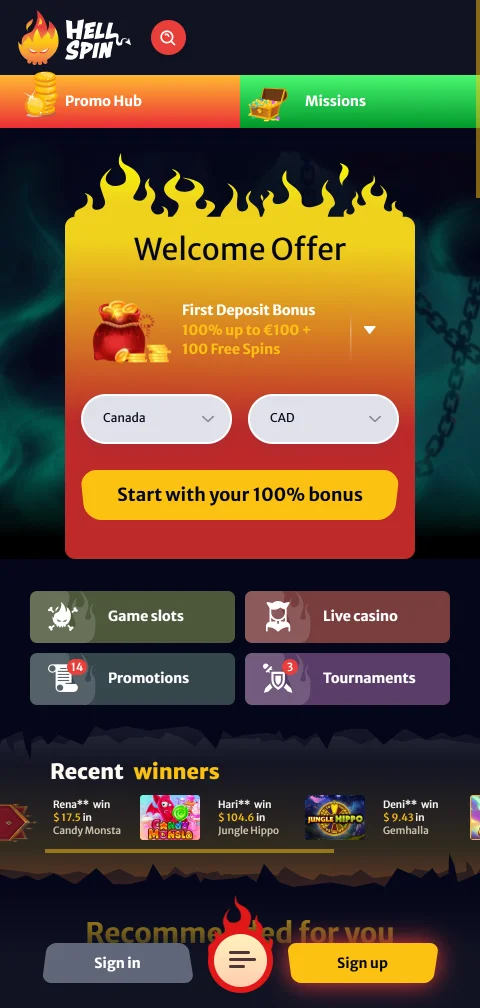


- Library of over 4,000 games drawn from more than 60 studios, including Evolution and Pragmatic Play
- E-wallet withdrawals are targeted within 12 hours and crypto within 24 hours of approval
- Low €10 minimum deposit on most methods, with transactions handled in euro
- No Irish licence and conflicting public reports about which offshore regulator currently covers the brand
- 40x wagering on the welcome package, with card withdrawals taking 3-7 business days
No confirmed native app, but the browser site carries all 4,000-plus games and the full cashier, as our HellSpin mobile detailed look explains.
Wazamba casino review
| Key Feature | Jungle-themed loyalty system with collectable rewards |
| Welcome Bonus | 100% up to €500 + 200 free spins |
| Min. Deposit | €10 (€20 for the welcome bonus) |
| Number of Games | Approximately 3,000+ |
| Game Providers | Approximately 80+ studios, including Pragmatic Play and Evolution |
| Payment Methods | Visa, Mastercard, Skrill, Neteller, Revolut, Trustly, Bitcoin |
| Payment Services | MuchBetter, Jeton, MiFinity, Paysafecard, SEPA transfer |
| Mobile App | Mobile browser site, no confirmed native app |
| VIP Programme | Yes, level-based loyalty programme |
| RTP | Typically 94-97% depending on title |
| Licence | Curaçao (status unconfirmed; check official site) |
| Operator | Formerly Rabidi N.V.; current operator to be confirmed |
| Launch Date | 2019 |
| Legal Age | 18+ |

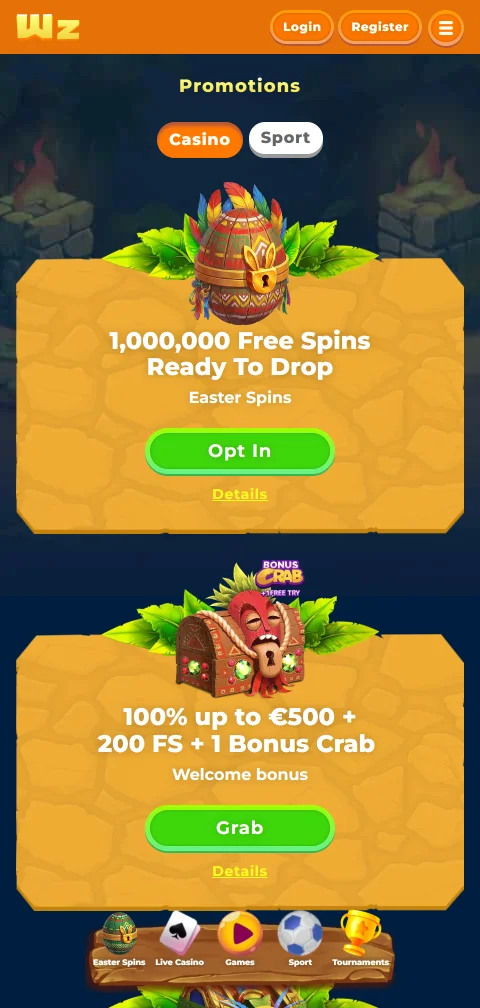

- Euro-denominated account with Revolut, Trustly and SEPA among the cashier options for Irish players
- No withdrawal fees listed, with a €10 minimum cashout and €20,000 monthly ceiling
- Separate crypto welcome package for players who prefer Bitcoin, Ethereum or Litecoin
- Licence position unclear after Rabidi N.V.'s 2024 bankruptcy and the revocation of its Curaçao licence
- 35x wagering on deposit plus bonus, and Skrill or Neteller deposits are excluded from the offer
No native app is confirmed in the Irish stores, so Wazamba runs through the mobile browser, where the full lobby of roughly 3,000 games loads. The Wazamba mobile guide explains how Revolut and Trustly deposits hand off to the banking app.
AmunRa Casino review
| Key Feature | Large multi-studio slot library with live casino |
| Welcome Bonus | 150% up to €3,000 + 100 free spins (three deposits) |
| Min. Deposit | Approximately €20 for the welcome offer |
| Number of Games | Approximately 4,000-5,500 |
| Game Providers | Evolution, NetEnt, Pragmatic Play, Push Gaming, Playtech |
| Payment Methods | Visa, Mastercard, e-wallets, bank transfer, crypto |
| Payment Services | CashtoCode, e-wallets, crypto wallets |
| Mobile App | Browser-based mobile site |
| VIP Programme | Five tiers, cashback up to 15% |
| RTP | Varies by game; check each game's info panel |
| Licence | Anjouan, ALSI-202411077-FI2 (as reported) |
| Operator | Unconfirmed; check the site footer |
| Launch Date | 2020 |
| Legal Age | 18+ |



- Around 100 studios, including Evolution and Pragmatic Play, under one account
- Withdrawals stated at one to three days once KYC is complete
- Five-tier VIP club with cashback reported to climb to 15%
- Offshore Anjouan licence; no Irish or EU regulator oversees player disputes
- Card deposits accepted, but payouts reportedly go out via crypto, e-wallet or bank only
No native app, but the browser site shares one account and cashier with desktop, and KYC uploads straight from a phone camera, as the AmunRa mobile player guide explains.
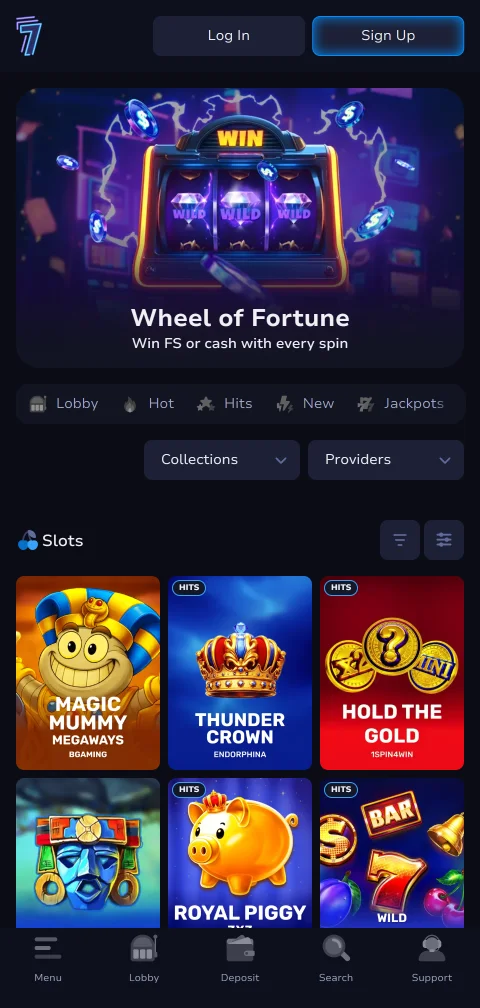
7Bit Casino review
| Key Feature | Crypto and euro cashier side by side |
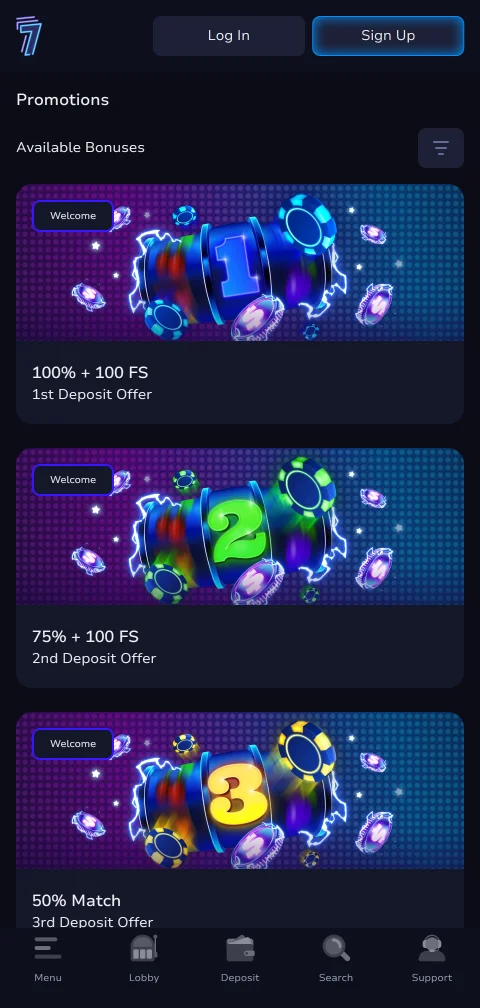
| Welcome Bonus | 100% up to €400 + 100 free spins |
| Min. Deposit | €20 for bonus stages; method minimums vary |
| Number of Games | Over 7,000 (some listings quote 10,000+) |
| Game Providers | BGaming, Pragmatic Play, Evolution, NetEnt, Play'n GO, Nolimit City |
| Payment Methods | Visa, Mastercard, Skrill, Neteller, bank transfer, Bitcoin, Ethereum, Litecoin, USDT |
| Payment Services | Card, e-wallet, bank wire, 17+ cryptocurrencies |
| Mobile App | Browser-based mobile site, no confirmed native app |
| VIP Programme | 12-level ladder, cashback up to 20% at the top |
| RTP | Approximately 96-97% average across slots |
| Licence | Curaçao Gaming Authority (number varies by source; check footer) |
| Operator | Curaçao-registered operator; entity named in current terms |
| Launch Date | 2014 |
| Legal Age | 18+ |

- Crypto withdrawals in 17+ coins, paid within minutes once the approval stage clears
- Library of over 7,000 titles, with Evolution, Pragmatic Play Live and Ezugi in the live section
- Twelve-level VIP ladder where an earned level does not drop back down
- No Irish licence: Curaçao oversight only, and the operating entity named differs between markets
- Card withdrawals take one to three days and bank wires up to five, far slower than crypto
No native app was confirmed; the browser site carries QR-code crypto deposits and 3-D Secure card payments, as our 7Bit Casino mobile assessment explains.
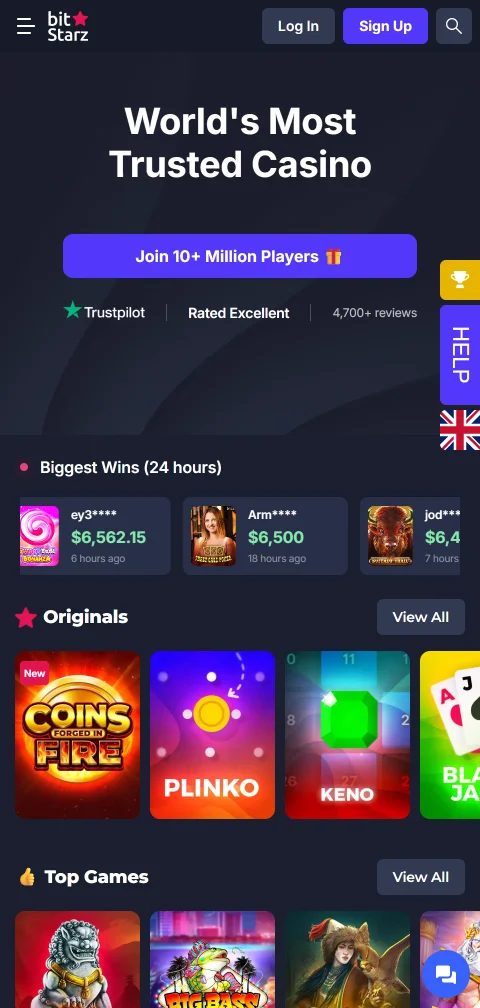
BitStarz casino review
| Key Feature | Crypto and euro cashier, payouts targeted within 1 hour |
| Welcome Bonus | 100% match plus 180 free spins, 40x wagering |
| Min. Deposit | €20 (around 0.0002 BTC in crypto) |
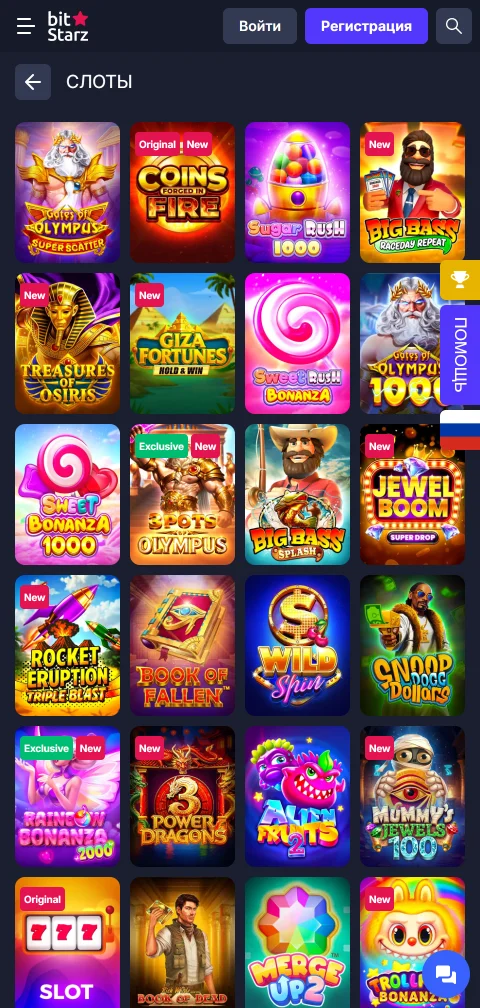
| Number of Games | Over 4,500 |
| Game Providers | Pragmatic Play, Play'n GO, Hacksaw Gaming, BGaming, ELK Studios, Yggdrasil |
| Payment Methods | Visa, Mastercard, Skrill, Neteller, bank transfer, crypto |
| Payment Services | Bitcoin, Lightning, Ethereum, Litecoin, Tether, Dogecoin |
| Mobile App | Browser-based mobile site, no native app |
| VIP Programme | Yes, invitation-based loyalty tiers |
| RTP | Approximately 96% across slots, varies by title |
| Licence | Curaçao Gaming Authority, OGL/2024/165/0185 |
| Operator | Gareton B.V., Curaçao (reg. 160656) |
| Launch Date | 2014 |
| Legal Age | 18+ |
- Terms commit to paying withdrawals within one hour where possible, with no casino fee charged
- Euro accounts for Irish players alongside Bitcoin, Lightning and roughly ten other coins
- Library of over 4,500 titles from Pragmatic Play, Play'n GO, Hacksaw and ELK
- Curaçao licence only; no Irish regulation and no independent ADR body for disputes
- Bank transfers take 3 to 10 banking days, and 40x wagering applies to bonus funds
No native app, a browser site with the full cashier, and no Apple Pay or Google Pay: the BitStarz mobile player guide explains the trade-off.
How we ranked the casinos with tournaments
The ranking is built from what each casino publishes: tournament terms, prize tables, payment pages, licence details and support channels, read and compared by the desk. Affiliate payments do not move a placing, and neither does the size of a headline prize pool on its own.
Tournament prizes and their terms
Prizes paid as cash with no wagering raise a placing, as do prize tables published in full before entry. A leaderboard paying out in bonus funds carrying 35x wagering or more lowers it, and so does a prize table that only appears after the event has closed. A minimum stake per spin above €0.50 to qualify counts against a site too.
Payout speed and payment methods
A casino scores well when tournament winnings land in the cash balance within 48 hours of the leaderboard closing and withdrawals clear under the stated window. A manual review on every prize, or a pending period beyond 72 hours, lowers the placing.
Tournament games and providers
We look at how many studios feed the tournament calendar. Sites joining provider networks such as Pragmatic Play’s Drops & Wins alongside their own events rank higher than those with a single weekly race. A schedule that runs only one game, or hides which titles qualify, costs a casino placings, and so does a qualifying list that excludes every slot whose RTP version is shown in the game’s information screen.
Mobile use and the live leaderboard
A live leaderboard that shows your position, points and the cut-off for paid places on a phone screen raises a placing. One that refreshes only on desktop or hides behind three menus lowers it.
Licence details and game certification
A licence on record with a named regulator, linked from the footer and checkable on that regulator’s register, is the floor for inclusion. Games certified by an independent testing lab raise the placing further. While Ireland’s regulator has not yet opened remote gaming licences, we read the overseas licence carefully and mark any site whose licence number cannot be matched to a register entry.
Customer support and tournament disputes
Support reachable by live chat around the clock, with agents able to explain a points dispute or a missing prize, raises a placing. Email-only support, or answers that send every tournament question to a generic terms page, lowers it, because leaderboard disputes are time-sensitive once a race closes.


BC Game Casino
Monthly deposit bonusHow a casino slot tournament works
A casino tournament is a timed competition in which players earn points on a set of qualifying games, and the players with the most points at the close share a prize pool. The house still takes its edge on every spin, because the games themselves do not change. What changes is that a second layer of prizes sits on top, paid according to rank rather than to the result of any one spin.
That distinction matters more than it first appears.
In an ordinary session, a slot’s return to player, or RTP, describes what the game pays back over a very long run of spins. A 96% RTP means that across millions of spins the game returns about €96 for every €100 staked; over €500 of play, the long-run expectation is roughly €480 returned, though any single session can land far above or below that. A tournament prize is extra money on top of that return, so the question for a player is whether the expected value of the leaderboard prizes is large enough to matter, given how many people are chasing them.
Who runs the tournament
Two kinds of organiser exist. Some tournaments are run by the casino itself, using its own budget and its own rules. Others are run by a game studio across hundreds of casinos at once, which is why the same leaderboard can appear on several sites carrying different branding. The organiser decides the scoring rule, the qualifying stake and how prizes are paid, so it is the first thing worth identifying.
Entering a casino tournament, step by step
The sequence below follows the order in which tournament terms are usually laid out, and it puts the checks before the first qualifying spin rather than after it.
- Step 1
Find out who organises the event
Check whether the casino or a game studio runs the tournament. The organiser sets the scoring rule, the prize table and the dispute process, and its terms override the casino's general promotion page. - Step 2
Read the scoring rule in full
Note whether points come from win multipliers, total stake, number of wins or single biggest win. Each rule rewards a different style of play, and the terms state which one applies. - Step 3
Check the minimum qualifying stake
Many network races only count spins at or above a stated minimum, such as 15p on one UK operator's Drops & Wins page. Spins below it earn nothing on the leaderboard. - Step 4
Opt in where the terms require it
Some tournaments count every eligible spin automatically, while others need a button pressed or a code entered first. Spins played before opting in are usually not counted. - Step 5
Watch the spin cap and the clock
Some events count only a set number of spins per player, and every tournament closes at a fixed time in a stated time zone, which may be UK time rather than Irish. - Step 6
Confirm how the prize is credited
Check whether prizes land as withdrawable cash, bonus funds with wagering, or free spins. Also check how long crediting takes after the leaderboard closes and whether a deadline applies to claiming.
Scoring systems and what each one rewards
The scoring rule is the single most important line in any tournament’s terms, because it decides which kind of player can realistically finish in the paid places. Four rules account for nearly every slot tournament on Irish-facing sites.
Win multiplier scoring
Here, points equal the win divided by the stake. A €1 bet that returns €50 scores 50 points, and a €5 bet returning €1,000 scores 200, so stake size does not buy points directly. Pragmatic Play’s daily Drops & Wins leaderboards rank players on the sum of win multipliers accumulated during the race. This rule favours high-volatility slots, where rare large multipliers do the work, and it gives a small-stake player the same scoring power per spin as a high roller.
Total stake or turnover scoring
Points accrue for every euro wagered, regardless of the result. This is the rule that rewards bankroll, plainly: a player staking €2,000 over a weekend will outscore one staking €200 whatever happens on the reels. It is also the rule that pushes players towards spending more than they planned, which is worth naming before entering one.
Biggest single win and win count
Some races rank by the largest single multiplier landed, which turns the event into something close to a lottery among the players taking part. Others count the number of winning spins, which favours low-volatility games with a high hit frequency, meaning the share of spins that return anything at all. A hit frequency is only meaningful when the studio publishes it; where it does not, no reliable figure exists and none should be assumed.
Provider networks versus casino-run events
Network tournaments pool players from every participating casino into one leaderboard, so the prize pool is large and the field is enormous. Pragmatic Play’s Drops & Wins promotion for 2026 advertises more than €25,000,000 across more than 5,000,000 prizes, with seven daily tournaments and one weekly wheel drop each week. One UK operator’s page for the same promotion lists a daily pool of £20,000 spread across 500 places, from £3,000 for first down to £5 for places 301 to 500.
Read that prize table slowly. Two hundred of the five hundred paid places return £5, and the overwhelming majority of entrants finish outside the paid places entirely.
A casino’s own tournament usually has a smaller pool and a much smaller field. A €1,000 weekly race with forty regular entrants can offer a better chance of some prize than a network event paying thousands, simply because the denominator is smaller. The trouble is that the field size is rarely published, so the comparison can only be made by watching the live leaderboard during the event. Casino-run races also vary more in their terms: some pay cash, some pay bonus money carrying wagering, and the organiser is the same company deciding disputes.
One practical point follows from the network model. Because Drops & Wins prizes are funded by the studio and, under its published terms, paid as fixed cash with no wagering requirements, the prize itself tends to be cleaner than a casino bonus. The 2024 network terms state this directly; whether a given casino adds conditions of its own is something its promotion page has to confirm.
RTP, volatility and leaderboard maths
Players often ask which slot has the highest RTP for tournaments, and the honest answer is that RTP matters far less on a leaderboard than volatility does. RTP describes the average return over a very long run; a tournament is a short window in which the spread of results, not the average, decides rank.
Volatility describes how that spread looks. A low-volatility slot pays small amounts often, so its results cluster near the average. A high-volatility slot pays rarely but sometimes very large multiples, so over 500 spins its results range from a heavy loss to a multiplier in the thousands. On a win-multiplier leaderboard, the player who lands one 2,000x hit beats a hundred steady players, which is why high-volatility games dominate the upper places of such races.
Why the RTP version still matters
Studios release many slots in several RTP versions, for example 96.5%, 94% and 91%, and the casino chooses which one to run. The difference does not change who wins a tournament much, but it changes what the session costs. Over €500 staked, the long-run expected loss is about €17.50 at 96.5% and about €45 at 91%, more than double for the same leaderboard ticket. The version in use is shown in the game’s own information or paytable screen, and that screen is the only source worth trusting; a review quoting a single RTP for a title without saying which casino and which version is not saying much.
Where a game’s information screen does not show its RTP at all, the figure is unknown, and this page treats it that way.
Free-roll, buy-in and opt-in formats
Beyond scoring, tournaments differ in what it costs to enter. A free-roll costs nothing to join and is usually played with tournament credits rather than your balance; prizes are small, but nothing of yours is at risk. A buy-in tournament charges a fixed fee for a set stack of credits, which caps the cost at the fee. An opt-in tournament, the commonest kind, counts your normal real-money spins on qualifying games, so the cost is whatever you stake.
The opt-in model is where the maths from the previous section bites, because every spin carries the game’s house edge.
The comparison below sets network tournaments against a casino’s own events on the points that most often decide which suits a given player, based on how the published terms of each type are usually written.
Network tournament | Casino's own tournament |
|---|---|
| Prize pools in the thousands per day, shared across hundreds of casinos | Smaller pools set by one casino, often weekly |
| Very large field, so most entrants finish unpaid | Smaller field, though its size is rarely published |
| Studio terms usually pay prizes as cash without wagering | Prizes may be cash, free spins or bonus funds with wagering |
| Scoring rule and qualifying stake stated in public terms | Scoring rule stated in the casino's own promotion terms |
Myths about tournament play
Tournaments attract the same myths as ordinary slot play, with a few of their own added on top.
“The slot is due a big hit before the race ends”
Each spin on a certified slot is decided by a random number generator, or RNG, the software that picks results independently of every spin before it. A game that has not paid a large multiplier in two hours is no more likely to pay one in the next ten minutes. Tournament clocks create urgency, but they do not create patterns.
“The casino lowers the RTP during tournaments”
A certified game runs at a fixed RTP version, and the version is a setting the casino chooses when it installs the game, not a dial turned during a race. What a casino can do is select a lower version for that title in general, which is why the information screen is worth checking before the event rather than suspecting the event itself.
“Finishing high once proves a strategy works”
One leaderboard result is one sample, and on a win-multiplier race that sample is driven largely by a handful of rare hits. A player who finished third last Tuesday and fortieth this Tuesday played no differently; the variance did. Strategy in a tournament is mostly about choosing the right scoring rule and the right game volatility for it, and about stopping at a stake you set in advance.
Reading tournament terms before you join
The table lists the terms that most often decide whether a tournament is worth joining, with example wording drawn from the published Drops & Wins pages and terms where they state it. Casino-run events vary, so treat the middle column as what to look for rather than a guarantee.
| Term | Example wording | Why it matters | Where it appears |
|---|---|---|---|
| Scoring rule | Sum of win multipliers | Decides which games suit | Promotion terms |
| Minimum stake | 15p per spin on one UK site | Lower spins earn no points | Operator promotion page |
| Spin cap | First 5,000 spins counted | Extra play adds cost, not points | Network terms |
| Prize form | Cash, no wagering | Bonus prizes may never convert | Prize section of terms |
| Closing time | Stated in UK time | An hour off can cost a place | Schedule in terms |
Tournaments under Irish gambling licensing
Ireland’s gambling law is mid-change. The Gambling Regulation Act 2024 set up the Gambling Regulatory Authority of Ireland, the GRAI, which began issuing remote betting licences on 1 July 2026. Those licences cover betting only. Licences for remote gaming, the category that covers online slots and casino games, come in a later phase, and while that phase has not opened, every casino offering slot tournaments to Irish players does so under a licence granted in another jurisdiction, such as Malta or Curaçao.
That has a direct consequence for tournament disputes.
A complaint about a missing leaderboard prize goes first to the casino, then to whatever dispute service its overseas licence names, and not to an Irish body. Checking the licence number against the issuing regulator’s own register takes a couple of minutes and tells you which rules apply. The 2024 Act also bans credit cards for gambling and requires licensees to let customers set financial limits, and those protections reach casino play as gaming licences are issued; a tournament with a turnover-based scoring rule is exactly the kind of event where a limit set beforehand earns its keep.
Live casino and table-game tournaments
Most casino tournaments run on slots, because a slot produces a clean multiplier on every spin and suits automatic scoring. Table and live casino tournaments exist, but they are rarer and built differently.
Blackjack tournaments typically give every entrant the same stack of chips and a fixed number of hands, with the largest stack at the end winning. The house edge of the underlying game, around 0.5% on blackjack with favourable rules and basic strategy, matters less here than in normal play, because players are competing against each other’s stacks and often have to take large risks late on to overtake. Roulette races work the same way; the single-zero wheel’s 2.7% edge is unchanged by the tournament, but the incentive to place a big final bet is built in.
Live casino leaderboards, where they appear, usually rank by turnover or by the biggest single multiplier on game-show titles, and the table limits printed on each table decide how much a player can stake per round. Those limits, and whether bets on side markets count towards points, are the two lines to find in the terms before joining.
Playing tournaments within your limits
Tournaments are built to keep people playing: a live leaderboard, a countdown clock and a paid place that always looks a few spins away. None of that changes the house edge on the games underneath, and on a turnover-scored race the only way to climb is to stake more. Set a deposit limit and a time limit before the event begins, not while you are watching your position slip in the final hour. Treat any entry fee or tournament stake as the price of entertainment rather than a route to a prize. If chasing a leaderboard has started to feel like a duty, or you are staking money meant for bills, stop and talk to someone; the support services listed below are free and confidential.
What to remember before joining a tournament
If one figure stays with you, make it the share of places that pay: on a daily network race paying 500 prizes, the bottom 200 return £5 each, and every player outside those 500 gets nothing. This ranking would change if a listed casino moved its tournament prizes from cash to wagered bonus funds, and that is the first line to recheck. The prize terms behind each placing were last read on 13 August 2026; poker tournaments and sportsbook prediction contests fall outside this page entirely.
Questions about casinos with tournaments
What is a casino tournament?
A casino tournament is a timed competition in which players earn points on qualifying games and the highest scorers share a prize pool. The games keep their normal house edge, so the tournament adds a second layer of prizes paid by rank. The scoring rule in the terms decides which kind of play earns the most points.
How are points calculated in slot tournaments?
The commonest rule is win multiplier scoring: a win is divided by the stake, so a €1 bet returning €50 earns 50 points. Other tournaments score total stake, number of winning spins or the single biggest win. The rule is stated in the promotion terms, and each favours a different game volatility.
Does a higher RTP slot help me win a tournament?
Barely. RTP is a long-run average, while a tournament is decided by short-run spread, which is volatility. A higher RTP version does lower what a session costs: over €500 staked, the expected loss is about €17.50 at 96.5% and about €45 at 91%. The game’s information screen shows which version is running.
Are tournament prizes paid in cash?
It depends on the organiser. Pragmatic Play’s Drops & Wins terms state that prizes are paid as fixed cash with no wagering requirements. Casino-run tournaments may pay cash, free spins or bonus funds carrying wagering, and the prize section of the promotion terms says which applies before you join.
What is the minimum stake for tournament spins?
Each tournament sets its own minimum qualifying stake, and spins below it earn no points. One UK operator’s Drops & Wins page lists 15p per spin. Irish-facing casinos state the minimum in their promotion terms, sometimes in euro and sometimes in sterling, so the figure is worth confirming on the specific site.
Is joining a casino tournament legal in Ireland?
Irish residents can play at online casinos, though the GRAI has so far issued betting licences rather than remote gaming licences. Until gaming licences are issued, casinos offering tournaments to Irish players operate under overseas licences, and disputes go through the bodies those licences name rather than through an Irish regulator.
Are network tournaments better value than a casino's own?
Not automatically. A network pool is larger, but the field runs into the thousands and most entrants finish unpaid. A casino’s own race pays less in total yet may have far fewer players. Field size is rarely published, so the live leaderboard during the event is the only real guide.
Can a slot be due a win before a tournament ends?
No. Each spin on a certified slot is decided independently by a random number generator, so a long run without a big multiplier does not make one more likely in the minutes before the race closes. The tournament clock adds urgency to play, not any pattern to the results.
More about online casinos







When comparing these casinos, look first at whether each one names its tournament organiser. A network race and a casino-run race on the same card follow different terms entirely.