




















LeoVegas Casino review
| Key Feature | Mobile-first platform with native iOS and Android apps |
| Welcome Bonus | Up to €1,000 + 200 free spins on Book of Dead |
| Min. Deposit | €10 to qualify for the welcome offer |
| Number of Games | Over 3,000 slots and table games |
| Game Providers | Evolution, Pragmatic Play, Playtech, OnAir, Stakelogic, Authentic Gaming |
| Payment Methods | Visa, Mastercard, Apple Pay, PayPal, bank transfer |
| Payment Services | PayPal, Apple Pay, Trustly (check cashier) |
| Mobile App | iOS and Android apps plus mobile browser |
| VIP Programme | Invitation-based VIP; terms not published |
| RTP | Approximately 94-97% on most slots, varies by title |
| Licence | Malta Gaming Authority, MGA/CRP/237/2013 |
| Operator | LeoVegas Gaming plc (MGM Resorts subsidiary) |
| Launch Date | Founded 2011, launched 2012 |
| Legal Age | 18+ |
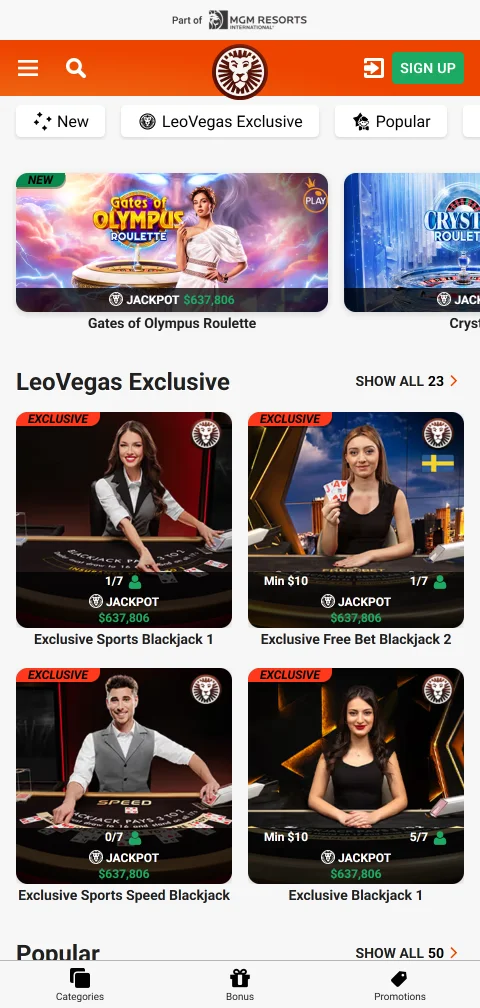
- Malta Gaming Authority licence MGA/CRP/237/2013 is printed on the Irish site's own pages
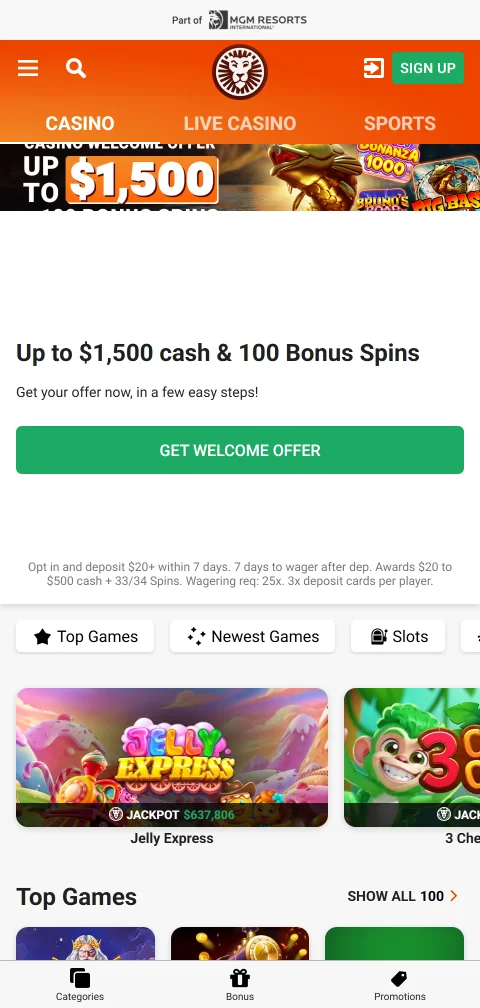
- Welcome offer needs only a €10 deposit, with 25x wagering on the cash part
- Live casino lists over 600 tables from Evolution, Playtech and Pragmatic Play Live
- Native apps on iOS and Android, and a mobile browser site that stands on its own
- Owned by MGM Resorts International since 2022, with a corporate record going back to 2011
- Irish pages state the welcome wagering as both 25x and 35x, so read the live terms
- No telephone support line; contact runs through live chat and email only
- Withdrawals can take up to five business days depending on the payment method
- No Irish GRAI casino licence yet, as online gaming licensing is phased into 2027-2028
A Maltese regulator, HTTPS throughout and an unnamed testing lab are the facts behind our LeoVegas security editorial assessment, alongside the MGA/CRP/237/2013 licence and MGM ownership since 2022.
888 Casino review
| Key Feature | In-house 888 slots and table games |
| Welcome Bonus | 100% up to €500, 40x wagering |
| Min. Deposit | €10 |
| Number of Games | Approximately 2,000+ |
| Game Providers | 888 in-house studio, Evolution, NetEnt, Pragmatic Play (approx.) |
| Payment Methods | Visa, Mastercard, PayPal, Skrill, NETELLER, Paysafecard, bank transfer |
| Payment Services | Skrill, NETELLER, PayPal, MuchBetter |
| Mobile App | iOS and Android apps, plus browser |
| VIP Programme | Yes, invitation-based VIP Casino Club |
| RTP | Around 95-97% on most slots, varies by title |
| Licence | Gibraltar Remote Gaming Licence No. 112 |
| Operator | 888 Eire Limited (Gibraltar) |
| Launch Date | 1997 |
| Legal Age | 18+ |
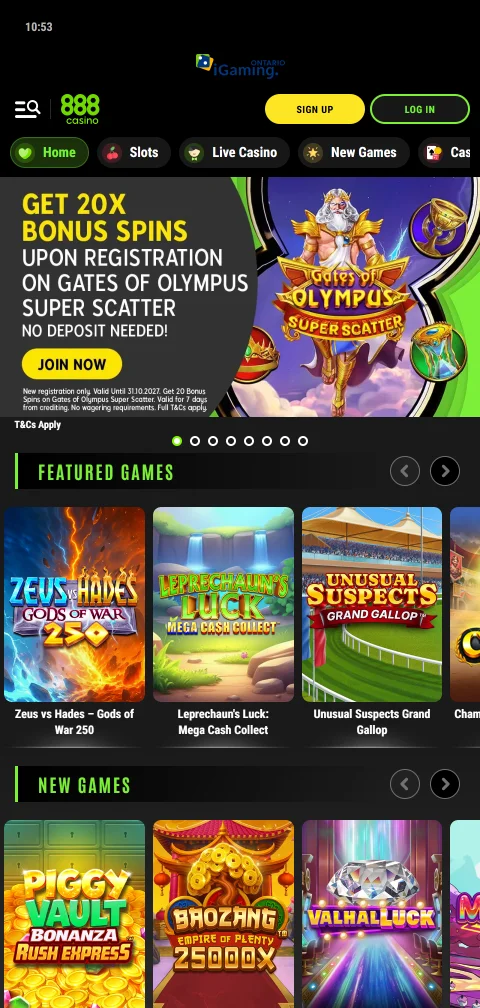
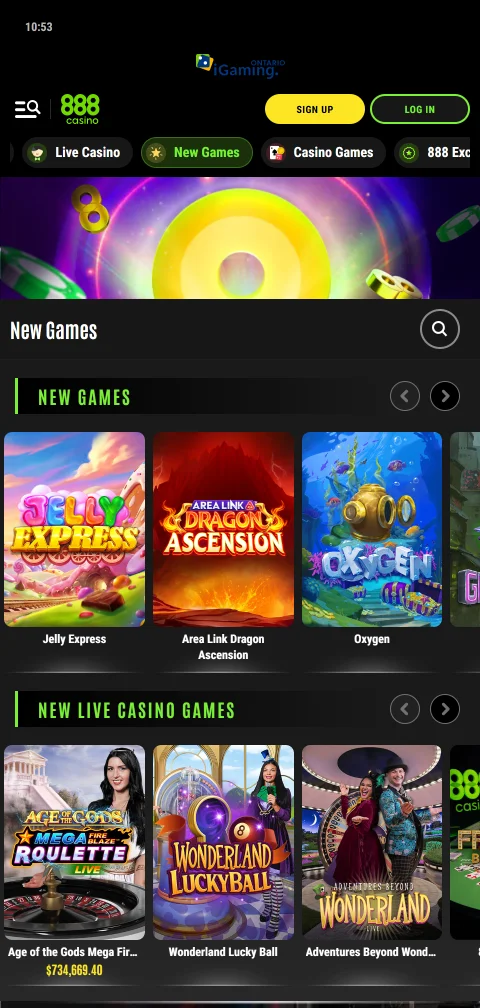

- Irish casino service licensed in Gibraltar under Remote Gaming Licence No. 112, named on every page
- Choice of welcome offers: 100% up to €500 or 100 free spins for a €10 deposit
- Operator history going back to 1997, with its own in-house slot and table studio
- Withdrawal timeframes published per method, including a one-day pending window for Gold VIP members
- Standard pending period of three business days before any withdrawal is processed
- 40x wagering on the match bonus, with Skrill and NETELLER deposits excluded from the offer
- Live chat only available while logged in and during operational hours, which are not published
The site runs over HTTPS, though no encryption standard or RNG testing lab is named; our 888 Casino security review explains what to ask.
bet365 Casino review
| Key Feature | One wallet shared with the bet365 sportsbook |
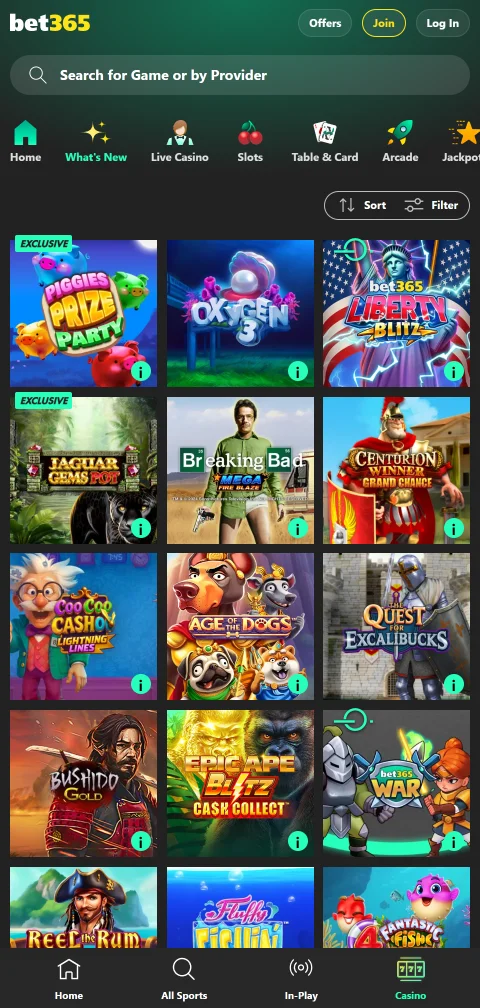
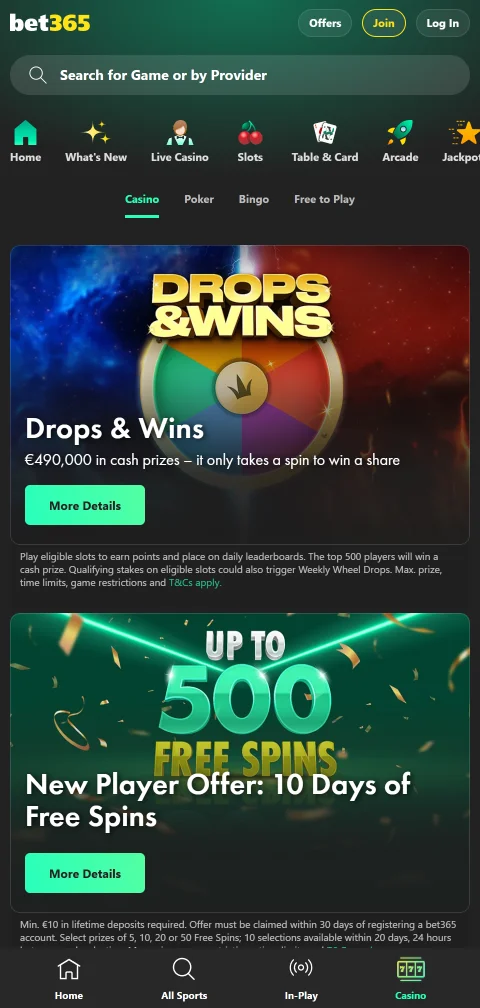
| Welcome Bonus | Up to 200 free spins over 10 days |
| Min. Deposit | €5–€10 depending on method |
| Number of Games | Approximately 1,500+ (unconfirmed) |
| Game Providers | Playtech, in-house titles and other studios (unconfirmed list) |
| Payment Methods | Visa Debit, Mastercard Debit, bank transfer, Trustly |
| Payment Services | PayPal, Apple Pay, Paysafecard |
| Mobile App | iOS and Android, casino inside main app |
| VIP Programme | No public VIP tiers published |
| RTP | Typically 94–97% on slots |
| Licence | GRAI remote betting; casino under MGA (check footer) |
| Operator | bet365 Group / Hillside entities |
| Launch Date | 2000 (bet365 brand) |
| Legal Age | 18+ |
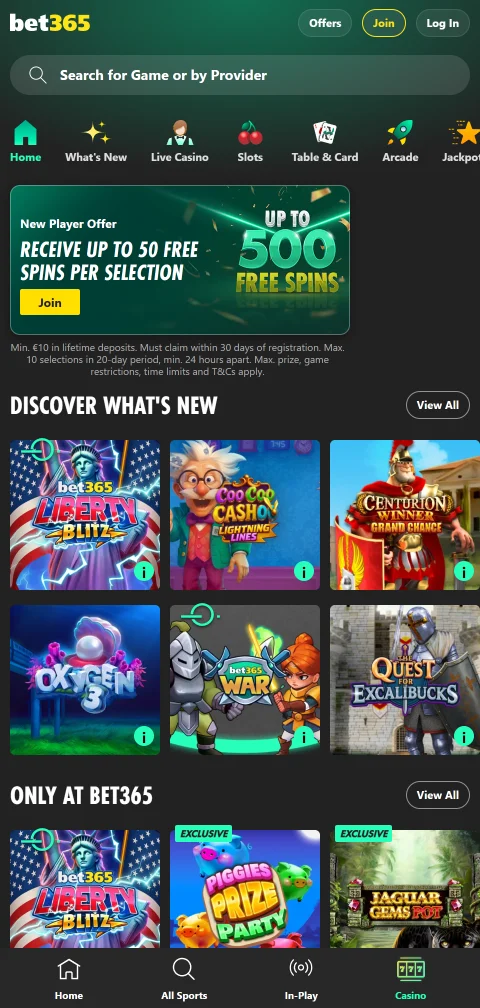
- Stated withdrawal processing target of around four hours, with Visa Direct possibly inside two
- No fees on any listed withdrawal method, with bank transfers up to €50,000
- Free spins welcome offer needs only €10 in lifetime deposits to qualify
- Holds a GRAI remote betting licence, listed on the public Irish register
- Casino, sportsbook and live dealer games share one balance and one login
- GRAI has not yet opened casino licences, so casino cover still relies on Malta
- Free spins prizes of 5, 10 or 20 are randomised, not a fixed amount
- Withdrawals must normally return to the deposit method, which is awkward to change
- No published VIP ladder or tiered loyalty scheme for casino players
bet365 names no encryption standard or audit body for its Irish casino, and KYC asks for photo ID plus proof of address before the first payout. Our bet365 Casino security review separates what is published from what is typical.
Betway Casino review
| Key Feature | Casino and sportsbook on one wallet |
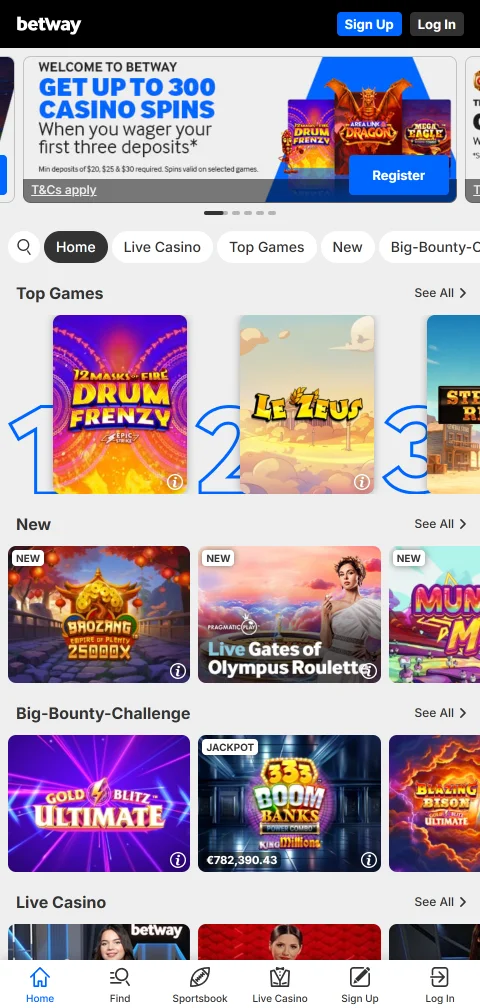
| Welcome Bonus | Up to €50 free bet + 50 bonus spins |
| Min. Deposit | €5 (debit card, for the welcome offer) |
| Number of Games | Approximately 500+ slots, plus tables and live |
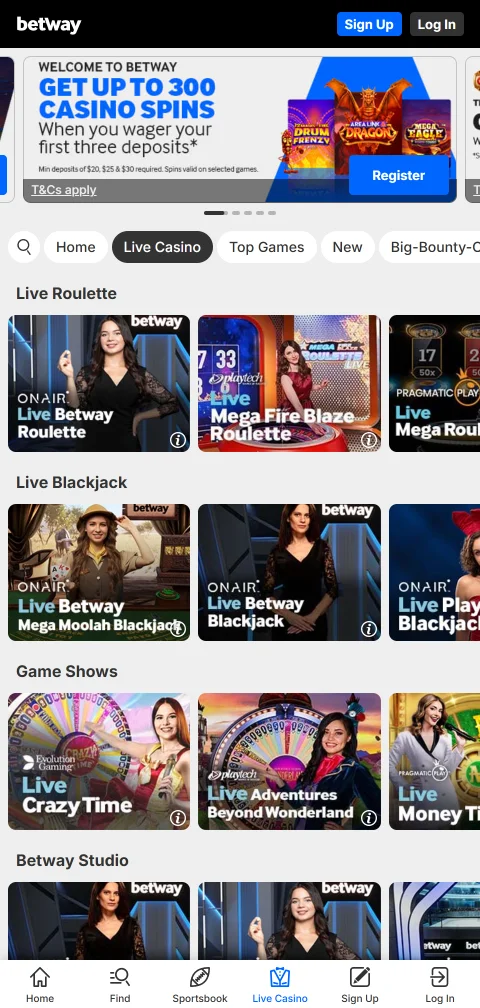
| Game Providers | Games Global, NetEnt, Pragmatic Play; Evolution live |
| Payment Methods | Visa, Mastercard debit, open banking, e-wallets |
| Payment Services | Debit cards, PayPal, open banking |
| Mobile App | iOS and Android apps, plus browser |
| VIP Programme | Invitation-only; no public tier table |
| RTP | Typically 94-97% on slots |
| Licence | MGA/B2C/130/2006; GRAI licence (betting) |
| Operator | Betway Limited (Malta) |
| Launch Date | 2006 |
| Legal Age | 18+ |
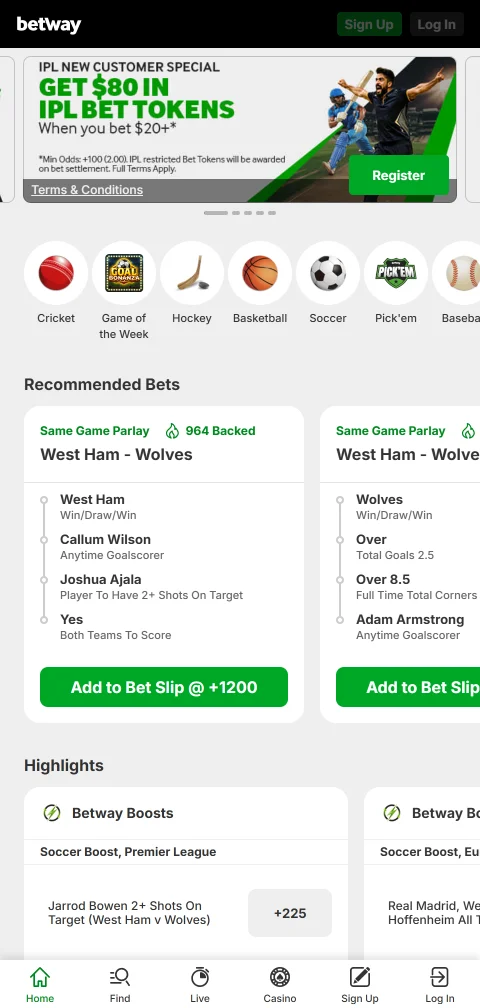
- Malta Gaming Authority licence MGA/B2C/130/2006 covers the casino product for Irish players
- GRAI register lists Betway for remote sports betting since the July 2026 licensing round
- Stated withdrawal processing within 24 hours, with one to two days in total
- Welcome offer starts from a €5 debit card deposit, lower than many rivals
- Bonus spins carry 50x wagering, and the offer expires seven days after registration
- Free bet returns winnings only; the €50 stake itself is never paid back
- Ireland has no online casino licence yet, so casino play relies on Malta
TLS encryption on the cashier and no named testing laboratory: the Betway Casino security check states what is published and what is not.
Casumo Casino review
| Key Feature | Gamified Casumo platform with 5,600+ games |
| Welcome Bonus | 100% up to €300 + 50 bonus spins |
| Min. Deposit | Around €10; €20 for the welcome bonus |
| Number of Games | 5,600+ (5,100+ slots) |
| Game Providers | Pragmatic Play, Play'n GO, Evolution, Playtech, Relax Gaming |
| Payment Methods | Visa, Mastercard, Trustly, Skrill, Neteller, Paysafecard |
| Payment Services | Cards, e-wallets, instant banking via Trustly |
| Mobile App | iOS and Android apps plus mobile browser |
| VIP Programme | Loyalty rewards; terms set by the operator |
| RTP | Approximately 96% average on slots |
| Licence | Malta Gaming Authority, MGA/CRP/217/2012-05 |
| Operator | Casumo Services Limited, Malta |
| Launch Date | 2012 |
| Legal Age | 18+ |

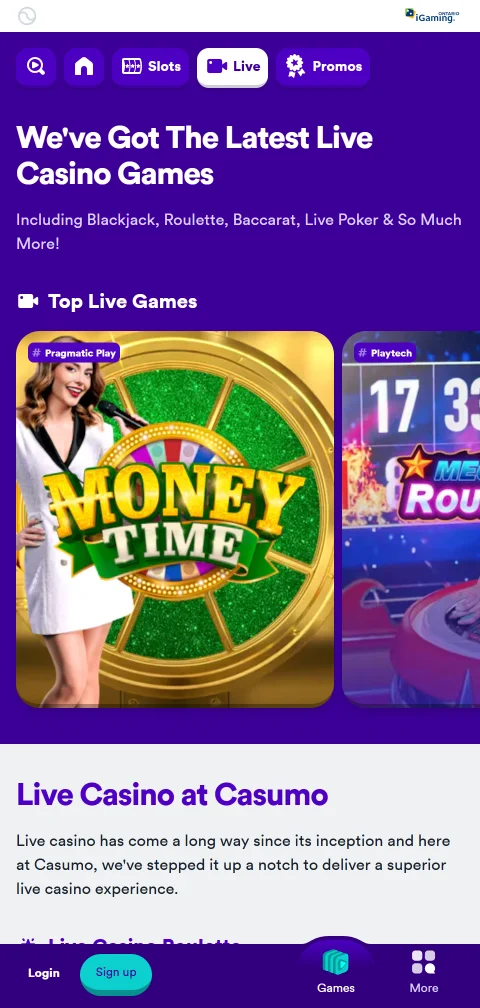
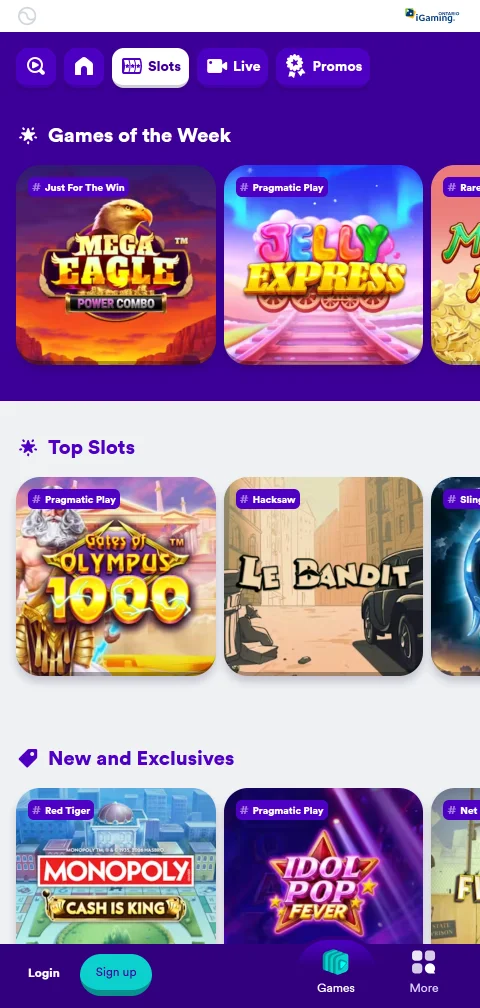
- Malta Gaming Authority licence MGA/CRP/217/2012-05, verifiable on the regulator's public register
- Over 5,600 games, with Pragmatic Play, Play'n GO and Evolution among the studios
- Welcome offer capped at €5 per spin, a clear and checkable limit
- 30x wagering on the welcome bonus is heavier than some rivals' 10x deals
- Withdrawal approval can take up to three days before the payment rail even starts
Casumo Services Limited is registered in Swieqi, Malta, under MGA licence MGA/CRP/217/2012-05. Connections run over HTTPS, and the operator names no RNG testing laboratory, a gap set out plainly in our Casumo security editorial assessment alongside KYC requirements.
How we rated the casinos for their game libraries
The ranking is built from what each casino publishes: game rules, RTP figures, provider lists, payment terms and licence records. Commission paid to us and the size of a welcome headline do not move a placing, and neither does a single lucky or unlucky session.
Game offers and their wagering terms
Free spins on named slots with a 35x or lower wagering requirement raise a placing, especially where the RTP of the eligible slot is shown. Offers that weight table games at zero, cap winnings at under €100 or hide the eligible game list lower it.
Payout speed and banking for winnings
A casino that states a withdrawal window of 24 hours or less for e-wallets and three banking days for cards earns credit. Pending periods longer than 72 hours, fees on withdrawals and limits under €2,000 a week count against it, because a winning session is only finished once the money arrives.
Game library, RTP versions and providers
This criterion carries most weight on this page. Placings rise where a casino shows the RTP inside each slot’s information screen, carries studios that publish their figures, and offers single-zero roulette and 3:2 blackjack. They fall where a slot runs at a lower RTP version than the studio’s default, where only 6:5 blackjack is offered, or where the lobby lists games with no provider named at all.
Mobile play and how the lobby is built
Credit goes to a mobile lobby that filters by provider, game type and volatility, and that opens the rules screen without leaving the game. A lobby that loads one long scroll, drops live tables from the mobile version or hides the paytable behind the desktop site lowers the score.
Licence details and game certification
A licence from Malta, the UK or Gibraltar whose number matches the regulator’s register raises a placing, as do testing-lab certificates from eCOGRA, GLI or iTech Labs naming the games covered. A licence number that does not resolve, or a seal linking nowhere, lowers it. Until Irish remote gaming licences are issued, this is the check that counts.
Customer support and what it can answer
Support that is reachable by live chat for at least 16 hours a day and can tell a player which RTP version a slot runs raises a placing. Email-only help, or agents who cannot point to a game’s rules, lowers it.


BC Game Casino
Monthly deposit bonusWhat RTP means over real stakes
RTP, or return to player, is the share of all money staked on a game that the game pays back over a very long run of play. A slot listed at 96% is designed to return €96 for every €100 wagered, averaged across millions of spins and many players.
That average says little about one evening. Put €500 through a 96% slot, perhaps by spinning at €1 five hundred times, and the long-run expectation is a loss of €20. The actual result of those 500 spins can sit hundreds of euro either side of that figure, because 500 spins is a tiny sample against the millions the RTP was calculated from.
The house edge is the same idea seen from the casino’s side: 100% minus the RTP.
So a 96% slot carries a 4% edge, and a 2.70% edge on roulette means an RTP of 97.30%. Neither figure is a prediction of what any player will win or lose, and neither changes because of how the last few rounds went. An RTP figure also needs a source. The useful one is the number the studio publishes for the version the casino actually runs, shown in the game’s own information screen, and if a casino does not show it, the honest position is that the figure is unknown.
Why one slot can carry several RTPs
Many studios release the same slot in several RTP configurations and let the operator choose which one to run. A title might exist at 96%, 94% and 92%, with identical graphics, sounds and features, so a player cannot tell them apart by looking at the reels.
The difference is real money over time. On €1,000 of total stakes, the 96% version has an expected cost of €40 and the 92% version an expected cost of €80, which doubles the price of the same entertainment.
Where to find the version in play
Most studios that release multiple versions print the active RTP in the game’s help or paytable screen, and that screen reflects the copy loaded at that casino. The studio’s own website usually lists the highest version, which is not proof of what a given casino runs. Sister sites on the same white-label platform, meaning casinos run by one operator under different brands, often share the same configuration, though the desk does not assume it.
When the help screen shows no figure, we treat the RTP as unconfirmed.
Volatility and hit frequency explained
Volatility describes how a game spreads its RTP across outcomes. A low-volatility slot pays small amounts often, while a high-volatility slot keeps much of its return in rare large wins, so long dry spells are part of its design rather than a fault.
Hit frequency is the share of spins that return anything at all, including wins smaller than the stake. A hit frequency of 25% means roughly one spin in four lands a win, but many of those wins return less than was bet, so a high hit rate does not mean a session is going well.
Two slots can share a 96% RTP and still feel nothing alike. With €200 and €1 spins, a low-volatility game tends to stretch the balance across many small returns, while a high-volatility one can empty it in 150 spins or turn it into a large win from a single feature.
Studios publish volatility as a band or a scale, and fewer of them publish hit frequency. Where neither appears in the game’s information screen, this page does not estimate one.
Live dealer and RNG tables compared
Table games come in two forms online. RNG tables use a random number generator, software certified to produce unpredictable results, while live dealer tables stream a real croupier, wheel or shoe from a studio.
The mathematics of a game does not change between the two when the rules match. A single-zero roulette wheel carries a 2.70% edge whether the ball is real or drawn by software, so the choice is about pace, limits and atmosphere more than value.
Pace matters more than most players expect, because the house edge applies to every round. An RNG blackjack table can deal far more hands in an hour than a live table, so the same edge works on a larger total stake.
RNG table games | Live dealer tables |
|---|---|
| Rounds play as fast as the player clicks | Fixed betting window paces each round |
| Minimum stakes often from €0.10 | Minimums commonly start around €1 |
| House edge set by the rule version | House edge set by the rule version |
| Outcomes certified through RNG testing | Physical equipment shown on camera |
| Free demo play usually available | No demo mode for live streams |
Myths about slots and probability
The most persistent myth is that a slot becomes due after a long losing run. Each spin on a certified slot is independent, so a machine that has not paid a feature in 300 spins has exactly the same chance of paying one on the next spin as it did on the first.
A second myth holds that one session proves a game is loose or tight. A winning night on a 92% slot does not show a high RTP, and a losing one on a 97% slot does not show a low one.
Only the published figure, read from the right version, says anything about long-run return.
Some players also believe a casino can switch a game’s payout mid-session. Certified games are tested as fixed builds, and the RTP version is chosen when the game is configured, not adjusted against a particular player.
Checking a casino game before you play
These six checks take a few minutes and work for any game in any lobby. They rest on what the game and the casino publish, so they can be repeated before every new title.
- Step 1
Open the game's information screen first
Before staking anything, open the help or paytable screen. Look for the RTP figure stated for this copy, and note whether the screen mentions volatility, maximum win or a hit frequency. - Step 2
Compare against the studio's published RTP
Check the studio's page for the same title. If the studio lists 96% and the casino's copy shows 94%, the casino has chosen a lower version, and that gap is a cost. - Step 3
Read the table rules in full
For blackjack, confirm a blackjack pays 3:2 and check whether the dealer stands on soft 17. For roulette, confirm one zero and any la partage rule. - Step 4
Try the demo where one exists
Demo mode shows features, bet sizing and pace without risking money. It cannot show whether a game will pay, since demo results are as random as real ones. - Step 5
Check bonus game weighting and limits
If a bonus is in play, find which games count towards wagering and at what percentage. Many terms count table games at 10% or less, and some exclude high-RTP slots entirely. - Step 6
Set a stake limit before starting
Decide the total amount for the session and the stake per spin or hand. Using the casino's deposit limit tools makes that decision stick when a session runs longer than planned.
Blackjack, roulette and baccarat rules
Table games publish their mathematics more openly than slots, because the edge follows directly from the rules. That makes the rules screen the most useful thing to read before sitting down.
Blackjack
With a standard 3:2 payout on a natural blackjack and correct basic strategy, many common rule sets leave the house edge at around half a percent. Reducing that payout to 6:5 adds roughly 1.4 percentage points, which makes it the single largest rule change a player will meet, and it is often printed only in small type on the felt or in the help file.
Smaller rules move the edge too: whether the dealer hits soft 17, how many decks are used, and whether doubling after a split is allowed.
Roulette
Single-zero roulette has 37 pockets and pays as if there were 36, which gives the 2.70% edge. The American wheel adds a double zero, so the edge rises to 5.26%. La partage, which returns half of an even-money stake when zero lands, halves the edge on those bets to 1.35%.
Baccarat
The banker bet carries the lowest edge in standard baccarat once its 5% commission is counted, at about 1.06% over eight decks. The tie bet paying 8 to 1 sits far higher, which surprises players who treat it as a side option.
House edge by game and bet
The table sets out the house edge for common bets under standard rules. These figures come from the rules themselves rather than from any casino’s claims, so a casino using different rules will show different numbers.
| Game | Bet | House edge | Rule basis | Note |
|---|---|---|---|---|
| European roulette | Even-money bets | 2.70% | Single zero | 1.35% with la partage |
| American roulette | Most bets | 5.26% | Zero and double zero | Five-number bet 7.89% |
| Blackjack | Main hand, 3:2 | About 0.5% | Basic strategy, common rules | Varies by deck count |
| Blackjack | Main hand, 6:5 | About 1.9% | Same rules, lower payout | Adds about 1.4 points |
| Baccarat | Banker | 1.06% | Eight decks, 5% commission | Lowest standard bet |
| Baccarat | Tie at 8:1 | 14.36% | Eight decks | Some tables pay 9:1 |
Studios, testing labs and sister sites
A casino rarely builds its own games. It licenses them from studios and runs them on a platform provider, the software that handles accounts, payments and the lobby, which is why so many casinos look alike underneath.
Testing labs such as eCOGRA, GLI and iTech Labs check that a game’s RNG behaves randomly and that its paytable produces the stated RTP. A certificate is worth something only when it names the game or the studio and can be traced on the lab’s or regulator’s site.
White-label casinos, brands run by one operator on a shared licence and platform, often carry the same game library and RTP choices. Knowing that one brand runs lower RTP versions is a fair reason to check its sister sites before assuming they differ, though each copy still has to be read on its own screen.
The Gambling Regulatory Authority of Ireland has issued remote betting licences since 1 July 2026, while remote gaming licences, which cover online casino games, are phased for a later stage. Until those are issued, casinos open to Irish players hold licences from other jurisdictions such as Malta, Gibraltar or the UK.
Playing casino games within your limits
Every casino game on this page carries a house edge, so over time the expected result of play is a cost, not an income. Treat the money staked as the price of entertainment and set that price before a session starts. Deposit limits, session reminders and time-outs are offered by licensed casinos and work far better when set in advance. No strategy, system or betting pattern removes the edge, and chasing losses only raises the total stake exposed to it. If gambling stops feeling like a choice, or starts affecting money, sleep or relationships, step away and speak to someone. The support organisations listed below offer free, confidential help, and self-exclusion is available at any casino holding a recognised licence. Gambling is for adults aged 18 and over.
What to remember before choosing a game
One thing this page leaves aside is progressive jackpots, whose RTP often includes a share of the jackpot that very few players ever collect. Read a jackpot slot’s figure with that in mind. Everything else here was last checked on 6 November 2026, and the house-edge table remains the quickest reference before sitting at any table, whatever the casino or the format of the game.
Questions about casino games, RTP and house edge
Does a 96% RTP mean I get back €96 from €100?
No. RTP is a long-run average across millions of rounds and many players. Over €100 of stakes, the actual result can be far above or below €96, and only a very large sample of play moves close to the published figure.
Why does the same slot show a different RTP at another casino?
Many studios release one slot in several RTP versions, for example 96%, 94% and 92%, and each casino chooses which to run. The game’s help screen at that casino shows the version actually loaded, which is the figure to trust over the studio’s headline.
Is a slot due to pay after a long losing streak?
No. Each spin on a certified slot is independent of the last, so past results do not change the odds of the next spin. A long dry spell on a high-volatility game is expected behaviour, not a sign that a win is building up.
Which casino game has the lowest house edge?
Among standard games, blackjack played with basic strategy under 3:2 rules usually carries the lowest edge, around half a percent. The baccarat banker bet sits near 1.06%, and single-zero roulette with la partage drops to 1.35% on even-money bets.
Are live dealer games fairer than RNG games?
Neither is fairer when the rules match, since the house edge comes from the rules. Live tables are slower, so less money goes through the edge per hour. RNG tables rely on lab certification, while live tables show the physical equipment on camera.
Are online casinos licensed in Ireland?
The GRAI has issued remote betting licences since 1 July 2026, but remote gaming licences for online casino games are phased for a later stage. Until they are issued, casinos taking Irish players operate under licences from regulators such as Malta, Gibraltar or the UK.
What does volatility tell me about a slot?
Volatility describes how a slot spreads its return. Low-volatility games pay small amounts often, while high-volatility games hold more of their RTP in rare large wins. Two slots with the same RTP can therefore behave very differently over a €200 session.
More about online casinos







Sister sites in a list often share one platform and one game configuration, so two cards can differ in branding while running identical RTP versions.