




















Stake Casino review
| Key Feature | 31 in-house Stake Originals |
| Welcome Bonus | 200% up to approx. €1,700, 40x wagering (code-based) |
| Min. Deposit | Typically around €10 in crypto equivalent |
| Number of Games | More than 2,000 |
| Game Providers | Stake Originals, Pragmatic Play, Evolution, Hacksaw Gaming |
| Payment Methods | Bitcoin, Ethereum, Litecoin, USDT, Dogecoin |
| Payment Services | MoonPay, crypto wallets |
| Mobile App | Mobile browser site, no Irish app |
| VIP Programme | Yes, tiered VIP with rakeback |
| RTP | Approximately 96-99% depending on game |
| Licence | Curaçao Gaming Authority OGL/2024/1451/0918 |
| Operator | Medium Rare N.V. |
| Launch Date | 2017 |
| Legal Age | 18+ |

- Crypto withdrawals are often processed in under an hour once KYC is cleared
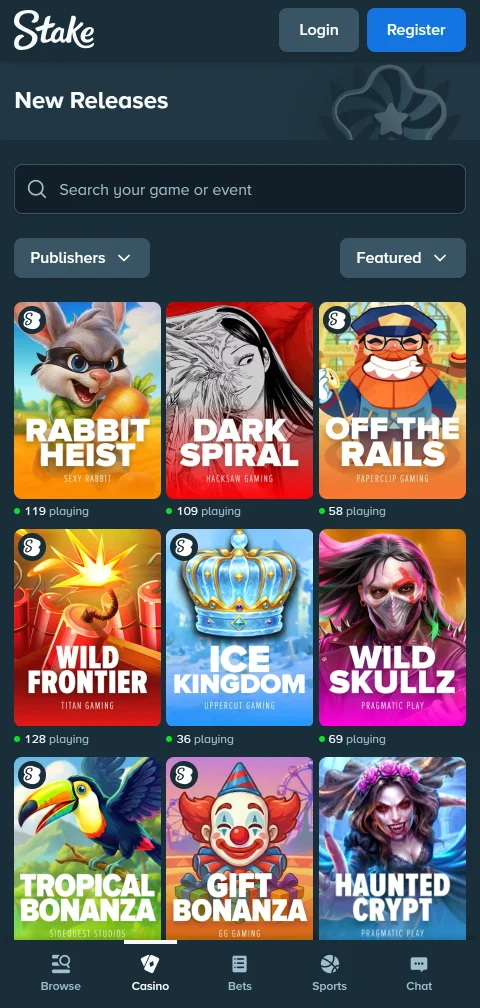
- A lobby of more than 2,000 games, including 31 in-house Originals
- Licence number OGL/2024/1451/0918 and operator Medium Rare N.V. are published openly
- Stake geo-blocked Irish users in September 2026 after engagement with the GRAI
- No GRAI licence, and the coded bonus carries 40x wagering on deposit plus bonus
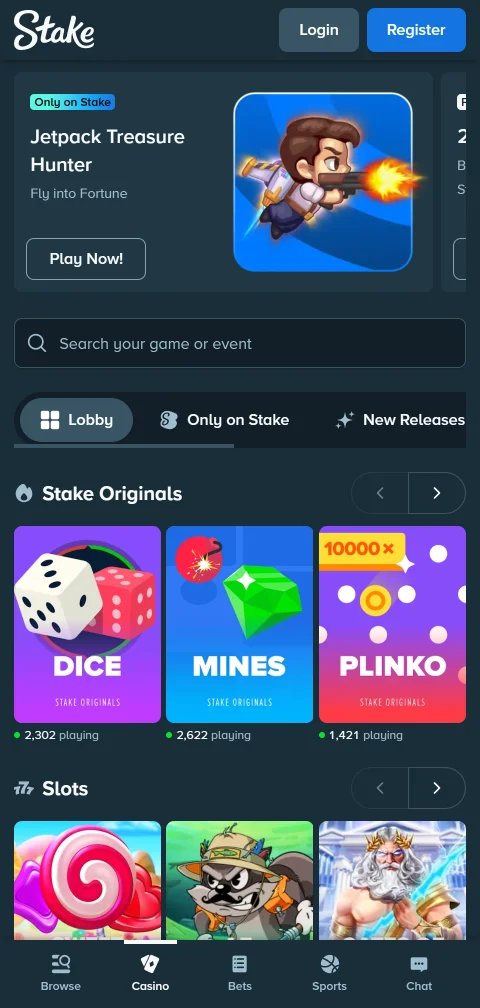
Stake has no app in the Irish App Store or Google Play. Its browser site carries the full lobby, with wallet deposits by QR code or copied address, and the Stake Casino mobile guide explains the wrong-network risk on small screens.
BC Game Casino review
| Key Feature | Crypto-first cashier with provably fair BC Originals |
| Welcome Bonus | 180% on the first of four monthly deposits |
| Min. Deposit | Approximately €10, varies by method |
| Number of Games | 10,000+ |
| Game Providers | 170+, incl. Pragmatic Play, Evolution, Hacksaw Gaming |
| Payment Methods | BTC, ETH, USDT, LTC, DOGE, XRP, third-party fiat on-ramps |
| Payment Services | Visa, Mastercard, Skrill, Neteller where offered regionally |
| Mobile App | Browser-based mobile site |
| VIP Programme | Tiered VIP club with rakeback |
| RTP | Typically 94-97% on third-party slots |
| Licence | Anjouan, ALSI-202410011-FI1 |
| Operator | Twocent Technology Limited (Belize) |
| Launch Date | 2017 |
| Legal Age | 18+ |
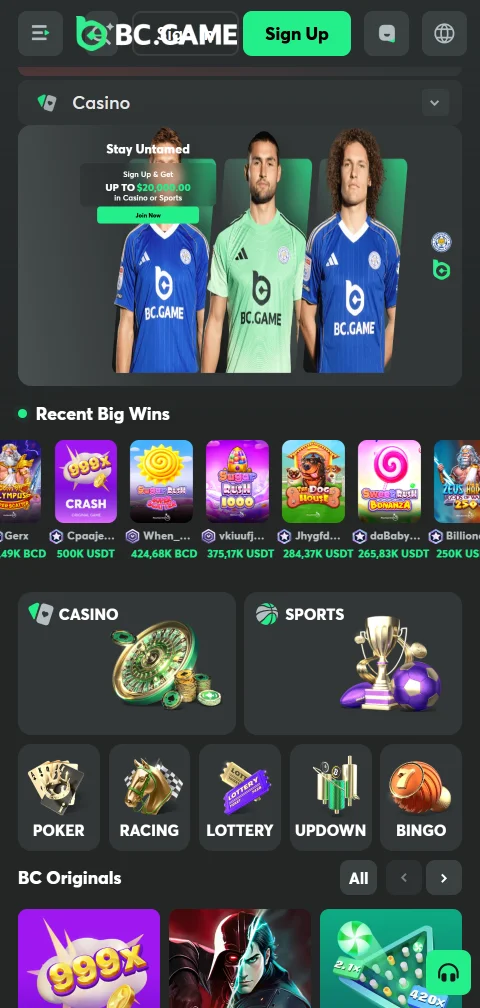
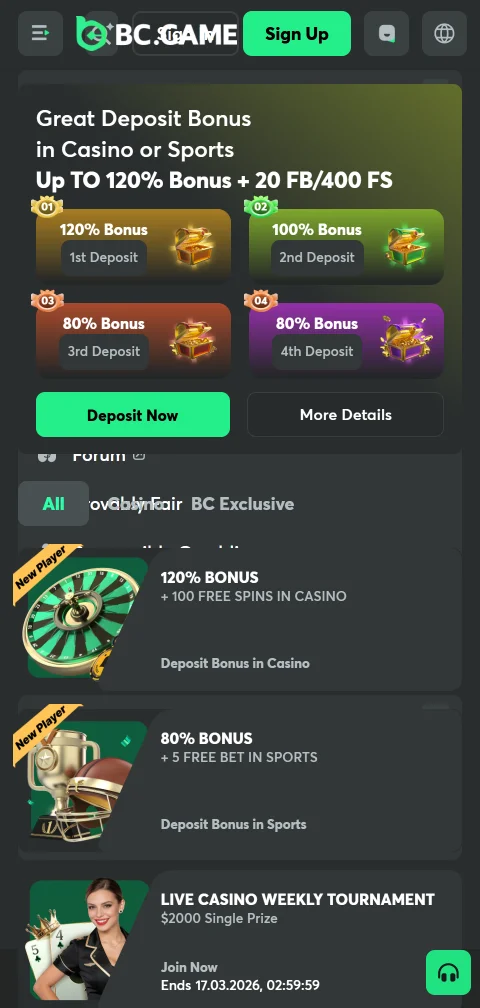
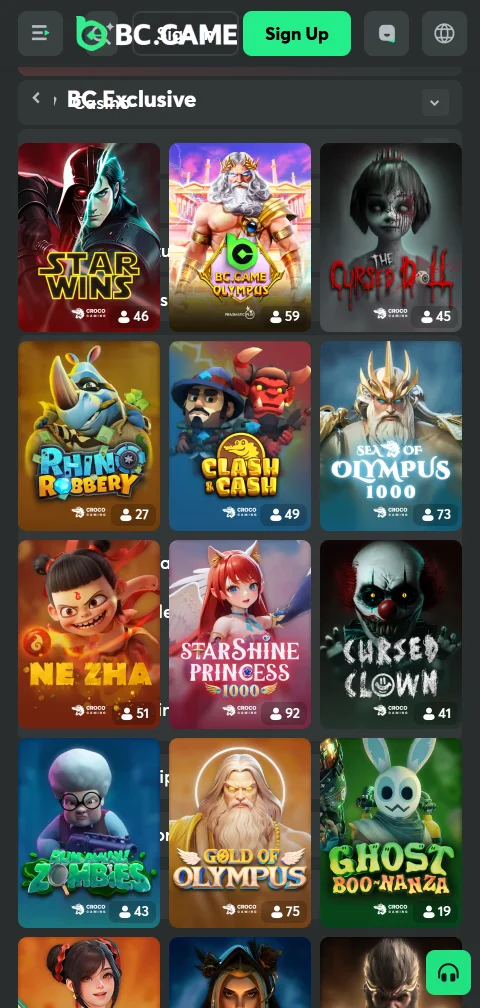
- Crypto payouts on USDT and ETH usually land within minutes once the request is approved
- Over 10,000 titles from more than 170 studios, including Evolution for live tables
- Operator, Belize company number and Anjouan licence number are all published on the licences page
- Live chat runs 24/7 in several languages, with email at [email protected] as backup
- Holds no Irish licence; offshore Anjouan oversight offers Irish players far less recourse
- Fiat options for Irish accounts depend on third-party on-ramps rather than a native euro cashier
- Bonus unlocks drip out through wagering, and the terms vary by region and over time
Browser-based on iOS and Android, with no native app confirmed in Irish stores and the same wallet as desktop. Our BC Game mobile guide covers the cashier on a small screen.
Cloudbet Casino review
| Key Feature | Crypto cashier with 30+ coins |
| Welcome Bonus | Up to approx. €2,150 cash over 30 days |
| Min. Deposit | Varies by coin; card purchase from about €7 |
| Number of Games | Over 3,000 |
| Game Providers | Evolution, Pragmatic Play, Play'n GO, Playtech, BGaming, Ezugi |
| Payment Methods | Bitcoin, Ethereum, USDT, USDC, Litecoin, Solana |
| Payment Services | Visa, Mastercard, Apple Pay, Google Pay, Skrill, Neteller via Swapped |
| Mobile App | Mobile browser site |
| VIP Programme | Cloudbet Rewards with rakeback |
| RTP | Typically 94-97% on slots, varies by title |
| Licence | Curaçao Gaming Authority, OGL/2024/328/0599 |
| Operator | Halcyon Super Holdings B.V. |
| Launch Date | 2013 |
| Legal Age | 18+ |
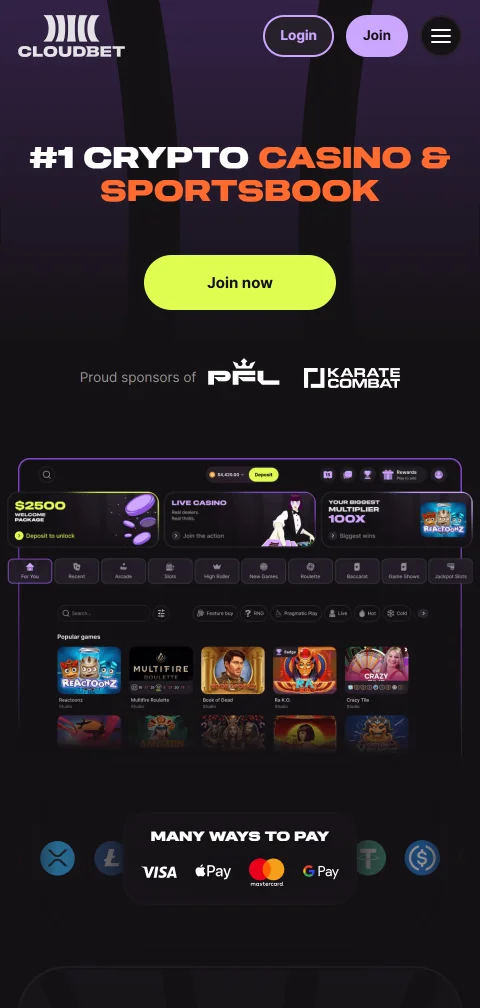
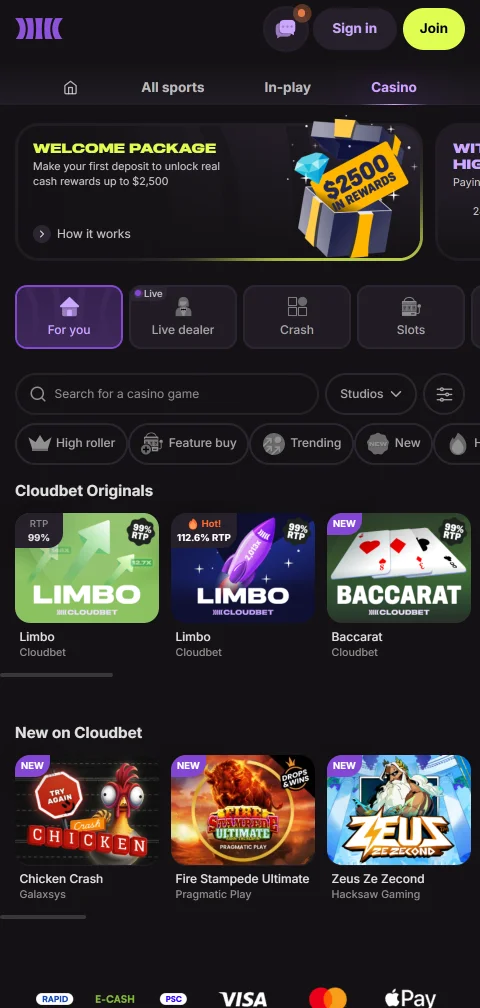

- Welcome Package pays real cash rather than bonus credit, with a 1x deposit playthrough
- Crypto withdrawals are mostly instant and the published ceiling is 24 hours
- Live casino tables from Evolution, Pragmatic Play, Ezugi and OneTouch
- No euro deposits directly: card, Skrill or Apple Pay payments buy crypto through Swapped, with fees
- Offshore Curaçao licence only, with no Irish licence and no local complaints route
No native app, but a full browser site with Connect Wallet for MetaMask and OneTouch live tables built for phones, as our Cloudbet Casino mobile guide explains.
Roobet casino review
| Key Feature | Crypto-first cashier with fast blockchain payouts |
| Welcome Bonus | 100% up to approximately €870 ($1,000) |
| Min. Deposit | Approximately €10 in crypto; card minimum around €15 |
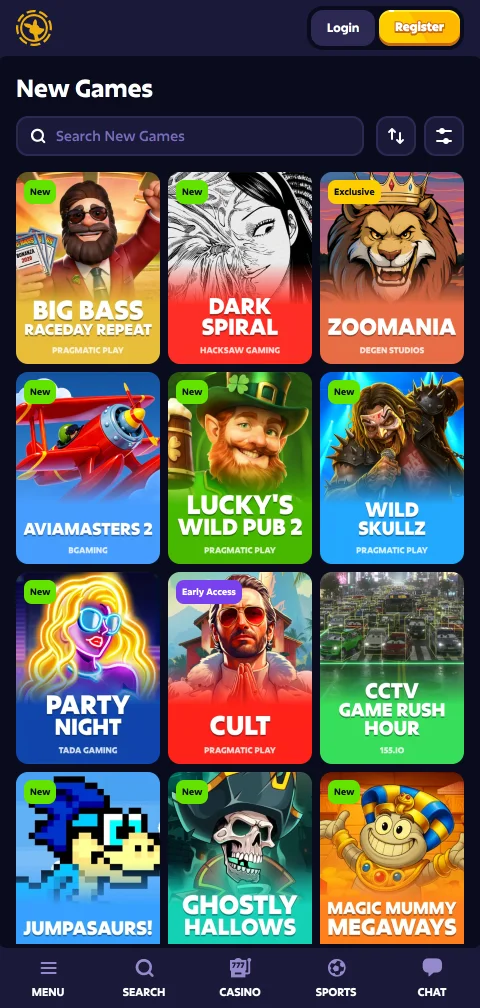
| Number of Games | Approximately 7,000+ |
| Game Providers | In-house Roobet originals plus third-party slot and live studios |
| Payment Methods | Bitcoin, Ethereum, USDT, USDC, Litecoin, XRP, Dogecoin, Tron |
| Payment Services | Crypto wallets, Changelly, cards where offered |
| Mobile App | Mobile browser site; no confirmed native app |
| VIP Programme | Yes, with rakeback and cashback tiers |
| RTP | Typically 94-97% on slots; originals vary by game |
| Licence | Curaçao Gaming Authority, OGL/2024/687/0427 |
| Operator | Raw Entertainment B.V. (Reg. 157205) |
| Launch Date | 2019 |
| Legal Age | 18+ |
- Crypto withdrawals in most coins typically clear within about 15 minutes of approval.
- Licence OGL/2024/687/0427 is listed as active on the Curaçao Gaming Authority certificate.
- Ireland does not appear on the operator's published list of restricted countries.
- Rakeback can be claimed frequently, which suits players who dislike locked bonus balances.
- No Irish licence: disputes go through Curaçao rather than an Irish or EU regulator.
- Welcome wagering of around 30x deposit plus bonus is heavy for a first deposit.
- Fiat options such as Irish debit cards or PayPal are limited or unconfirmed for Ireland.
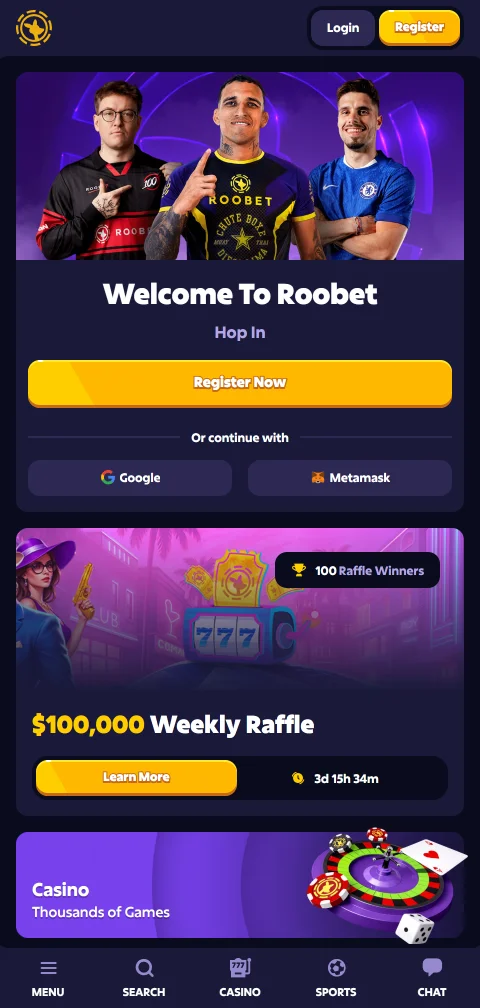
Roobet runs in mobile Safari and Chrome with no confirmed native app, and sign-in through Google, Telegram or MetaMask; our Roobet mobile guide covers the wallet steps where errors happen.
BitStarz casino review
| Key Feature | Crypto and euro cashier, payouts targeted within 1 hour |
| Welcome Bonus | 100% match plus 180 free spins, 40x wagering |
| Min. Deposit | €20 (around 0.0002 BTC in crypto) |
| Number of Games | Over 4,500 |
| Game Providers | Pragmatic Play, Play'n GO, Hacksaw Gaming, BGaming, ELK Studios, Yggdrasil |
| Payment Methods | Visa, Mastercard, Skrill, Neteller, bank transfer, crypto |
| Payment Services | Bitcoin, Lightning, Ethereum, Litecoin, Tether, Dogecoin |
| Mobile App | Browser-based mobile site, no native app |
| VIP Programme | Yes, invitation-based loyalty tiers |
| RTP | Approximately 96% across slots, varies by title |
| Licence | Curaçao Gaming Authority, OGL/2024/165/0185 |
| Operator | Gareton B.V., Curaçao (reg. 160656) |
| Launch Date | 2014 |
| Legal Age | 18+ |
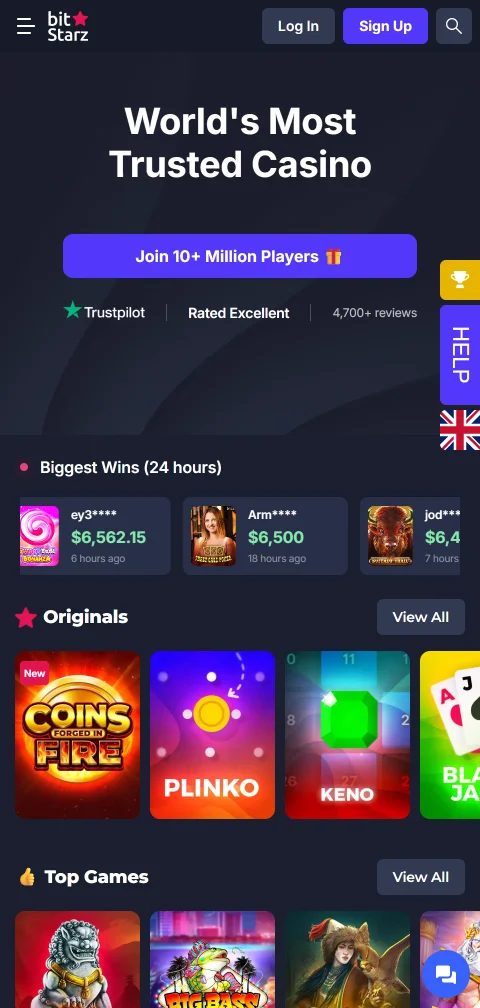
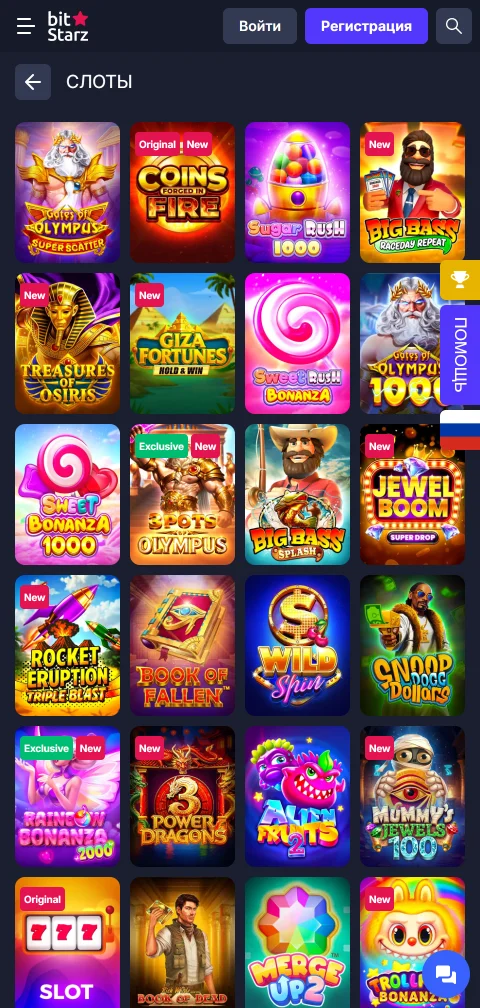
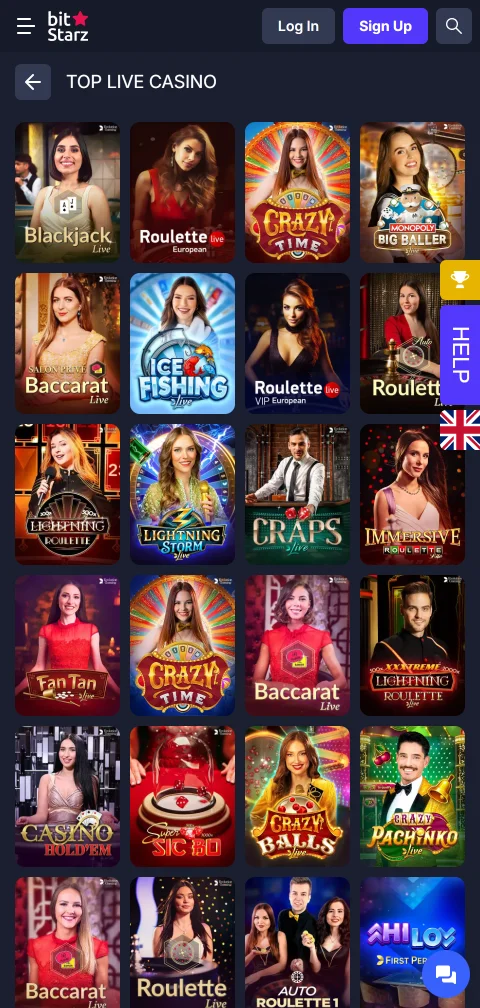
- Terms commit to paying withdrawals within one hour where possible, with no casino fee charged
- Euro accounts for Irish players alongside Bitcoin, Lightning and roughly ten other coins
- Library of over 4,500 titles from Pragmatic Play, Play'n GO, Hacksaw and ELK
- Curaçao licence only; no Irish regulation and no independent ADR body for disputes
- Bank transfers take 3 to 10 banking days, and 40x wagering applies to bonus funds
No native app, a browser site with the full cashier, and no Apple Pay or Google Pay: the BitStarz mobile player guide explains the trade-off.
How we ranked these crypto casinos
The ranking is built from what each casino publishes: cashier terms, bonus rules, licence records and support answers we asked for and quoted. Affiliate payments do not move a placing, and neither does the size of a headline bonus taken on its own.
Crypto bonuses and their wagering terms
A crypto bonus with wagering at 35x or below, a maximum bet stated in euro or its coin equivalent, and no separate rule excluding crypto deposits raises a placing. Wagering above 50x, a cap on winnings below ten times the bonus, or terms that apply only to fiat deposits lower it, however large the headline figure looks.
Networks, confirmations and on-chain fees
The heaviest of the six here. A cashier that names its confirmation count, supports a low-fee network such as TRC-20 or Lightning and passes on only the network fee raises a placing. A flat charge on top of that fee, or a minimum withdrawal above €50 equivalent, lowers one. An approval window under 24 hours for verified accounts helps; a manual review on every withdrawal hurts.
Game library, providers and provably fair titles
Licensed studios with published RTP figures raise a placing, as do provably fair games whose seeds can be checked independently. A lobby padded with unnamed in-house slots and no RTP information lowers one, as does blocking crypto balances from live casino tables.
Mobile cashier, QR codes and wallet hand-off
On a phone, the crypto cashier has to show a QR code, a copyable address and the network name on one screen. A mobile site that hides the network choice, or drops the memo field for coins that need one, lowers a placing.
Licence on record and who holds your coins
Most casinos taking crypto from Irish players hold a licence issued abroad, so we check the number on the issuing regulator’s own register rather than trusting the footer badge. A licence that verifies, a named operating company and published dispute terms raise a placing. A badge linking nowhere, an untraceable operator, or terms letting the casino void winnings at its discretion lower one sharply.
Customer support on stuck transactions
Live chat open around the clock that can read a transaction hash and say where a withdrawal sits raises a placing. Support that only answers by email, or replies with general text when given a specific transaction ID, lowers it, because a stuck crypto payout is a precise problem that needs a precise answer.


BC Game Casino
Monthly deposit bonus
Roobet casino
First deposit bonus
MyStake casino
First Deposit BonusWhere the money actually goes on a crypto cash-out
A crypto withdrawal has more stages than a card payout, and each one can take a slice of your balance. You pay the network fee to move the coins, and some casinos add a flat charge of their own. Then comes the spread or commission when your exchange turns the coins back into euro, and a SEPA transfer to your Irish bank account.
None of those costs shows up in the bonus banner.
The casino’s approval stage is where most withdrawals stall, not the blockchain. Once a casino releases the coins, a TRC-20 USDT transfer usually lands within a few minutes and Bitcoin settles in roughly ten minutes per confirmation. Before release, though, the request sits in a pending queue that the casino controls, and that window runs from minutes on an account already verified to several days on a first withdrawal that triggers KYC. A casino advertising “instant crypto payouts” is describing the chain, not the queue in front of it.
Price movement is the cost nobody prints. If you deposit €200 in Bitcoin and the price drops 8% while you play, your balance in euro has fallen even if every spin broke even. Stablecoins such as USDT and USDC remove most of that risk, which is why many Irish players keep the bankroll in a stablecoin and treat Bitcoin as the transfer rail only.
Crypto wallet or debit card: how they differ in practice
For most Irish players the real choice is between a crypto wallet and a Visa or Mastercard debit card, often issued by Revolut or a high-street bank. Credit cards are already off the table at casinos licensed under the Gambling Regulation Act 2024, which bans gambling payments by credit card, including e-wallets loaded from one.
The two methods win on different points, and the comparison below sets them side by side using what casino cashier pages and exchange fee schedules publish.
Crypto wallet | Debit card or Revolut |
|---|---|
| Minutes to settle once the casino approves | One to five working days after approval |
| Network fee plus possible casino charge | Usually no fee from the casino |
| Value moves with the coin price unless held in a stablecoin | Balance stays in euro throughout |
| KYC still applies at most casinos before the first payout | KYC applies before the first payout |
| A wrong address or network cannot be reversed | Bank disputes and chargebacks exist |
Confirmations and why your deposit is still pending
A deposit shows as pending until the blockchain has added enough blocks after your transaction for the casino to treat it as final. Each casino sets its own count, and the cashier page or the deposit screen normally states it.
The count matters far more on Bitcoin than anywhere else. Bitcoin produces a block roughly every ten minutes, so a casino asking for three confirmations is asking you to wait around half an hour, and longer when the network is busy and your fee was set low. Ethereum blocks arrive about every twelve seconds, so even a casino that asks for a dozen confirmations credits within a few minutes. Tron and Litecoin sit between the two in practice, with Tron near the fast end.
What I check first on any cashier is whether the confirmation count is written down at all.
A casino that will not tell you how many confirmations it needs will also struggle to tell you why your deposit has not arrived. Low fees chosen in your own wallet are the other common cause: on Bitcoin, a transaction paying below the going rate can sit unconfirmed for hours, and the casino cannot speed that up from its side.
KYC, source of funds and the first withdrawal
Paying in crypto does not make you anonymous at a licensed casino. Most operators accept a deposit with only an email address, then ask for photo ID and a proof of address once you request the first withdrawal. That is the single most common reason a crypto payout sits pending for days rather than minutes.
Larger sums bring a second check. A source-of-funds request asks where the money came from, and for crypto that often means a screenshot or statement from the exchange where you bought the coins. Players who bought Bitcoin years ago on a now-closed exchange sometimes find this the hardest document to produce.
Do the verification before you deposit.
On the exchange side, Irish players using Coinbase, Kraken or Revolut’s crypto service may be asked to confirm who owns the address they are sending to or receiving from. EU rules on crypto transfers require exchanges to collect that information, so a pop-up asking whether the casino address is “your own wallet” or “another person or business” is routine rather than a warning. Answer it accurately; a mismatch between what you tell the exchange and what the casino reports is a quick route to a frozen account on both sides.
Network fees and speeds by coin
The table compares the networks Irish crypto casinos accept most often. Figures are typical ranges drawn from public network data and casino cashier pages; fees on Bitcoin and Ethereum move with congestion, so treat them as a range rather than a quote.
| Network | Usual confirmations | Network fee range | Time after approval | Main catch |
|---|---|---|---|---|
| Bitcoin (BTC) | 1 to 3 | Under €1 to several euro | 10 to 60 minutes | Low fees can stall for hours |
| Bitcoin Lightning | None on-chain | A few cents | Seconds | Few casinos support it |
| Ethereum (ERC-20) | 12 to 35 | Under €1 to over €10 | 1 to 10 minutes | Fees jump when busy |
| USDT on Tron (TRC-20) | About 20 | Around €1 to a few euro | 1 to 5 minutes | Sending on wrong network loses funds |
| Litecoin (LTC) | 3 to 6 | A few cents | 10 to 20 minutes | Smaller exchange choice in Ireland |
Taking crypto winnings back into euro
Getting the coins out of the casino is half the job. The other half is turning them into euro in your Irish bank account without losing a chunk to spreads or a tax bill you did not plan for.
Gambling winnings themselves are not taxed in Ireland, but the coins are a separate matter. Revenue treats a disposal of crypto as a chargeable event for Capital Gains Tax at 33%, with an annual personal exemption of €1,270. If you bought Bitcoin cheaply, played with it and later sold the winnings for euro, the gain on the coin can fall into that charge even though the casino win itself does not. Keep the exchange records; they are the evidence for both Revenue and a casino’s source-of-funds check.
Stablecoins narrow the gap considerably.
Five steps to a crypto withdrawal that does not stall
The order matters more than the speed of any single step. Most stalled crypto payouts trace back to a step done out of sequence, usually verification left until the money was already waiting.
- Step 1
Verify your casino account before depositing
Upload photo ID and proof of address as soon as you register. The first withdrawal is where most crypto payouts stall, and an account already verified moves straight to the approval queue. - Step 2
Match the coin and the network
Check that the casino's withdrawal network matches the deposit network on your exchange. USDT on TRC-20 and USDT on ERC-20 are different addresses, and coins sent across them are usually lost. - Step 3
Read the casino's fee and minimum
Find the withdrawal minimum and any flat charge in the cashier terms. A €10 charge on a €40 withdrawal takes a quarter of it, so batching smaller wins into one request costs less. - Step 4
Copy the address and send a test
Paste the address rather than typing it, then compare the first and last characters. On a first withdrawal to a new wallet, a small test amount confirms the route before the full balance moves. - Step 5
Convert and transfer to your bank
Sell on your exchange and send the euro to your Irish IBAN by SEPA. Keep the trade confirmation, since Revenue and any later source-of-funds check can both ask for it.
Licensing and where Irish players stand
The Gambling Regulatory Authority of Ireland now licenses online betting, and gaming licences for online casinos are the next stage of its rollout. Until those gaming licences are issued and in force, most casinos accepting crypto from Irish players operate under a licence granted in another jurisdiction, commonly Curaçao, Anjouan or Malta.
That matters for one practical reason: where you complain if a withdrawal is refused. A Malta Gaming Authority licensee answers to a regulator with a published complaints route; some offshore licences offer far less. We check every licence number against the issuing regulator’s register, and a casino whose number does not appear there does not make the list.
Crypto adds its own wrinkle. Some regulators restrict or forbid their licensees from taking crypto at all, so a casino that holds an EU licence and also takes Bitcoin may be running the crypto side through a sister brand on a different licence. The cashier terms name the company that holds your funds, and that is the name to check.
Read the footer, then read the register.
Provably fair games and what they prove
Many crypto casinos carry a set of provably fair games, usually dice, crash and plinko titles, where each result comes from a server seed and a client seed combined by a published algorithm. After the round, you can check the hash yourself and confirm the casino did not change the outcome after your bet.
That is a real guarantee, and a narrow one. It proves the round was not altered; it says nothing about the house edge, which the game rules set, or about whether the casino will pay out. A provably fair crash game with a 3% edge still takes 3% over time.
Slots from studios such as Pragmatic Play, Play’n GO or Hacksaw Gaming work differently, relying on testing labs to certify the random number generator and the RTP. A crypto casino that runs both kinds of game needs to show the RTP on the slot info screen and the verification tool on the in-house games, and where either is missing we mark it down.
Keeping crypto play under control
Crypto makes gambling feel less like spending money. A balance shown in BTC or mBTC hides the euro amount, and deposits that clear in minutes remove the pause a bank transfer used to give you. Set a deposit limit in euro in the casino account, and check what it means in coins before each session.
Keep your gambling wallet separate from any long-term crypto holdings, so a losing night cannot reach savings you bought as an investment. Chasing a price drop by playing to win it back is the same as chasing losses. If gambling stops being something you choose, use the casino’s time-out or self-exclusion tools and contact one of the support services listed below.
What to check before your first crypto deposit
The ranking above would change fastest on one condition: the Gambling Regulatory Authority of Ireland issuing gaming licences, at which point offshore licensing stops being the norm and every crypto casino here faces a new test. Until then, the order of work is verification first, network match second, deposit third. The cashier terms, licence numbers and fee schedules behind every placing were last checked on 14 August 2026. What this page leaves out on purpose is trading advice: which coin to hold is a separate question.
Questions about crypto casinos in Ireland
Are crypto casinos legal for players in Ireland?
Playing at an online casino is not an offence for an Irish player, and crypto as a payment is legal. The question is the operator’s licence: until gaming licences from the Gambling Regulatory Authority of Ireland are in force, crypto casinos serving Ireland rely on licences issued abroad, so check that licence on the regulator’s own register.
How long does a crypto withdrawal take?
Once the casino approves it, a USDT transfer on Tron arrives within a few minutes and Bitcoin within ten to sixty minutes, depending on confirmations and network load. Approval itself ranges from minutes on a verified account to several days on a first withdrawal that triggers ID checks.
Do I need KYC at a crypto casino?
At most licensed crypto casinos, yes, at the point of the first withdrawal rather than at sign-up. Expect photo ID and a proof of address, and for larger sums a source-of-funds request, which for crypto usually means statements from the exchange where you bought the coins.
Which coin is cheapest for deposits and withdrawals?
Bitcoin Lightning and Litecoin carry network fees of a few cents, and USDT on Tron is usually around a euro or a few. Bitcoin and Ethereum on-chain fees vary with congestion. Check the casino’s own flat withdrawal charge too, since it can outweigh the network fee entirely.
Are crypto casino winnings taxed in Ireland?
Gambling winnings are not taxed in Ireland. The crypto is separate: Revenue treats selling or swapping coins as a disposal for Capital Gains Tax at 33%, after an annual exemption of €1,270. A rise in the coin’s value between buying and selling can be taxable even when the casino win is not.
What happens if I send crypto on the wrong network?
In most cases the coins are lost, because blockchain transfers cannot be reversed. Some casinos can recover funds sent to a compatible address on the wrong chain, but they are not obliged to and often charge for it. Always match the network on the deposit screen to the one your wallet uses.
Can I claim a bonus with a crypto deposit?
Usually, but read the terms. Some casinos run separate crypto bonuses with their own wagering, while others exclude crypto deposits from the standard welcome offer. Check the wagering multiple, the maximum bet while wagering and whether winnings are capped before you deposit.
More about online casinos





When comparing these casinos, look first at the minimum withdrawal and any flat crypto charge. Those two lines decide more of your real return than the bonus figure on the card.