






















Stake Casino review
| Key Feature | 31 in-house Stake Originals |
| Welcome Bonus | 200% up to approx. €1,700, 40x wagering (code-based) |
| Min. Deposit | Typically around €10 in crypto equivalent |
| Number of Games | More than 2,000 |
| Game Providers | Stake Originals, Pragmatic Play, Evolution, Hacksaw Gaming |
| Payment Methods | Bitcoin, Ethereum, Litecoin, USDT, Dogecoin |
| Payment Services | MoonPay, crypto wallets |
| Mobile App | Mobile browser site, no Irish app |
| VIP Programme | Yes, tiered VIP with rakeback |
| RTP | Approximately 96-99% depending on game |
| Licence | Curaçao Gaming Authority OGL/2024/1451/0918 |
| Operator | Medium Rare N.V. |
| Launch Date | 2017 |
| Legal Age | 18+ |
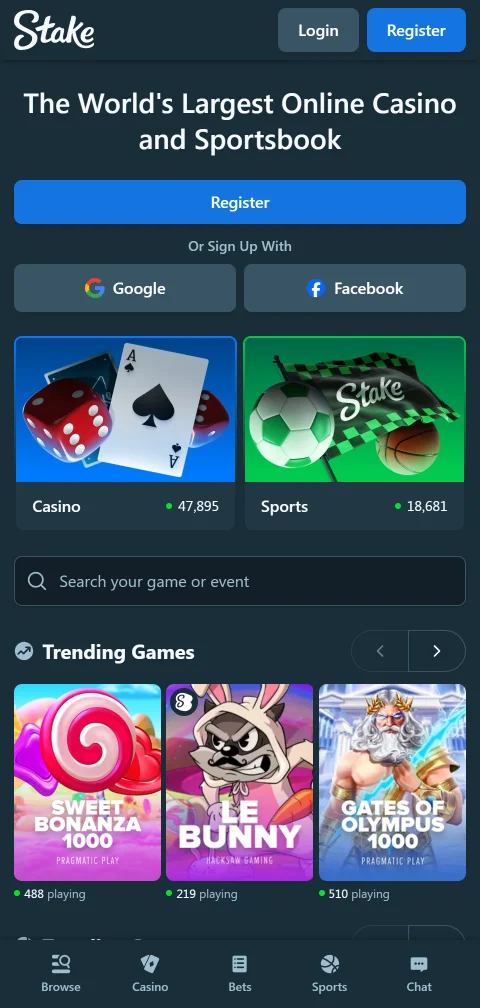
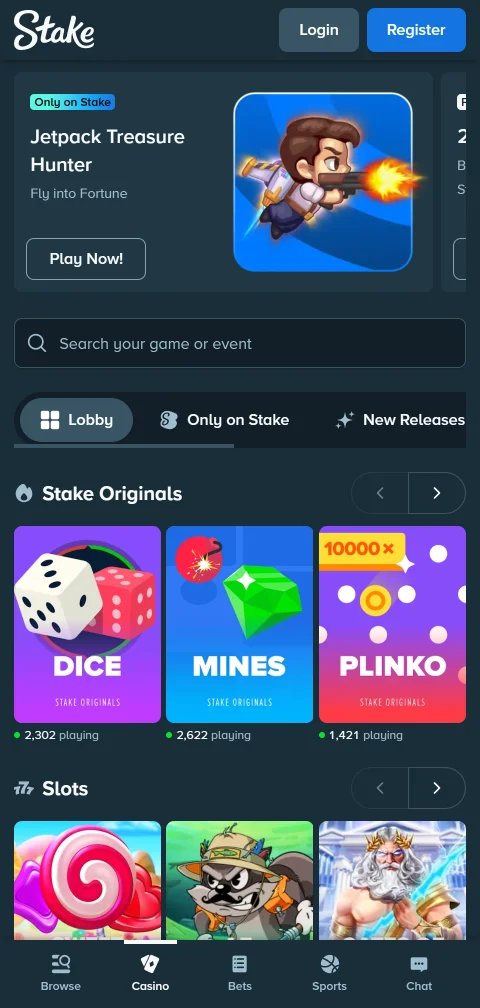
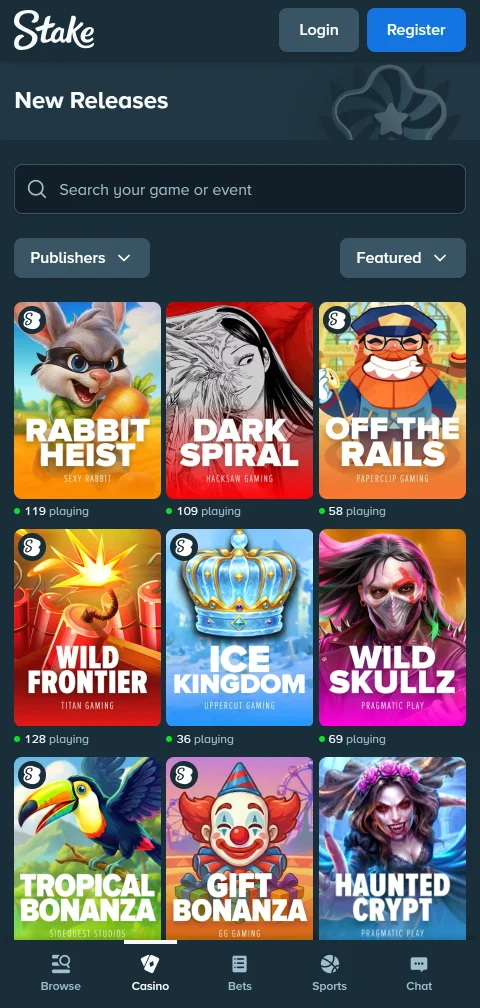
- Crypto withdrawals are often processed in under an hour once KYC is cleared
- A lobby of more than 2,000 games, including 31 in-house Originals
- Licence number OGL/2024/1451/0918 and operator Medium Rare N.V. are published openly
- Stake geo-blocked Irish users in September 2026 after engagement with the GRAI
- No GRAI licence, and the coded bonus carries 40x wagering on deposit plus bonus
For a player in Ireland, Stake offered crypto payouts and 31 Originals but no debit card or Revolut withdrawals and no Irish licence, then geo-blocked Ireland in September 2026. Read the Stake Casino Ireland assessment before considering any account.
BitStarz casino review
| Key Feature | Crypto and euro cashier, payouts targeted within 1 hour |
| Welcome Bonus | 100% match plus 180 free spins, 40x wagering |
| Min. Deposit | €20 (around 0.0002 BTC in crypto) |
| Number of Games | Over 4,500 |
| Game Providers | Pragmatic Play, Play'n GO, Hacksaw Gaming, BGaming, ELK Studios, Yggdrasil |
| Payment Methods | Visa, Mastercard, Skrill, Neteller, bank transfer, crypto |
| Payment Services | Bitcoin, Lightning, Ethereum, Litecoin, Tether, Dogecoin |
| Mobile App | Browser-based mobile site, no native app |
| VIP Programme | Yes, invitation-based loyalty tiers |
| RTP | Approximately 96% across slots, varies by title |
| Licence | Curaçao Gaming Authority, OGL/2024/165/0185 |
| Operator | Gareton B.V., Curaçao (reg. 160656) |
| Launch Date | 2014 |
| Legal Age | 18+ |
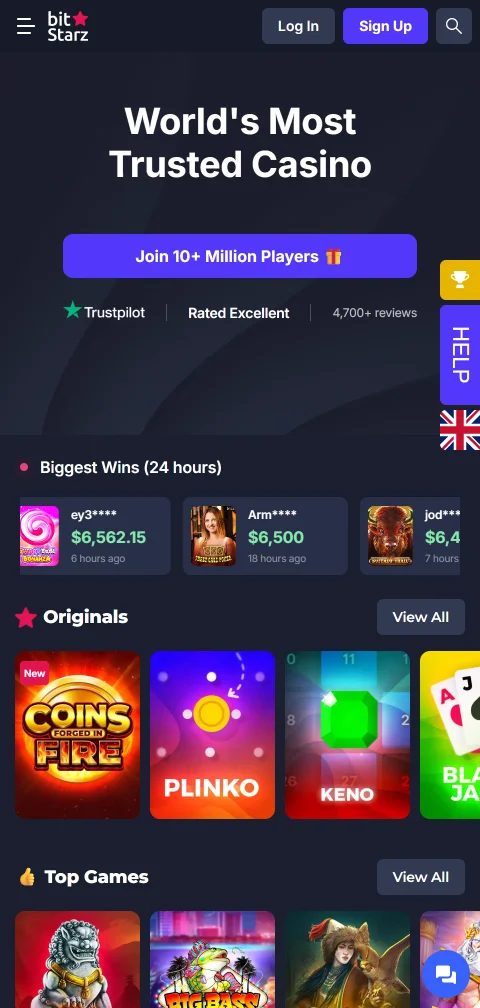
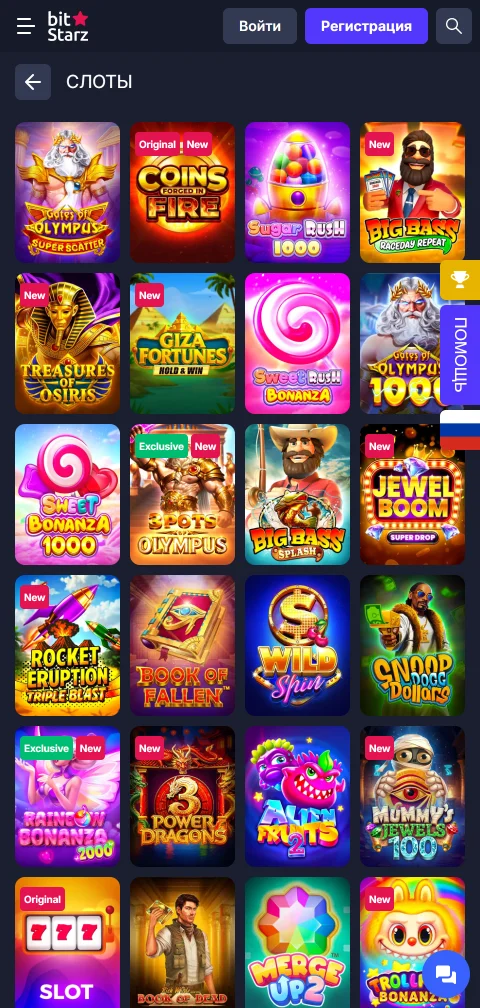
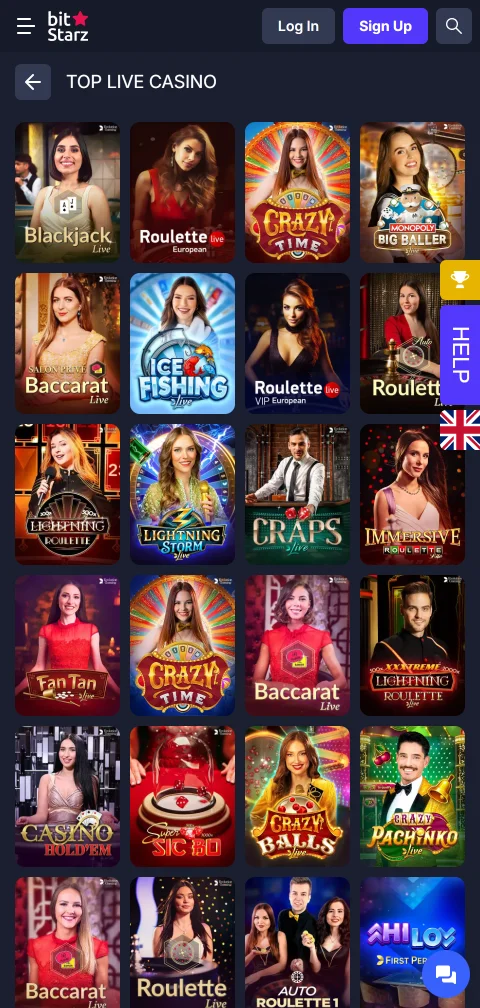
- Terms commit to paying withdrawals within one hour where possible, with no casino fee charged
- Euro accounts for Irish players alongside Bitcoin, Lightning and roughly ten other coins
- Library of over 4,500 titles from Pragmatic Play, Play'n GO, Hacksaw and ELK
- Curaçao licence only; no Irish regulation and no independent ADR body for disputes
- Bank transfers take 3 to 10 banking days, and 40x wagering applies to bonus funds
Euro accounts by Visa, Mastercard, Skrill or Neteller, crypto including Lightning, and a Curaçao-only licence define what this operator offers Irish players, as the BitStarz Ireland full analysis details, along with bank transfers that take three to ten banking days.
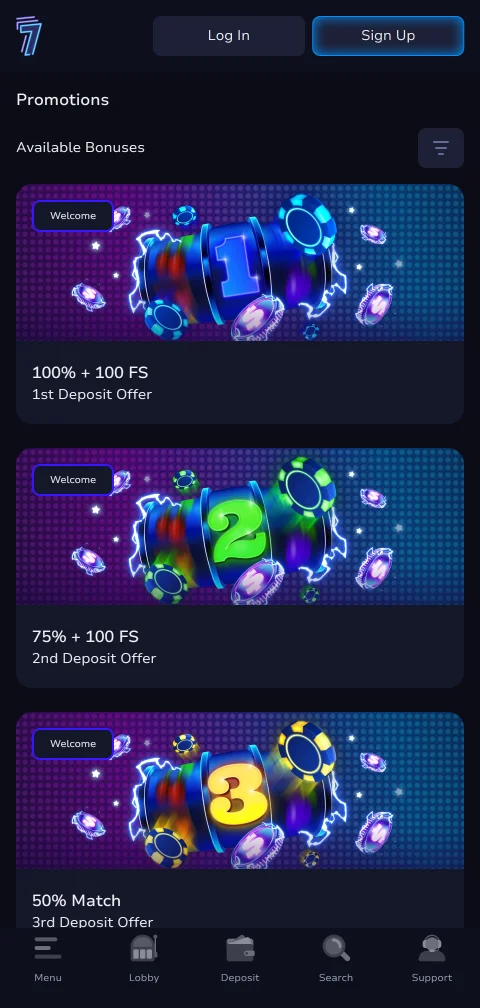
7Bit Casino review
| Key Feature | Crypto and euro cashier side by side |
| Welcome Bonus | 100% up to €400 + 100 free spins |
| Min. Deposit | €20 for bonus stages; method minimums vary |
| Number of Games | Over 7,000 (some listings quote 10,000+) |
| Game Providers | BGaming, Pragmatic Play, Evolution, NetEnt, Play'n GO, Nolimit City |
| Payment Methods | Visa, Mastercard, Skrill, Neteller, bank transfer, Bitcoin, Ethereum, Litecoin, USDT |
| Payment Services | Card, e-wallet, bank wire, 17+ cryptocurrencies |
| Mobile App | Browser-based mobile site, no confirmed native app |
| VIP Programme | 12-level ladder, cashback up to 20% at the top |
| RTP | Approximately 96-97% average across slots |
| Licence | Curaçao Gaming Authority (number varies by source; check footer) |
| Operator | Curaçao-registered operator; entity named in current terms |
| Launch Date | 2014 |
| Legal Age | 18+ |
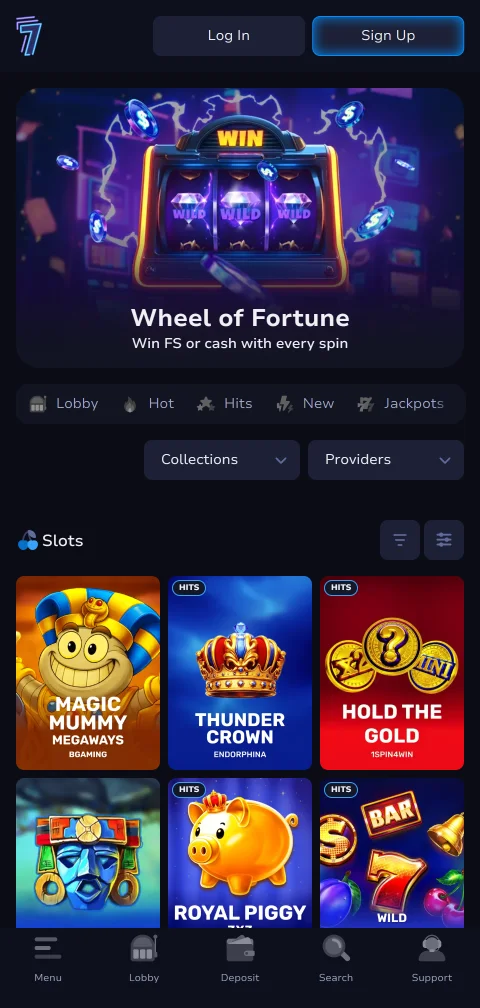
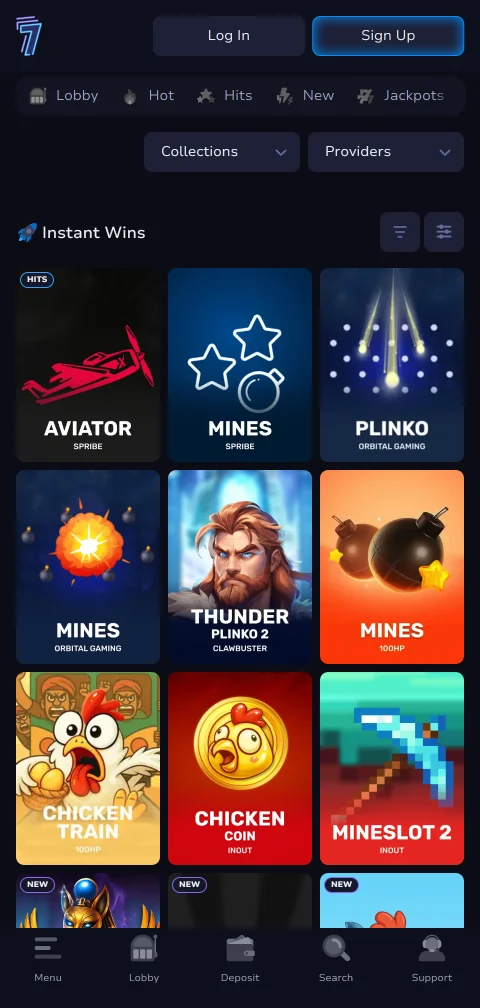
- Crypto withdrawals in 17+ coins, paid within minutes once the approval stage clears
- Library of over 7,000 titles, with Evolution, Pragmatic Play Live and Ezugi in the live section
- Twelve-level VIP ladder where an earned level does not drop back down
- No Irish licence: Curaçao oversight only, and the operating entity named differs between markets
- Card withdrawals take one to three days and bank wires up to five, far slower than crypto
For Irish players, 7Bit pairs a Curaçao licence with a cashier in 17+ coins and euro rails via Visa and Skrill, weighed in our 7Bit Casino Ireland review.
BC Game Casino review
| Key Feature | Crypto-first cashier with provably fair BC Originals |
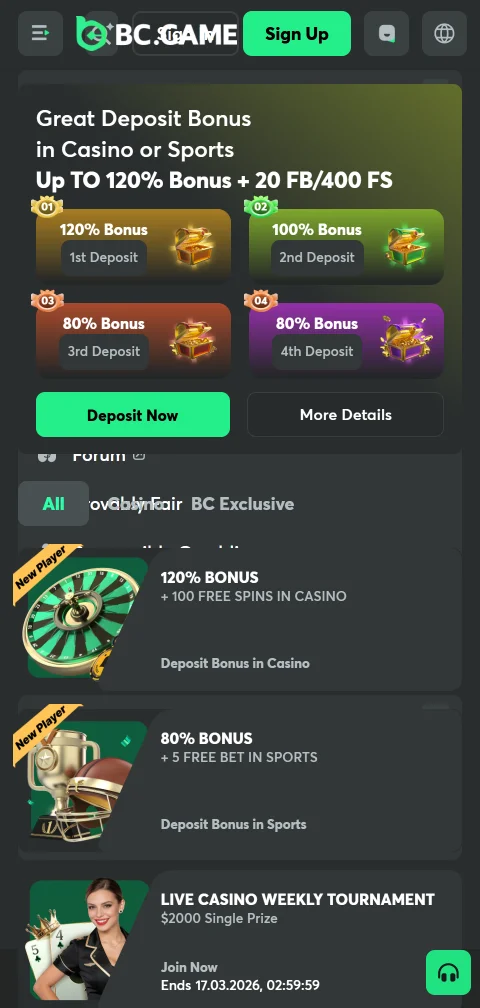
| Welcome Bonus | 180% on the first of four monthly deposits |
| Min. Deposit | Approximately €10, varies by method |
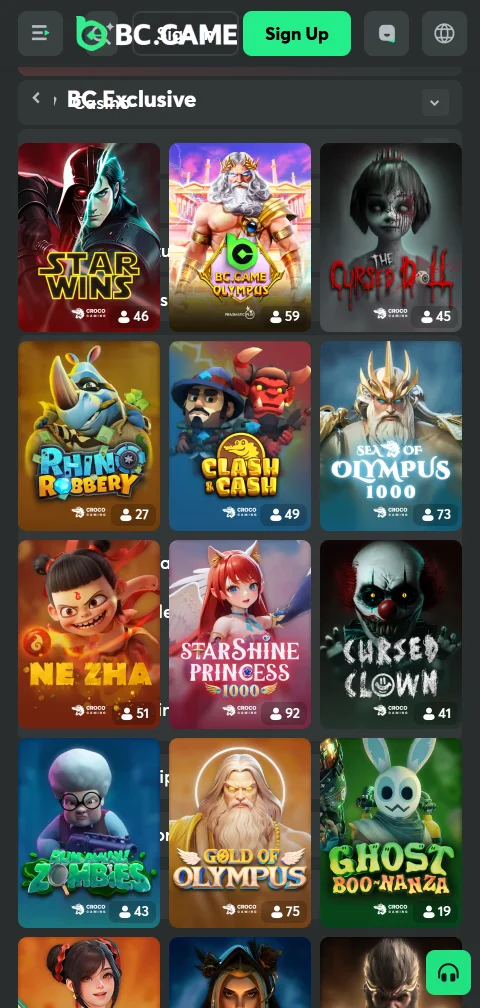
| Number of Games | 10,000+ |
| Game Providers | 170+, incl. Pragmatic Play, Evolution, Hacksaw Gaming |
| Payment Methods | BTC, ETH, USDT, LTC, DOGE, XRP, third-party fiat on-ramps |
| Payment Services | Visa, Mastercard, Skrill, Neteller where offered regionally |
| Mobile App | Browser-based mobile site |
| VIP Programme | Tiered VIP club with rakeback |
| RTP | Typically 94-97% on third-party slots |
| Licence | Anjouan, ALSI-202410011-FI1 |
| Operator | Twocent Technology Limited (Belize) |
| Launch Date | 2017 |
| Legal Age | 18+ |
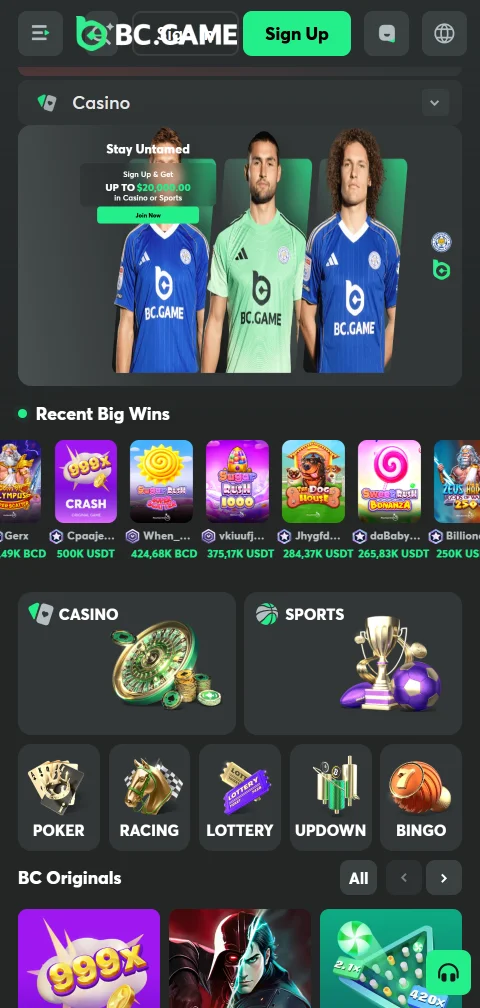
- Crypto payouts on USDT and ETH usually land within minutes once the request is approved
- Over 10,000 titles from more than 170 studios, including Evolution for live tables
- Operator, Belize company number and Anjouan licence number are all published on the licences page
- Live chat runs 24/7 in several languages, with email at [email protected] as backup
- Holds no Irish licence; offshore Anjouan oversight offers Irish players far less recourse
- Fiat options for Irish accounts depend on third-party on-ramps rather than a native euro cashier
- Bonus unlocks drip out through wagering, and the terms vary by region and over time
For players in Ireland, an offshore Anjouan licence weighed against crypto payouts in minutes and 10,000-plus titles: BC Game Irish review.
Cloudbet Casino review
| Key Feature | Crypto cashier with 30+ coins |
| Welcome Bonus | Up to approx. €2,150 cash over 30 days |
| Min. Deposit | Varies by coin; card purchase from about €7 |
| Number of Games | Over 3,000 |
| Game Providers | Evolution, Pragmatic Play, Play'n GO, Playtech, BGaming, Ezugi |
| Payment Methods | Bitcoin, Ethereum, USDT, USDC, Litecoin, Solana |
| Payment Services | Visa, Mastercard, Apple Pay, Google Pay, Skrill, Neteller via Swapped |
| Mobile App | Mobile browser site |
| VIP Programme | Cloudbet Rewards with rakeback |
| RTP | Typically 94-97% on slots, varies by title |
| Licence | Curaçao Gaming Authority, OGL/2024/328/0599 |
| Operator | Halcyon Super Holdings B.V. |
| Launch Date | 2013 |
| Legal Age | 18+ |
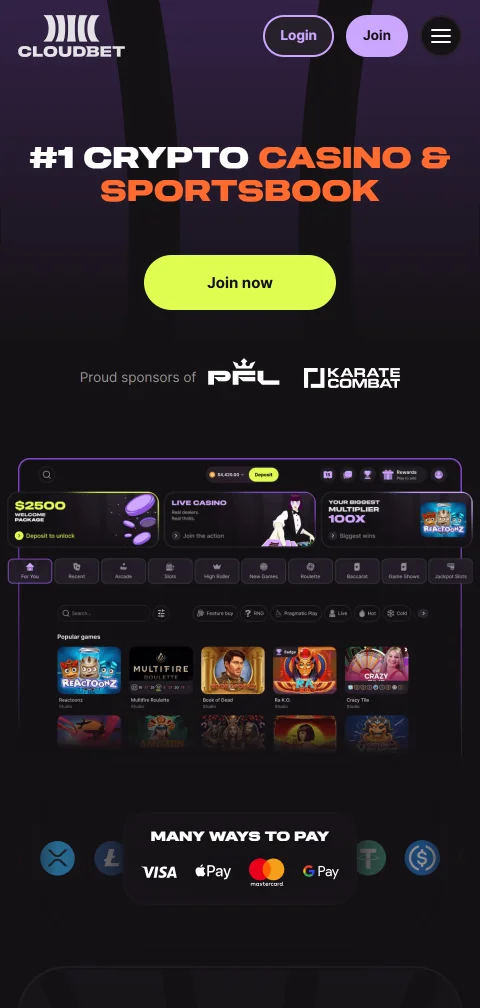
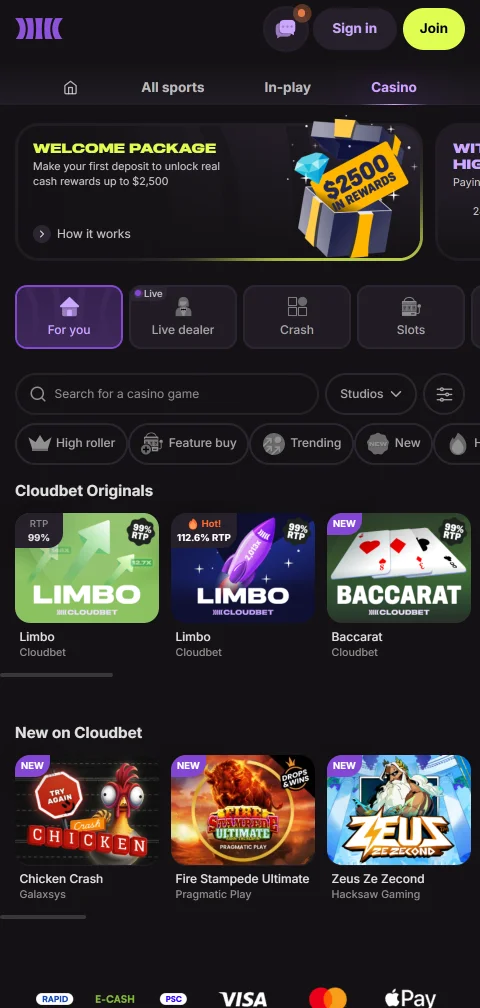

- Welcome Package pays real cash rather than bonus credit, with a 1x deposit playthrough
- Crypto withdrawals are mostly instant and the published ceiling is 24 hours
- Live casino tables from Evolution, Pragmatic Play, Ezugi and OneTouch
- No euro deposits directly: card, Skrill or Apple Pay payments buy crypto through Swapped, with fees
- Offshore Curaçao licence only, with no Irish licence and no local complaints route
Irish residents can register, yet no Irish licence covers the account; crypto holders gain fee-free deposits, card users pay Swapped fees, as our Cloudbet Casino editorial assessment details.
How we ranked these Litecoin casinos
The ranking is built from each casino’s published cashier terms, its bonus rules, its licence on record and the answers support gave to our payment questions. Affiliate commission does not move a placing, and neither does the size of a headline bonus on its own.
Litecoin offers and their wagering
A bonus open to Litecoin deposits, with wagering at 35x or below and a maximum bet stated in euro, raises a placing. Offers that exclude crypto in the small print, or hold the bonus as coin with no euro value, lower one.
Network confirmations, fees and payout windows
This criterion carries the most weight here. A casino that credits deposits after a stated number of confirmations, passes on only the network fee and publishes a withdrawal window under 24 hours for verified accounts raises its placing. A flat fee on top of the network cost, a pending period beyond 48 hours, or a manual review on every crypto withdrawal rather than only the first lowers it.
Games available on a Litecoin balance
We look at whether the full lobby is open to a Litecoin balance or only a crypto-branded corner of it. A casino whose slots and live tables from licensed studios accept the same balance, with RTP shown in the game info, raises a placing; a shortened catalogue for crypto players lowers it.
Mobile cashier and wallet handling
Most Litecoin payments start in a phone wallet, so the mobile cashier matters here. A deposit screen that shows the address as a QR code with a copy button, states the network clearly and keeps the amount in euro alongside LTC raises a placing. A mobile site that hides the crypto cashier behind the desktop layout, or truncates the address, lowers it.
Licence on record and KYC rules
A licence we can find on the regulator’s public register, terms that say when ID and source-of-funds checks happen and a clear list of restricted countries raise a placing. A licence number that leads nowhere, or terms allowing verification to be demanded only after a large win, lower it sharply. That clause most often turns a fast coin into a frozen balance.
Support that knows the cashier
We put cashier questions to support and quote the answers where they matter. Live chat that can explain confirmation counts and say which wallet networks are accepted raises a placing; replies that only paste the general FAQ or push every payment question to email lower one.


BC Game Casino
Monthly deposit bonus
Roobet casino
First deposit bonus
MyStake casino
First Deposit BonusHow a Litecoin payment reaches the casino
When you send Litecoin to a casino, the transaction goes from your wallet to a deposit address the casino generated for your account. The network bundles it into a block, and each later block adds another confirmation on top. Litecoin aims for one block roughly every 2.5 minutes, a quarter of Bitcoin’s ten-minute target.
The casino decides how many confirmations it waits for before crediting you.
Some cashiers credit after one or two, others wait for six or more, and the terms do not always say which. Six confirmations at the target rate is around fifteen minutes, though block times vary and a busy period stretches that. If the deposit page does not state a number, support usually can, and it is worth asking before your first deposit rather than after.
Withdrawals run the other way, and the network part is the short part. The casino has to approve the request, sometimes send it to a manual queue, then broadcast it from its own hot wallet. Everything before the broadcast is the casino’s process, and it is where your money actually waits.
Addresses and networks
A Litecoin address usually starts with L, M or ltc1. Sending LTC to an address meant for another coin, or choosing the wrong network on an exchange’s withdrawal screen, can lose the funds outright, and casinos rarely recover them. Copy the address, check the first and last few characters, and send a small amount first if the casino is new to you.
Litecoin against the usual Irish payment methods
The table sets Litecoin beside the methods Irish players use most often at licensed and offshore casinos. The ranges come from published cashier terms and network specifications, and each one depends on whether your account is already verified.
| Method | Deposit credited | Withdrawal window | Usual fees | Where it stalls |
|---|---|---|---|---|
| Litecoin | Minutes, after set confirmations | Under an hour to 3 days | Network fee, sometimes a casino fee | Pending period and first KYC |
| Bitcoin | 10 minutes to an hour | A few hours to 3 days | Network fee, higher when busy | Confirmations and first KYC |
| Debit card | Instant | 1 to 5 working days | Usually none from the casino | Bank processing after approval |
| Revolut | Instant | Same day to 3 days | Usually none | Casino approval queue |
| Bank transfer | Same day to 2 days | 1 to 5 working days | Possible bank charges | Source-of-funds checks |
The step where a Litecoin withdrawal stalls
Most delays on a Litecoin withdrawal happen before a single coin moves. The first request on a new account is the usual sticking point, because that is when the casino asks for your ID, proof of address and sometimes a selfie with the document.
A verified account and a later withdrawal is a different story. Many crypto cashiers state approval within a few hours at that point, and the network adds minutes on top. An unverified first withdrawal can sit for one to three days while documents go back and forth, and longer if a photo is rejected.
Source-of-funds checks are the second stall, and they are triggered by size rather than by coin.
Once your deposits or withdrawals pass a threshold the casino sets internally, it may ask where the money came from. With Litecoin, that can mean exchange statements showing how you bought the coins, not just a payslip. Keep your exchange account history downloadable, because a casino asking for it will not accept a screenshot of a wallet balance as proof of anything.
Pending and reversal periods
Some casinos hold a withdrawal in a pending state for 24 to 72 hours and let you cancel it during that time. That window exists for the casino’s benefit more than yours. Where a site lets you switch off reversal, or states a short pending period, the payout reaches the queue sooner.
Fees, limits and the euro value
Litecoin’s network fee is usually a fraction of a cent to a few cents per transaction, which is one reason casinos like it. The fee you actually pay can be larger, though, because it is split across three places.
The first is the casino’s own withdrawal fee, which some sites add as a flat amount on top of the network cost. The second is the exchange or wallet you use to buy and sell LTC, where a spread between buy and sell prices often costs more than every network fee combined. The third is price movement: between your deposit and your withdrawal, the euro value of the coin can rise or fall by more than your session’s result.
Check whether your balance is held in LTC or converted to euro on arrival.
Limits matter as much as fees. Crypto cashiers often set a minimum withdrawal between roughly €10 and €50 in coin value, and daily or weekly caps that are higher than card limits but not unlimited. A weekly cap combined with a large win means instalments, and the terms page is where that rule is written, usually under a heading nobody opens.
Tax on the coin, not the bet
Gambling winnings are not taxed for players in Ireland, but Litecoin itself is treated as an asset by Revenue. Selling coins for euro at a gain can be a disposal for Capital Gains Tax, subject to the annual personal exemption. If you hold coins for a while between sessions, keep a record of purchase prices.
Litecoin or Bitcoin at the cashier
Most casinos that take Litecoin also take Bitcoin, so the choice is usually yours at the deposit screen. The comparison below covers the points that change your payout, not the coins’ merits as investments.
Litecoin | Bitcoin |
|---|---|
| Block target of about 2.5 minutes | Block target of about 10 minutes |
| Network fee usually a few cents or less | Network fee rises sharply when the network is busy |
| Accepted at most crypto cashiers | Accepted at virtually every crypto cashier |
| Lower minimum withdrawal at many sites | Minimums often set higher to cover fees |
| Same KYC and source-of-funds rules | Same KYC and source-of-funds rules |
| Price swings between deposit and payout | Price swings between deposit and payout |
Licensing and the Irish position
Ireland’s Gambling Regulation Act 2024 created the Gambling Regulatory Authority of Ireland, which is taking over licensing from the older Revenue-based system. Until the authority’s new licences are issued and in force across online gambling, the casinos that accept Litecoin from Irish players generally hold licences granted elsewhere, often in Curaçao, Anjouan or Malta.
That matters for complaints more than for payments.
A licence from abroad means the regulator you would complain to sits outside Ireland, and its dispute process varies a great deal. Before depositing, look the licence number up on the issuing regulator’s public register and check that the company name matches the one in the casino’s terms. A mismatch, or a seal that is just an image with no link, is reason enough to go elsewhere.
Wallet providers and EU rules
The exchange you use to buy Litecoin falls under the EU’s MiCA framework and anti-money-laundering rules, separate from the casino. Some exchanges flag or block transfers to gambling addresses, so read your exchange’s terms on that before you rely on it for a payout.
Setting up a wallet before you deposit
The order you do things in decides how fast your first payout is. Getting the wallet and the casino’s verification sorted before you deposit removes the two waits that cost most players a day or more.
A self-custody wallet gives you the address directly and keeps exchange rules out of the path. An exchange wallet is simpler for converting to euro, but it adds the exchange’s own checks on incoming funds. Either works; just know which one you are using when the casino asks where the coins came from.
Your first Litecoin withdrawal, step by step
These five steps follow the order in which a first Litecoin withdrawal is usually processed, with the point where each one tends to slow down.
- Step 1
Verify your account before depositing
Upload ID and proof of address as soon as you register. Approval can take from a few hours to a couple of days, and doing it early keeps that wait out of your first withdrawal. - Step 2
Check confirmations and minimum withdrawal
Read the cashier page or ask support how many confirmations a deposit needs and what the minimum withdrawal is. Both numbers decide how long and how small a payout can be. - Step 3
Deposit a small test amount
Send a small amount of LTC to the generated address first. Once it is credited, you know the address, network and confirmation count all work as stated. - Step 4
Request the withdrawal to your address
Paste your own Litecoin address, check the first and last characters, and confirm. If the casino offers a reversal option, decline it so the request moves out of pending. - Step 5
Track the transaction once it is sent
When the casino broadcasts the payout, ask for the transaction ID. A block explorer shows the confirmations, and a missing ID means the request is still in the casino's queue.
Bonuses claimed on a Litecoin deposit
Crypto casinos often advertise larger welcome offers than card-based sites, and the size is rarely the part to read first. What I check first is whether a Litecoin deposit qualifies at all, because some offers list eligible methods and crypto is quietly missing from them.
Wagering is the next rule. A 100% match with 35x wagering on the bonus means €3,500 of bets on a €100 bonus, while 35x on deposit plus bonus doubles that to €7,000. The terms rarely put those two versions side by side, and the difference decides whether the offer is worth taking.
Watch the maximum bet rule, too.
If the bonus is held in LTC, a maximum bet of, say, €5 has to be converted at the moment you place each spin, and a price move can push a bet over the line without you changing anything. Offers that state the cap in euro and show the conversion in the game are easier to keep within. A withdrawal made while a bonus is active can also cancel the bonus and any winnings from it, so finish or forfeit the offer before requesting a payout.
Keeping control when you play with crypto
Litecoin moves money quickly, and that speed works in both directions. A deposit that lands in minutes makes it easy to top up again before you have decided to, and a balance shown in coin rather than euro can hide how much you have actually spent. Set deposit limits in the casino account, and check the euro value of every deposit before you send it.
Keep gambling money in a separate wallet from any coins you hold as savings. If you find yourself chasing losses, or moving coins between exchanges to keep playing, take a break and use the casino’s time-out or self-exclusion tools. The support organisations listed below offer free, confidential help.
What to settle before your first Litecoin deposit
One figure is worth carrying away from this page: the first withdrawal is the slow one, often by a day or more, while later ones on a verified account usually clear in hours. The terms behind this list were last checked on 14 August 2026, and a casino would move down it if it added a flat crypto fee or a manual review on every payout. This page does not cover buying Litecoin or choosing an exchange; that decision sits before any of this.
Litecoin casino questions from Irish players
How long does a Litecoin casino withdrawal take?
The network part takes minutes, since Litecoin targets a block every 2.5 minutes. The casino’s approval is what varies: a few hours on a verified account, up to one to three days on a first withdrawal with ID checks. Pending periods can add another 24 to 72 hours at some sites.
Do Litecoin casinos still ask for ID?
Most do, at the latest when you make your first withdrawal. Licensed casinos are bound by anti-money-laundering rules whatever the payment method, so expect ID, proof of address and, above certain amounts, source-of-funds documents such as exchange statements showing how you bought the coins.
Are Litecoin fees lower than Bitcoin fees?
On the network, usually yes: Litecoin fees tend to be a few cents or less, while Bitcoin fees climb when the network is busy. The bigger costs are often elsewhere, in a flat casino withdrawal fee or the spread your exchange charges to convert LTC to euro.
Is it legal to play at Litecoin casinos from Ireland?
Irish law does not make it an offence for a player to gamble online. Until the Gambling Regulatory Authority of Ireland’s licences are in force for online casinos, most sites accepting Litecoin hold foreign licences, so your complaint route runs through that regulator rather than an Irish one.
What happens if I send Litecoin to the wrong address?
Blockchain transactions cannot be reversed, so coins sent to a wrong or mistyped address are usually gone. Coins sent on the wrong network may be recoverable only if the casino controls that address and agrees to help. Send a small test amount first and check the address characters.
Can I claim a welcome bonus with Litecoin?
Often, but not always. Some offers exclude crypto deposits in their eligible-method list, and others hold the bonus in LTC, which makes euro-based maximum bet rules harder to follow. Read the method list and the wagering base before depositing.
Do I pay tax on Litecoin casino winnings in Ireland?
Gambling winnings are not taxed for players in Ireland. The coin is a separate matter: Revenue treats crypto as an asset, so selling Litecoin for euro at a gain can fall under Capital Gains Tax, after the annual personal exemption. Keep records of what you paid.
More about online casinos





Compare the withdrawal windows on these cards before the bonus figures, since the bonus is spent once and the cashier is used every time.