






















LeoVegas Casino review
| Key Feature | Mobile-first platform with native iOS and Android apps |
| Welcome Bonus | Up to €1,000 + 200 free spins on Book of Dead |
| Min. Deposit | €10 to qualify for the welcome offer |
| Number of Games | Over 3,000 slots and table games |
| Game Providers | Evolution, Pragmatic Play, Playtech, OnAir, Stakelogic, Authentic Gaming |
| Payment Methods | Visa, Mastercard, Apple Pay, PayPal, bank transfer |
| Payment Services | PayPal, Apple Pay, Trustly (check cashier) |
| Mobile App | iOS and Android apps plus mobile browser |
| VIP Programme | Invitation-based VIP; terms not published |
| RTP | Approximately 94-97% on most slots, varies by title |
| Licence | Malta Gaming Authority, MGA/CRP/237/2013 |
| Operator | LeoVegas Gaming plc (MGM Resorts subsidiary) |
| Launch Date | Founded 2011, launched 2012 |
| Legal Age | 18+ |



- Malta Gaming Authority licence MGA/CRP/237/2013 is printed on the Irish site's own pages
- Welcome offer needs only a €10 deposit, with 25x wagering on the cash part
- Live casino lists over 600 tables from Evolution, Playtech and Pragmatic Play Live
- Native apps on iOS and Android, and a mobile browser site that stands on its own
- Owned by MGM Resorts International since 2022, with a corporate record going back to 2011
- Irish pages state the welcome wagering as both 25x and 35x, so read the live terms
- No telephone support line; contact runs through live chat and email only
- Withdrawals can take up to five business days depending on the payment method
- No Irish GRAI casino licence yet, as online gaming licensing is phased into 2027-2028
Verification asks for photo ID and proof of address, and withdrawals return to the deposit method, as the LeoVegas registration overview explains.
Casumo Casino review
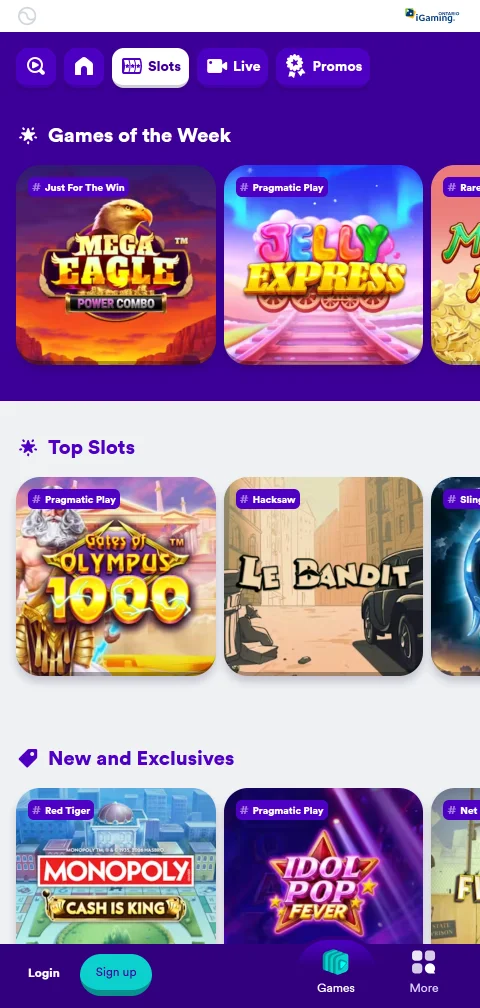
| Key Feature | Gamified Casumo platform with 5,600+ games |
| Welcome Bonus | 100% up to €300 + 50 bonus spins |
| Min. Deposit | Around €10; €20 for the welcome bonus |
| Number of Games | 5,600+ (5,100+ slots) |
| Game Providers | Pragmatic Play, Play'n GO, Evolution, Playtech, Relax Gaming |
| Payment Methods | Visa, Mastercard, Trustly, Skrill, Neteller, Paysafecard |
| Payment Services | Cards, e-wallets, instant banking via Trustly |
| Mobile App | iOS and Android apps plus mobile browser |
| VIP Programme | Loyalty rewards; terms set by the operator |
| RTP | Approximately 96% average on slots |
| Licence | Malta Gaming Authority, MGA/CRP/217/2012-05 |
| Operator | Casumo Services Limited, Malta |
| Launch Date | 2012 |
| Legal Age | 18+ |


- Malta Gaming Authority licence MGA/CRP/217/2012-05, verifiable on the regulator's public register
- Over 5,600 games, with Pragmatic Play, Play'n GO and Evolution among the studios
- Welcome offer capped at €5 per spin, a clear and checkable limit
- 30x wagering on the welcome bonus is heavier than some rivals' 10x deals
- Withdrawal approval can take up to three days before the payment rail even starts
Verification asks for photo ID and proof of address before any withdrawal, uploaded by phone camera. The Casumo registration guide explains why completing it early keeps the three-day approval window short, and which document mismatches most often send an application back.
PlayOJO Casino review
| Key Feature | No-wagering bonuses and OJOplus money back on every bet |
| Welcome Bonus | 50 wager-free spins on Book of Dead, €10 minimum deposit |
| Min. Deposit | €10 |
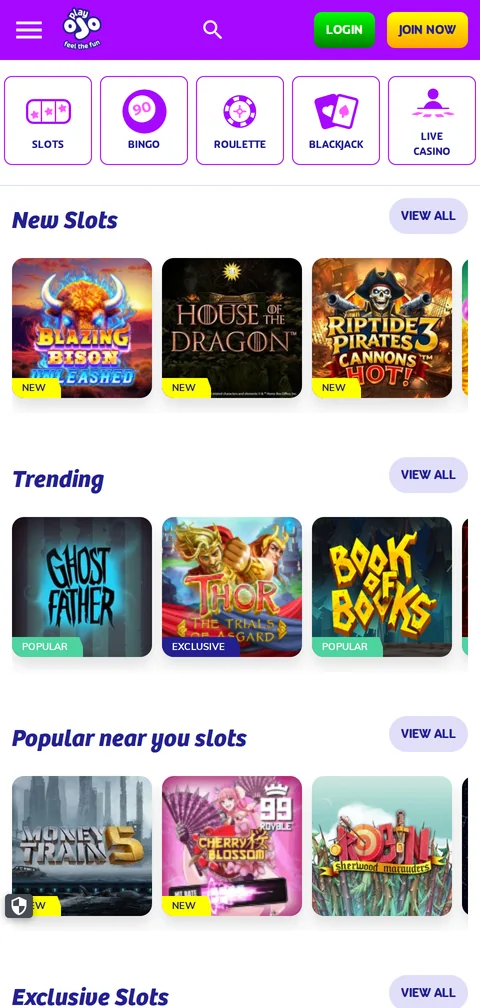
| Number of Games | 4,000+ (operator also cites over 7,000) |
| Game Providers | Evolution, Pragmatic Play, Play'n GO, NetEnt, Nolimit City, Relax Gaming |
| Payment Methods | Visa Debit, Mastercard Debit, Apple Pay, Instant Bank, Trustly |
| Payment Services | PayPal, Skrill, Neteller, MuchBetter |
| Mobile App | Mobile browser site; native apps not confirmed for Ireland |
| VIP Programme | OJO Levels with Kickers, OJO Wheel and Prize Twister |
| RTP | Varies by game; approximately 94-97% on mainstream slots |
| Licence | Malta Gaming Authority, MGA/CRP/171/2009/01 |
| Operator | Skill On Net Limited, Ta' Xbiex, Malta |
| Launch Date | 2017 |
| Legal Age | 18+ |


- Welcome free spins carry no wagering, so winnings are paid as withdrawable cash.
- OJOplus returns a small cash percentage on every real-money bet, win or lose.
- No minimum withdrawal on Visa, Mastercard, Apple Pay and Instant Bank payments.
- No telephone support, and the welcome offer is small next to match-bonus rivals.
- Irish GRAI licence still pending; the Irish site currently relies on its Maltese licence.
KYC before the first payout asks for ID and proof of address, and withdrawals return to the deposit method. Read the PlayOJO Casino detailed look.
Rizk Casino review
| Key Feature | Wheel of Rizk loyalty rewards |
| Welcome Bonus | 100% up to €100 plus free spins |
| Min. Deposit | Typically €10 |
| Number of Games | Around 2,500 |
| Game Providers | NetEnt, Evolution, Play'n GO, Pragmatic Play, Red Tiger |
| Payment Methods | Visa, Mastercard, Trustly, bank transfer |
| Payment Services | Skrill, Neteller, MuchBetter, Paysafecard |
| Mobile App | iOS and Android apps, plus mobile browser |
| VIP Programme | Captain Rizk levels and Wheel of Rizk |
| RTP | Approximately 96% on slots, varies by title |
| Licence | MGA sub-licence MGA/CRP/1117/2025/02 |
| Operator | Zecure Gaming Ltd (C 69036), Betsson Group |
| Launch Date | 2016 |
| Legal Age | 18+ |



- Malta Gaming Authority sub-licence, with the number printed in the operator's footer
- Stated withdrawal processing window of up to 3 hours once KYC is cleared
- Around 2,500 titles, with live tables from Evolution and slots from NetEnt and Play'n GO
- Fee-free cashier with Trustly, Skrill and Neteller alongside debit cards
- Current terms list Ireland among the jurisdictions refused for new account registration
- Welcome bonus carries wagering of around 40x and excludes Skrill and Neteller deposits
- No phone line; support runs on live chat, email and a callback request
First withdrawals at Rizk wait on ID, proof of address and payment-method ownership, 1 to 3 business days; see the Rizk Casino player guide.
888 Casino review
| Key Feature | In-house 888 slots and table games |
| Welcome Bonus | 100% up to €500, 40x wagering |
| Min. Deposit | €10 |
| Number of Games | Approximately 2,000+ |
| Game Providers | 888 in-house studio, Evolution, NetEnt, Pragmatic Play (approx.) |
| Payment Methods | Visa, Mastercard, PayPal, Skrill, NETELLER, Paysafecard, bank transfer |
| Payment Services | Skrill, NETELLER, PayPal, MuchBetter |
| Mobile App | iOS and Android apps, plus browser |
| VIP Programme | Yes, invitation-based VIP Casino Club |
| RTP | Around 95-97% on most slots, varies by title |
| Licence | Gibraltar Remote Gaming Licence No. 112 |
| Operator | 888 Eire Limited (Gibraltar) |
| Launch Date | 1997 |
| Legal Age | 18+ |



- Irish casino service licensed in Gibraltar under Remote Gaming Licence No. 112, named on every page
- Choice of welcome offers: 100% up to €500 or 100 free spins for a €10 deposit
- Operator history going back to 1997, with its own in-house slot and table studio
- Withdrawal timeframes published per method, including a one-day pending window for Gold VIP members
- Standard pending period of three business days before any withdrawal is processed
- 40x wagering on the match bonus, with Skrill and NETELLER deposits excluded from the offer
- Live chat only available while logged in and during operational hours, which are not published
A KYC check typically comes before the first payout, with a €10 minimum on every method, as described in our 888 Casino registration guide.
How we ranked casinos on their limit and exclusion tools
The ranking is built from published terms, the responsible gambling pages and the licence on record for each casino. Bonus size does not lift a casino here, and neither does affiliate commission. A missing or hidden limit tool removes a site from the list.
Bonuses and how they treat your limits
A placing rises when a bonus can be declined at deposit and when bonus funds count against your deposit limit like cash. It falls when wagering runs above 35x, or when a clause lets a promotion push you past your limit. On €100 at 40x you face €4,000 of bets, and that turnover has to fit inside the loss limit you chose.
Banking, withdrawals and reversals
A casino moves up when withdrawals are processed within 48 hours and cannot be reversed once requested. It moves down when pending withdrawals can be sent back into play, because that reversal undoes the point of a deposit limit.
Games and software limits
Reality checks that interrupt slots at intervals you choose raise a placing, as do session timers that work in live casino too. A placing drops when the tools cover only the sportsbook side, or when third-party games from studios outside the main lobby ignore the account timer completely. We read the help pages for which games each tool covers.
Mobile use and where the tools sit
Limits reachable in two taps from the app or mobile cashier raise a placing. Tools buried behind a desktop-only page or a support request lower it, since you will often decide to stop while holding a phone, not while sitting at a laptop.
Licence and exclusion obligations
A placing rises where the licence on record requires the operator to honour self-exclusion for the full term, refuse reopening on request, and return any balance. Under the Gambling Regulation Act 2024 an Irish licensee must refund an excluded person’s account within 7 days of notice once the national register is running. A placing falls where the licence number cannot be matched to a public register.
Customer support on exclusion requests
Support that can action an exclusion over live chat without asking you to justify it raises a placing. Support that tries to talk you out of it, offers a bonus instead, or demands an emailed request with documents before closing an account lowers it sharply. Where published terms and the support help pages disagree on how exclusion works, the placing drops too.

What a deposit limit actually stops
A deposit limit caps the money you move into the account over a period, usually a day, a week or a month. It does not cap what you lose, and it does not stop you replaying winnings that are already in the balance.
That gap matters more than most players expect. Set €200 a week, win €300 on Tuesday, and you can lose all €500 before Sunday without breaching anything, because only €200 ever came from your bank. A loss limit closes that hole, and a sensible setup uses both.
Read the reset clause before anything else.
Some casinos run a rolling seven days from each deposit, others reset on a fixed weekday at midnight. A typical rolling clause reads: “limits are calculated over the preceding seven days from the time of each deposit”. Under that wording a deposit on Friday evening keeps counting until the following Friday evening, which is stricter on you than a Monday reset and usually the better design if control is the point.
Raising versus lowering
A decrease should apply immediately. An increase on most sites listed here waits at least 24 hours, and several hold it for seven days, which gives you a cooling period to change your mind before the higher figure goes live.
Setting limits before your first deposit
The moment to set a limit is at registration, when there is no session running and no loss to chase. Most casinos on this page offer the prompt in the sign-up flow, but some let you skip it with a single click.
If you skipped it, the cashier or account settings will hold the same controls. Pick figures from your monthly budget, not from what feels right during a good evening.
One practical habit: write the numbers down outside the casino, so a later increase request is a decision you can check against something you set when calm.
Five steps to a limit setup that holds
The order below matters, because the later steps depend on limits already being in place. Each step uses controls found in the account area of the casinos listed.
- Step 1
Work out a monthly gambling budget
Take the amount you can lose without touching rent, bills or savings. Divide it by four for a weekly figure, and treat that as the ceiling rather than a target to reach. - Step 2
Set the deposit limit first
Enter daily, weekly and monthly caps where the casino allows all three. The daily figure stops a single bad evening from consuming the whole week's budget in one go. - Step 3
Add a loss limit alongside it
A loss limit counts net losses, so winnings replayed and lost still count. Set it at or below the deposit figure so the two caps work together. - Step 4
Switch on reality checks and timers
Choose a reminder interval, such as every 30 or 60 minutes. The pop-up shows time played and net result, which is harder to ignore than a clock on the wall. - Step 5
Note how to self-exclude in advance
Find the self-exclusion option now, while you do not need it. Knowing it sits two taps away removes one barrier if you later decide to stop completely.
Self-exclusion, one operator at a time
Self-exclusion closes your account for a fixed term, commonly six months, a year or five years, and the operator should refuse to reopen it before that term ends. Unlike a limit, it cannot be loosened with a 24-hour wait.
For now it works site by site. Excluding at one casino leaves every other account you hold open, including sister brands run by the same company unless their terms say the exclusion covers the group.
Check for a group clause.
The Gambling Regulation Act 2024 provides for a National Gambling Exclusion Register run by the Gambling Regulatory Authority of Ireland, so that one request would reach every licensed operator. Until that register is confirmed as operating, you still need to exclude with each operator separately, and the GRAI’s own site is where its launch will be announced. Even once it runs, the Act keeps your right to exclude directly with a single licensee, so the operator tools on this page do not become redundant.
Cooling-off or full self-exclusion
Casinos offer two ways to step back, and they behave differently. A cooling-off period, often called a time-out, locks the account for a short spell, from 24 hours up to about six weeks. Self-exclusion is longer and harder to undo.
Which one fits depends on whether you want a pause or a stop.
Cooling-off break | Self-exclusion |
|---|---|
| Lasts from 24 hours to around six weeks | Lasts six months, a year or longer |
| Account reopens automatically when the break ends | Reopening usually needs a request after the term ends |
| Can be set instantly from the account | Can be set instantly from the account |
| Marketing stops during the break on most sites | Marketing must stop and the balance is returned |
Where bonuses collide with your limits
Bonus terms are where limit tools get tested. A welcome offer that matches 100% up to €100 with 40x wagering on bonus plus deposit means €8,000 of bets, not €4,000, because the deposit is wagered too.
Run that against a €200 weekly loss limit and the arithmetic stops working, since clearing the turnover would take many weeks of play at normal slot RTP. That is the offer to skip.
Look for this clause: “bonus funds are not counted towards deposit limits”. It means a €50 reload sits outside your cap, so you can play more than you set without the casino treating it as a breach. A site that counts bonus money against the limit is the better one for you here, even if its headline offer looks smaller.
Inducements are also in the Act. A licensee must not offer targeted inducements to keep a person gambling, and while that rule is applied mainly to betting licensees so far, any casino offering you a bonus on the same day you ask to close an account is showing you how it treats exclusion.
The licence question for Irish players
The GRAI began licensing remote betting in 2026, and since 1 July 2026 online bookmakers serving Ireland have needed a GRAI remote betting licence. Online casino gaming licences are phased in later, so the casino side of most sites on this list still runs on a licence issued elsewhere until those licences open.
That is why the licence on record matters for exclusion. A Malta Gaming Authority licensee, for example, is bound by Maltese player protection rules, and that is the regulator you would complain to.
Check the footer number against the regulator’s public register before you deposit.
Reading the three kinds of limit
Casinos use the word limit for three different controls, and the clause wording decides which one you are actually setting. The table sets out what each counts and where it leaves room, based on how the terms on the listed sites define them.
| Limit type | What it counts | What slips through |
|---|---|---|
| Deposit limit | Money paid in | Replayed winnings |
| Loss limit | Net losses | Nothing, if net |
| Wager limit | Total stakes placed | Size of losses |
| Session limit | Time logged in | Spend per session |
When a casino ignores your limit
If a casino accepted a deposit above your limit, or let you play during an exclusion, raise a written complaint with the operator first and keep the chat transcript or email.
Quote the date you set the limit and the clause it breached. The operator’s licence decides the next stage: a GRAI licensee answers to the GRAI, while an offshore-licensed casino usually names an alternative dispute resolution body in its terms, and that body is where an unresolved complaint goes.
A refund of deposits taken during a self-exclusion is a reasonable request, and several regulators treat a breach of exclusion as a serious failing by the operator rather than a player error.
Gambling responsibly with limits in place
Limits work best when you set them before you play, not after a loss. If you notice you are chasing losses, raising limits often, or hiding play from people close to you, take a cooling-off break today and consider self-exclusion at every site where you hold an account.
You can also block gambling payments through your bank’s card controls, and install blocking software on your phone and laptop so the sites will not load. Talking to someone helps, and the helplines listed below are confidential and free to call. Gambling should come out of money you can afford to lose, and when it stops feeling that way, the tools on this page are there to be used.
Before you choose a casino from this list
The single clause worth finding before you register is whether bonus funds count against your deposit limit, because that one line decides whether your cap holds when an offer lands. The ranking would shift if a casino began reversing pending withdrawals or slowed exclusion requests, and the terms behind it were last checked on 4 September 2026. This page does not cover sports betting limits, which follow separate GRAI licence rules.
Questions about deposit limits and self-exclusion
Can I raise my deposit limit straight away?
Usually not. Lowering a limit takes effect immediately, but raising one is held for at least 24 hours, and some sites hold it for seven days. The wait is deliberate, giving you time to reconsider an increase you asked for during a session.
Does a deposit limit stop me losing more than I set?
Not on its own. A deposit limit counts only money coming in, so winnings you replay and lose fall outside it. If you want a firm ceiling on losses, set a loss limit alongside the deposit limit, at or below the same figure.
Can I cancel self-exclusion early?
Normally, no. Self-exclusion runs for the full term you choose, and support should refuse to reopen the account before it ends. If you want a pause you can reverse sooner, a cooling-off break of 24 hours to around six weeks is the tool for that.
Does excluding at one casino block its sister sites?
Only if the terms say the exclusion applies across the group. Many operators run several brands on one licence, and some extend exclusion to all of them while others do not. Read the self-exclusion clause, or ask support in writing and keep the answer.
Is the National Gambling Exclusion Register live?
It is set up by the Gambling Regulation Act 2024 and will be run by the GRAI, but it had not been confirmed as operating when this page was last edited. Until it runs, you exclude with each casino separately. The GRAI website will carry the launch.
What happens to my balance if I self-exclude?
Casinos generally return the withdrawable balance to your payment method. Bonus funds still under wagering are usually forfeited. Under the Act, once the national register operates, an Irish licensee must refund an excluded person’s account within 7 days of being notified.
Do bonus funds count towards my deposit limit?
It depends on the clause. Some casinos count only cash deposits, so a reload bonus sits outside your cap and lets you play beyond what you set. Look for the wording on bonus funds in the responsible gambling terms, and prefer sites that count them.
More about online casinos







Look first at whether each casino offers a loss limit as well as a deposit limit, since the deposit cap alone lets replayed winnings slip through.