








888 Casino review
| Key Feature | In-house 888 slots and table games |
| Welcome Bonus | 100% up to €500, 40x wagering |
| Min. Deposit | €10 |
| Number of Games | Approximately 2,000+ |
| Game Providers | 888 in-house studio, Evolution, NetEnt, Pragmatic Play (approx.) |
| Payment Methods | Visa, Mastercard, PayPal, Skrill, NETELLER, Paysafecard, bank transfer |
| Payment Services | Skrill, NETELLER, PayPal, MuchBetter |
| Mobile App | iOS and Android apps, plus browser |
| VIP Programme | Yes, invitation-based VIP Casino Club |
| RTP | Around 95-97% on most slots, varies by title |
| Licence | Gibraltar Remote Gaming Licence No. 112 |
| Operator | 888 Eire Limited (Gibraltar) |
| Launch Date | 1997 |
| Legal Age | 18+ |
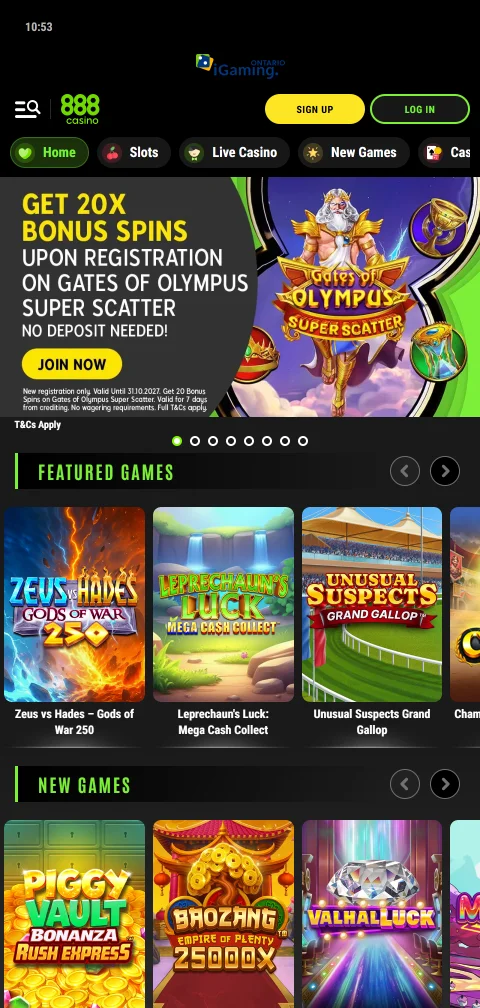
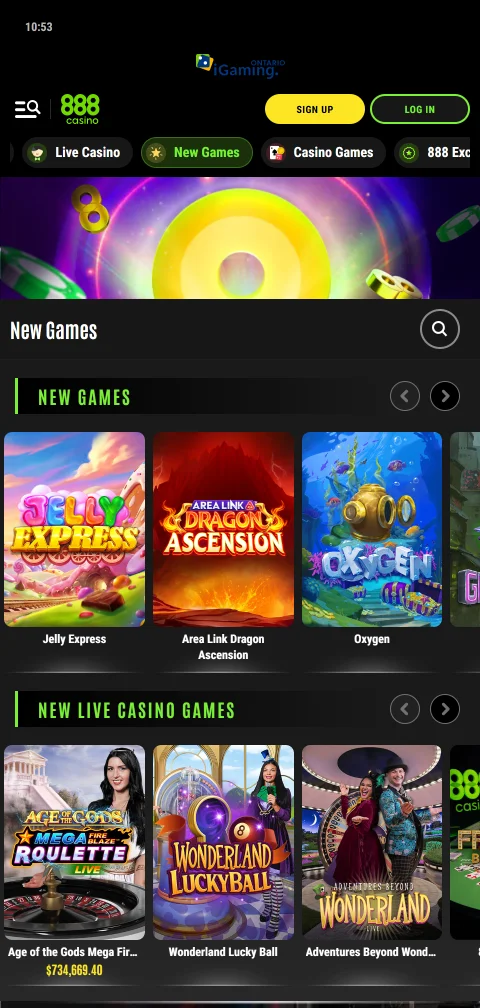

- Irish casino service licensed in Gibraltar under Remote Gaming Licence No. 112, named on every page
- Choice of welcome offers: 100% up to €500 or 100 free spins for a €10 deposit
- Operator history going back to 1997, with its own in-house slot and table studio
- Withdrawal timeframes published per method, including a one-day pending window for Gold VIP members
- Standard pending period of three business days before any withdrawal is processed
- 40x wagering on the match bonus, with Skrill and NETELLER deposits excluded from the offer
- Live chat only available while logged in and during operational hours, which are not published
For a player in Ireland, trading since 1997 and a Gibraltar licence weigh against a 4-10 business day payout window in the full 888 Casino analysis.
Betway Casino review
| Key Feature | Casino and sportsbook on one wallet |
| Welcome Bonus | Up to €50 free bet + 50 bonus spins |
| Min. Deposit | €5 (debit card, for the welcome offer) |
| Number of Games | Approximately 500+ slots, plus tables and live |
| Game Providers | Games Global, NetEnt, Pragmatic Play; Evolution live |
| Payment Methods | Visa, Mastercard debit, open banking, e-wallets |
| Payment Services | Debit cards, PayPal, open banking |
| Mobile App | iOS and Android apps, plus browser |
| VIP Programme | Invitation-only; no public tier table |
| RTP | Typically 94-97% on slots |
| Licence | MGA/B2C/130/2006; GRAI licence (betting) |
| Operator | Betway Limited (Malta) |
| Launch Date | 2006 |
| Legal Age | 18+ |
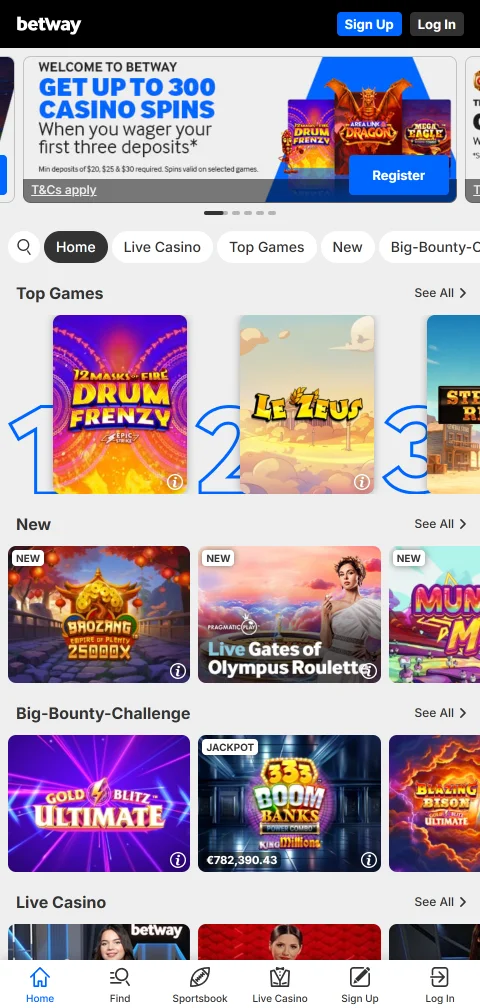
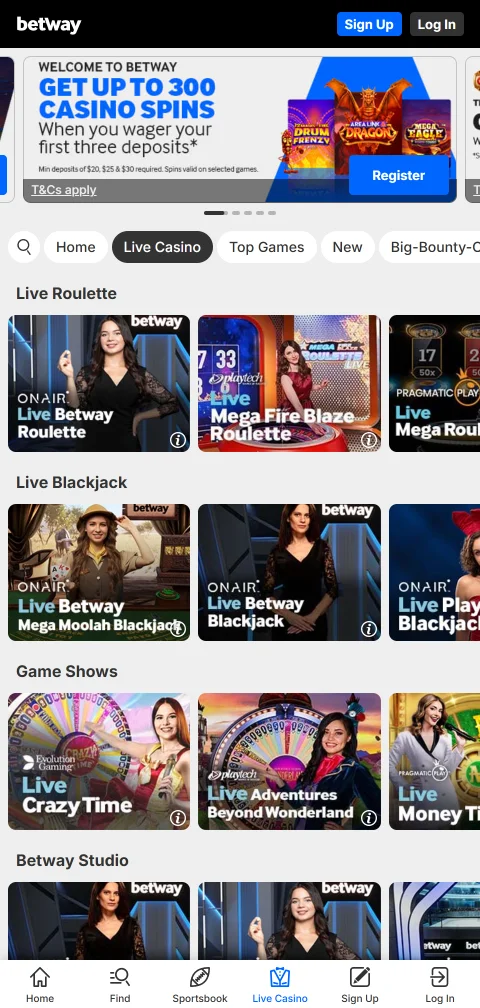
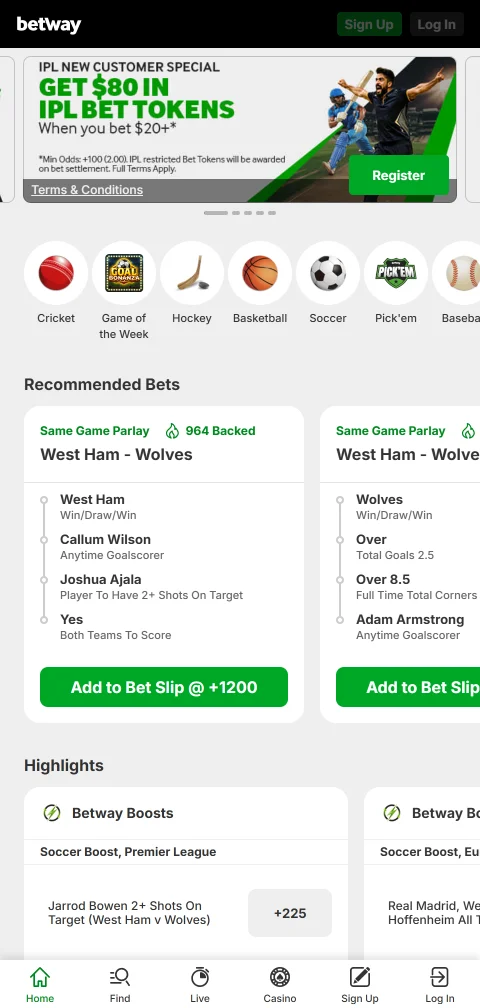
- Malta Gaming Authority licence MGA/B2C/130/2006 covers the casino product for Irish players
- GRAI register lists Betway for remote sports betting since the July 2026 licensing round
- Stated withdrawal processing within 24 hours, with one to two days in total
- Welcome offer starts from a €5 debit card deposit, lower than many rivals
- Bonus spins carry 50x wagering, and the offer expires seven days after registration
- Free bet returns winnings only; the €50 stake itself is never paid back
- Ireland has no online casino licence yet, so casino play relies on Malta
For an Irish punter, one euro wallet joins a GRAI-licensed sportsbook to a Malta-licensed casino with more than 500 slots and stated 24-hour processing, all read in our full Betway Casino analysis.
bet365 Casino review
| Key Feature | One wallet shared with the bet365 sportsbook |
| Welcome Bonus | Up to 200 free spins over 10 days |
| Min. Deposit | €5–€10 depending on method |
| Number of Games | Approximately 1,500+ (unconfirmed) |
| Game Providers | Playtech, in-house titles and other studios (unconfirmed list) |
| Payment Methods | Visa Debit, Mastercard Debit, bank transfer, Trustly |
| Payment Services | PayPal, Apple Pay, Paysafecard |
| Mobile App | iOS and Android, casino inside main app |
| VIP Programme | No public VIP tiers published |
| RTP | Typically 94–97% on slots |
| Licence | GRAI remote betting; casino under MGA (check footer) |
| Operator | bet365 Group / Hillside entities |
| Launch Date | 2000 (bet365 brand) |
| Legal Age | 18+ |
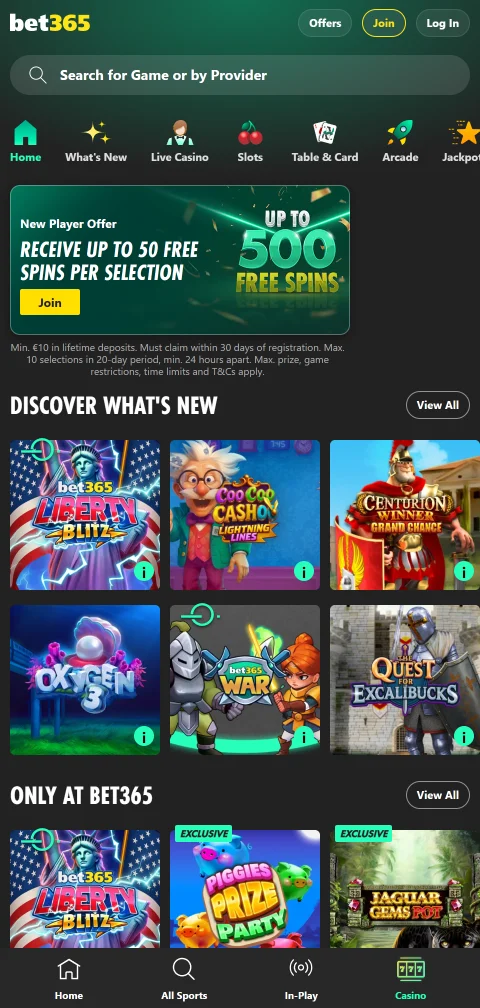
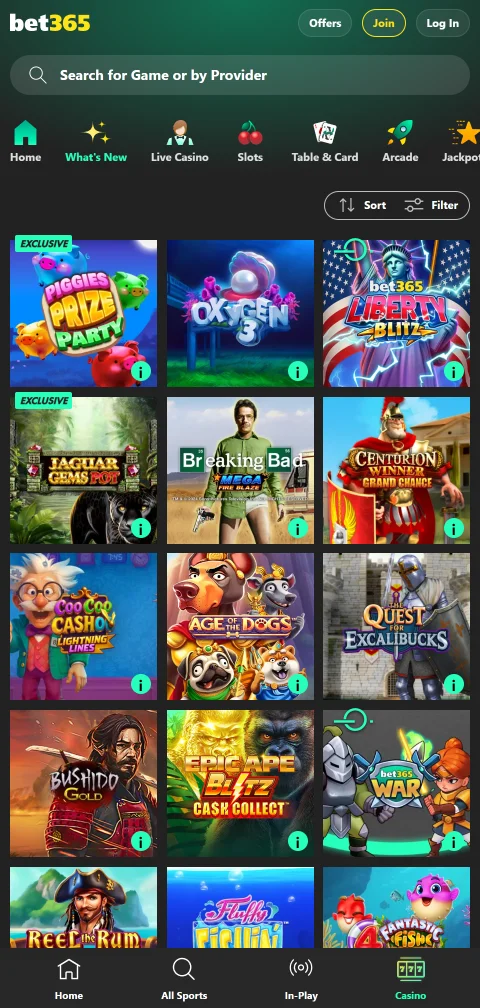
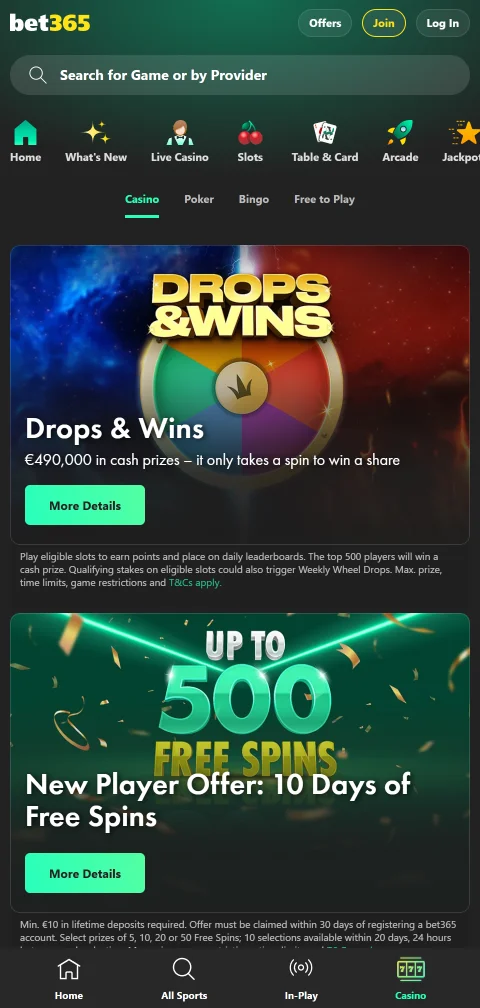
- Stated withdrawal processing target of around four hours, with Visa Direct possibly inside two
- No fees on any listed withdrawal method, with bank transfers up to €50,000
- Free spins welcome offer needs only €10 in lifetime deposits to qualify
- Holds a GRAI remote betting licence, listed on the public Irish register
- Casino, sportsbook and live dealer games share one balance and one login
- GRAI has not yet opened casino licences, so casino cover still relies on Malta
- Free spins prizes of 5, 10 or 20 are randomised, not a fixed amount
- Withdrawals must normally return to the deposit method, which is awkward to change
- No published VIP ladder or tiered loyalty scheme for casino players
For Irish players, single-zero roulette at a 2.7% house edge, debit card deposits from €5 and fee-free withdrawals anchor the bet365 Casino value review, alongside a split GRAI and Malta licence position that every Irish depositor needs to read before funding an account.
LeoVegas Casino review
| Key Feature | Mobile-first platform with native iOS and Android apps |
| Welcome Bonus | Up to €1,000 + 200 free spins on Book of Dead |
| Min. Deposit | €10 to qualify for the welcome offer |
| Number of Games | Over 3,000 slots and table games |
| Game Providers | Evolution, Pragmatic Play, Playtech, OnAir, Stakelogic, Authentic Gaming |
| Payment Methods | Visa, Mastercard, Apple Pay, PayPal, bank transfer |
| Payment Services | PayPal, Apple Pay, Trustly (check cashier) |
| Mobile App | iOS and Android apps plus mobile browser |
| VIP Programme | Invitation-based VIP; terms not published |
| RTP | Approximately 94-97% on most slots, varies by title |
| Licence | Malta Gaming Authority, MGA/CRP/237/2013 |
| Operator | LeoVegas Gaming plc (MGM Resorts subsidiary) |
| Launch Date | Founded 2011, launched 2012 |
| Legal Age | 18+ |
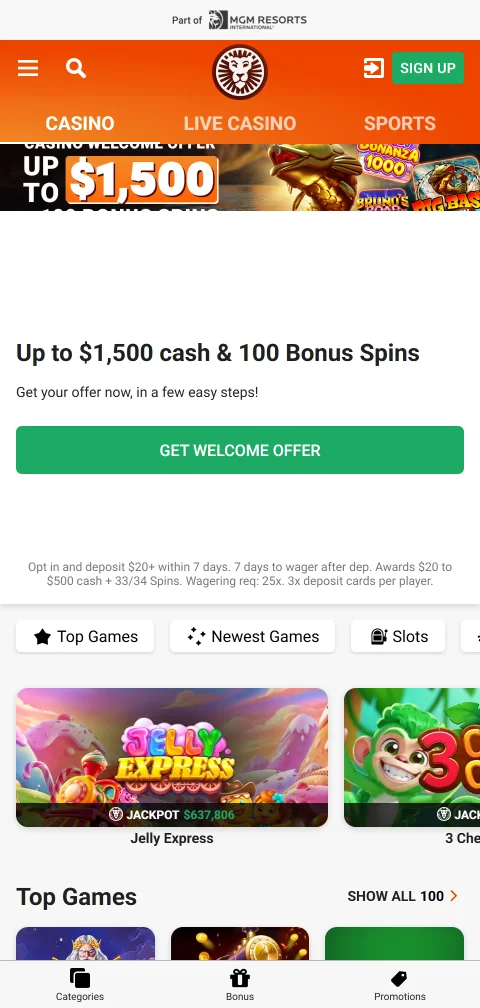
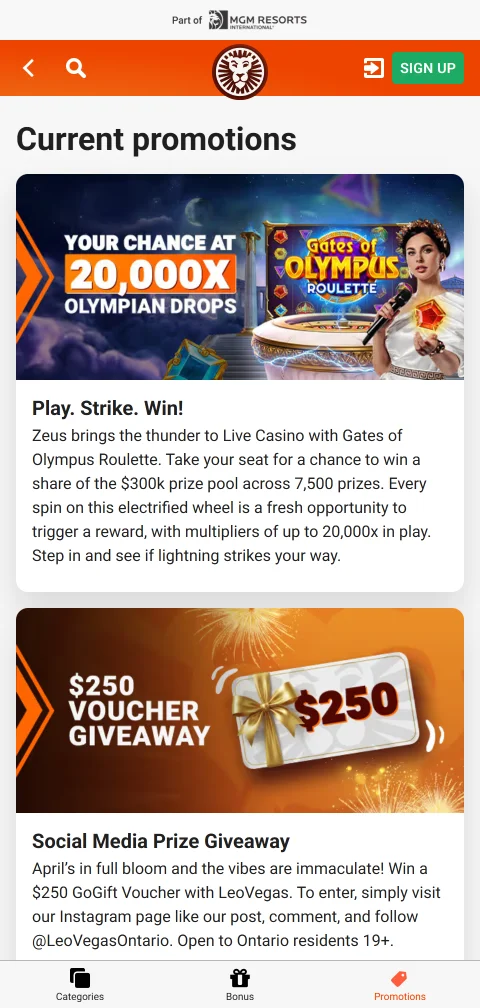
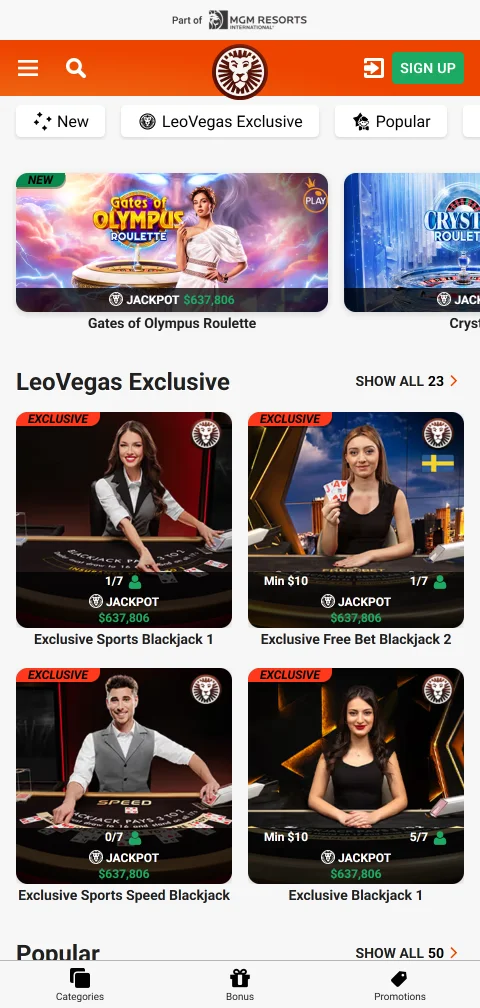
- Malta Gaming Authority licence MGA/CRP/237/2013 is printed on the Irish site's own pages
- Welcome offer needs only a €10 deposit, with 25x wagering on the cash part
- Live casino lists over 600 tables from Evolution, Playtech and Pragmatic Play Live
- Native apps on iOS and Android, and a mobile browser site that stands on its own
- Owned by MGM Resorts International since 2022, with a corporate record going back to 2011
- Irish pages state the welcome wagering as both 25x and 35x, so read the live terms
- No telephone support line; contact runs through live chat and email only
- Withdrawals can take up to five business days depending on the payment method
- No Irish GRAI casino licence yet, as online gaming licensing is phased into 2027-2028
For a player in Ireland, euro accounts, a €10 minimum and over 600 live tables sit against a five-business-day payout ceiling and no phone support, all weighed in our LeoVegas Casino Ireland review. The casino is licensed in Malta.
William Hill Casino review
| Key Feature | One account for sportsbook, Vegas, poker and bingo |
| Welcome Bonus | 200 free spins on Big William Hill Fortune for a €10 stake |
| Min. Deposit | Typically around €5-€10 depending on method |
| Number of Games | Approximately 1,700-2,000 |
| Game Providers | Playtech, Games Global, Red Tiger, ELK Studios, Pragmatic Play |
| Payment Methods | Visa, Mastercard, bank transfer, Apple Pay, PayPal |
| Payment Services | Visa Direct, PayPal, Skrill, Neteller, Paysafecard |
| Mobile App | iOS and Android (Vegas app) |
| VIP Programme | No public tiered VIP scheme confirmed |
| RTP | Typically around 94-97% per slot |
| Licence | Gibraltar Remote Gaming Licence 112 (casino); GRAI-1096-RB-26-0001 (sportsbook) |
| Operator | WH Ireland Limited (Evoke plc group) |
| Launch Date | 1934 (brand); online casino since the late 1990s |
| Legal Age | 18+ |


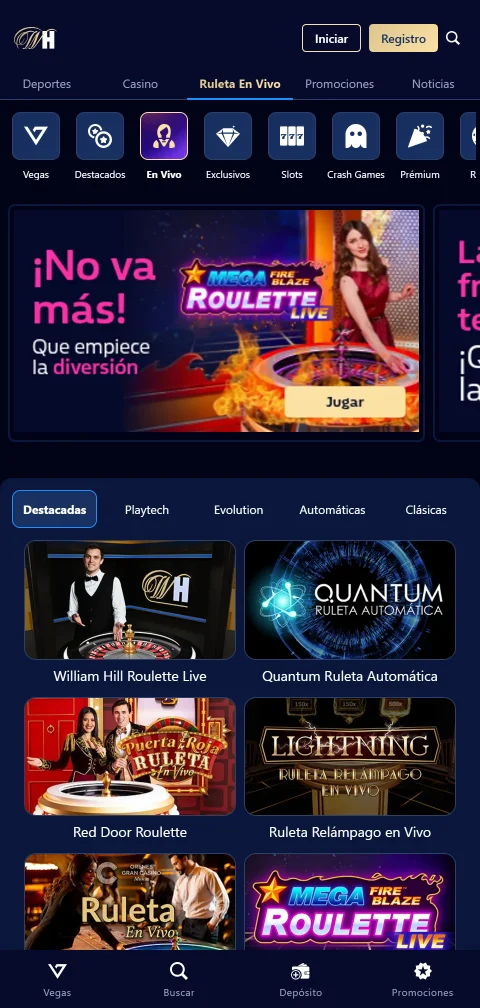
- Casino operated under Gibraltar Remote Gaming Licence 112, with the operator named in every footer
- Visa Direct card withdrawals stated at up to four hours, weekends included
- Support runs 24/7 through Messaging, and one login covers sportsbook, Vegas, poker and bingo
- Free spin winnings are capped at €30 and unused spins disappear after 24 hours
- Casino side is not yet licensed by the Irish regulator; no phone line confirmed for Irish players
For Irish punters, one login covers racing bets and around 1,700 to 2,000 casino games, with payouts of up to four hours by Visa Direct; the William Hill Casino editorial assessment weighs it.
How we rank casinos on their dispute resolution
The ranking is built from what each operator publishes: its complaints procedure, the ADR body it names, the licence on the regulator’s register and the terms that most often trigger disputes. Commission paid to us, bonus size on its own and brand recognition do not move a placing.
Bonus terms that are likely to end in a dispute
Most complaints that reach an ADR body begin with a bonus clause. Wagering, maximum-bet and cashout rules in one readable section raise a placing; a vague “irregular play” clause allowing winnings to be voided at discretion lowers it sharply.
Withdrawals, KYC holds and payout speed
Withdrawal holds are the second large source of disputes, usually because verification is requested only after a win. A casino that lists its KYC documents and source-of-funds triggers before the first deposit, and publishes a processing window of a few working days, ranks higher. Open-ended verification, or a pending withdrawal that can be reversed back into play, ranks lower, since an unlimited review gives a complaint no yardstick.
Game records and certified software
A dispute about a game round can only be settled if the round can be reconstructed. Placings rise where the casino carries providers whose games are certified by a testing laboratory and where a player can request game history; they fall where the terms reserve the right to void rounds over undefined “malfunctions”.
Mobile access to the complaints procedure
The complaints procedure has to be reachable from the phone where most play happens. An app or mobile site linking directly to the complaints page, the submission form and the ADR body’s details ranks higher. Links found only in a desktop footer or a PDF inside the terms lower the placing.
Licence, ADR body and binding decisions
This criterion carries the most weight here. A placing rises when the licence appears on the issuing regulator’s own register and the complaints procedure names an ADR body whose decision binds the operator, as the Malta Gaming Authority requires. It falls when the only escalation is the regulator’s general inbox, or when the named body cannot be traced. No foreign licence is treated as equal to Irish supervision.
Internal complaints handling and response times
A written acknowledgement within two days and a stated deadline for a final answer raise a placing, matching Curaçao’s complaints policy. Chat-only support with no written complaint reference lowers the placing, since the adjudicator then has nothing on paper.

What independent dispute resolution actually means
Independent dispute resolution, usually called ADR, is a stage that sits between a casino’s own complaints desk and a court. When a player has gone through the operator’s internal procedure and still disagrees with the outcome, the dispute goes to a body that the casino does not own and cannot overrule, and that body reads both sides’ evidence before giving a decision.
The word that matters is binding.
Under the Malta Gaming Authority’s player protection rules, an operator must engage an ADR entity established in the European Union or the European Economic Area before it goes live, must name that entity in its complaints procedure, and must accept the entity’s conclusions as binding on both parties. The same rules state that referring a dispute to ADR does not take away the player’s right to bring proceedings in a court of competent jurisdiction, so the route adds an option rather than closing one.
Many casinos advertise a “dispute” page that turns out to be a second email address for the same support team. That is internal handling with a different label, and it is not what this page lists.
A genuine ADR route has three practical features you can check yourself: a named organisation with its own website, a stated condition for when you may refer a case, and a statement of what the decision means for the operator. If any of the three is missing from the terms, treat the route as unconfirmed until support confirms it in writing.
Where Irish law stands on casino complaints
The Gambling Regulation Act 2024 is the statute that will eventually bring online casinos under an Irish regulator, the Gambling Regulatory Authority of Ireland, and it is being switched on in pieces by ministerial commencement orders rather than all at once.
The first order established the Authority, with 5 March 2025 as its establishment day. A second order, S.I. No. 31/2026, brought a large block of the Act into force on 5 February 2026, enabling the Authority to grant licences and commencing the enforcement, oversight and complaints mechanisms that sit underneath the licensing framework, including administrative sanctions of up to €20 million or 10% of a licensee’s turnover, whichever is greater. That order also commenced the ban on credit card payments for gambling and the obligation on licensees to let customers set spending limits, but those obligations bind GRAI licensees and nobody else.
The licences issued so far are betting licences, remote and in-person.
Remote gaming licences, the category that would cover online slots, roulette and live casino, are phased for later, and until the Authority issues them every online casino open to Irish players operates on a licence granted by another jurisdiction. That has a direct consequence for complaints: the Authority’s complaints and enforcement machinery applies to its own licensees, so a dispute with a casino licensed in Malta or Curaçao is not one the Irish regulator can decide. Where no commencement order exists for a provision, this page says so rather than describing it as law in force, and you should read any claim of “Irish-regulated online casino” with that in mind.
Which regulators require ADR, and how
The table sets out what each licence on the casino cards obliges the operator to offer when a complaint is not settled internally. The entries come from the regulators’ own published rules and from the GRAI’s commencement orders, not from operator marketing.
| Licence issuer | Who hears disputes | Decision binding | Note for Irish players |
|---|---|---|---|
| Malta Gaming Authority | EU/EEA ADR body named by operator | Yes, on both parties | Court action still open |
| Curaçao Gaming Authority | Free ADR offered by operator | Per ADR terms | Six months to lodge |
| Kahnawake Gaming Commission | Commission's own complaints process | Commission decides | No separate ADR rule found |
| UK Gambling Commission | Approved ADR provider | Per provider rules | Applies to UK customers |
| GRAI (Ireland) | GRAI complaints mechanism | Applies to GRAI licensees | No casino licences yet |
How to take a complaint to an ADR body
An ADR body will not take a case that has skipped the casino’s own procedure, so the order of steps is not a formality. Most rejected referrals fail on sequence or missing evidence rather than on merit.
Before anything else, save the terms and conditions as they stood on the day of the disputed event, because operators revise them and the version in force at the time is the one the adjudicator applies. Under the Curaçao complaints policy you have six months from the settlement of the bet or the incident to lodge a complaint, and the operator must confirm receipt in writing within two days and explain how the complaint will be handled.
Keep everything in writing.
Five steps from refusal to independent decision
The sequence below follows the structure that MGA and Curaçao rules both impose: internal complaint first, a final answer from the operator, then referral to the named body.
- Step 1
Save the terms and your records
Download the terms, bonus rules and complaints procedure as they stood on the day, and export your transaction and game history before your account status changes. - Step 2
File a formal written complaint
Use the casino's official complaint form or email rather than chat alone, state the amount and the event, and ask for a written complaint reference number. - Step 3
Wait for the operator's final answer
Note the deadline the procedure gives for a final response. If it passes without one, record that in writing, since silence usually counts as exhaustion of the internal stage. - Step 4
Refer the case to the named ADR body
Submit the complaint to the ADR organisation listed in the casino's terms, attaching the reference number, the operator's answer and the saved terms. - Step 5
Escalate to the regulator if needed
If the operator ignores the ADR decision or names no ADR body at all, report it to the licensing regulator, quoting the licence number shown on its register.
What a foreign licence does not give you
A Maltese or Curaçao licence with a working ADR route is better than no route, but it is not the protection an Irish licence will give once the GRAI licenses casino operators, and it would be a mistake to read the two as the same thing.
The rules that apply are the regulator’s, not Ireland’s. The Irish ban on credit card gambling, the limits on inducements and the advertising restrictions in the 2024 Act bind GRAI licensees, so a casino licensed elsewhere may still offer things an Irish licensee could not, and an ADR body will measure the operator’s conduct against its own licence conditions rather than against Irish law.
Enforcement is another gap. An ADR decision is binding on the operator because its licence says so, which means the real sanction for ignoring one is the foreign regulator acting against the licence, and how quickly that happens is outside anything a player in Ireland can influence. Under the Curaçao regime the Authority itself has said that mediating individual player disputes is not part of its mandate, which places the whole weight of independent review on the ADR provider the operator has chosen.
Court action remains possible in principle and is rarely practical for the sums involved.
Checking a casino's ADR claim yourself
The casino cards above were matched to this page because each names an outside dispute body, but terms change between our reviews and you should confirm the route for yourself before depositing.
On the regulator’s register
Search the licence number from the casino’s footer on the issuing regulator’s own website, not on a seal that links to a page hosted by the casino. The legal entity on the register should match the company named in the terms, and a mismatch is reason enough to stop.
In the complaints procedure
Look for the ADR body’s name, a link to its site, the point at which you may refer a case and a statement of whether its decision binds the operator. What I check first is whether the procedure is reachable as its own page, because Curaçao’s policy requires a standalone complaints statement listing ADR contact details and timelines, and an operator meeting that rule will have nothing to hide in a footnote.
If support cannot name the ADR body when asked directly, that answer is the information you needed.
MGA and Curaçao dispute rules side by side
Most casinos on the cards hold one of these two licences, and the rules they impose on complaints differ in ways that matter once a case is open. The rows below are drawn from the MGA’s player protection page and the Curaçao Gaming Authority’s player complaints policy, version 1.1 of 18 June 2025.
MGA licence with EU ADR | Curaçao CGA licence |
|---|---|
| ADR body must be in the EU or EEA | Free ADR must be offered, location not fixed to the EU |
| ADR decision binding on both parties | Effect set by the ADR provider's terms |
| Complaints procedure must sit in the terms | Standalone complaints statement plus terms |
| No fixed acknowledgement deadline in the rule quoted | Written acknowledgement within two days |
Why the ADR route changes the ranking
On most listing pages a casino’s complaints procedure is a minor line item, weighed far below its bonuses and its game library. Here it decides the order, because the reason to choose a casino with independent dispute resolution is what happens on the one day the operator says no.
A casino with a modest welcome offer, a published KYC list and a named EU-based ADR body will sit above one with a larger bonus and a complaints page that leads only back to its own support team. That is a deliberate choice of the desk and not an accident of scoring.
The comparison above shows why the licence weighs so heavily in that order: the Maltese rules fix where the adjudicator sits and what its decision means, while the Curaçao rules, reformed under the national ordinance that took effect on 24 December 2024, are stronger on deadlines and visibility but leave more to whichever provider each operator picks. Neither is Irish supervision, and the ranking does not pretend otherwise.
When the GRAI begins licensing remote casino operators, this page will be reassessed against the Irish rules.
Gambling responsibly while a complaint is open
A disputed withdrawal can pull a player back into the account they are arguing with, and the balance waiting there makes it easy to keep playing while the complaint runs. If a case is open, set your deposit limit to zero or use the casino’s time-out, which also keeps the disputed funds untouched as evidence. Deposit and loss limits are worth setting before any dispute arises, since a foreign-licensed casino is not bound by the Irish obligation on GRAI licensees to offer them, though most of the operators on this list publish their own tools. If gambling has stopped being something you choose, the support services in the table below are free and confidential.
Before you deposit: the one line to find in the terms
The single line worth finding before your first deposit is the name of the ADR body in the complaints procedure, followed by whether its decision binds the operator; on this subject everything else on a casino’s terms page is secondary. The procedures behind this ranking were last checked on 25 September 2026, and the order will be redone once the GRAI licenses remote casino operators, since an Irish licence would then outrank every foreign route described here. Bonus value, deliberately, was not what this page set out to compare.
Questions about casino dispute resolution in Ireland
What is an ADR body at an online casino?
It is an organisation independent of the casino that reviews a complaint once the operator’s own procedure has ended. Under Malta Gaming Authority rules it must be based in the EU or EEA and its decision binds both the player and the operator, though you keep the right to go to court.
Can the GRAI resolve my complaint against an online casino?
Not while the casino holds a foreign licence. The GRAI’s complaints and enforcement mechanisms, commenced by S.I. No. 31/2026, apply to its own licensees, and it has so far licensed betting operators rather than online casinos. A dispute with a Maltese or Curaçao casino goes through that licence’s route.
Is an ADR decision binding on the casino?
Under MGA rules, yes: the conclusions of the ADR entity bind both parties. Under other licences the effect depends on the provider’s own terms, so read what the complaints procedure says about the decision before you rely on it. An operator that ignores a binding decision can be reported to its regulator.
How long do I have to complain to a Curaçao casino?
The Curaçao Gaming Authority’s complaints policy gives players six months from the settlement of the bet or the disputed incident to lodge a complaint, free of charge. The operator must confirm receipt in writing within two days and explain how the complaint will be processed.
Does using ADR stop me going to court?
Not under the MGA’s rules, which state that referring a dispute to an ADR entity does not restrict your right to bring proceedings in a competent court. The Curaçao policy also bars operators from limiting your right to take legal action, except where agreed under specific ADR terms.
Is a forum or review-site complaint the same as ADR?
No. Public complaint boards can put pressure on an operator, but they have no standing under any licence and their outcome binds nobody. ADR means the body named in the casino’s own complaints procedure, which the licence obliges the operator to accept and to name in its terms.
What usually causes disputes that reach ADR?
Most begin with voided bonus winnings, often under a maximum-bet or “irregular play” clause, or with a withdrawal held during KYC or a source-of-funds review. Saving the terms on the day and keeping written complaint references gives an adjudicator something concrete to decide on.
More about online casinos






Compare the ADR body each card names before the bonus figure, since that body decides what happens if a withdrawal is refused later.