




























888 Casino review
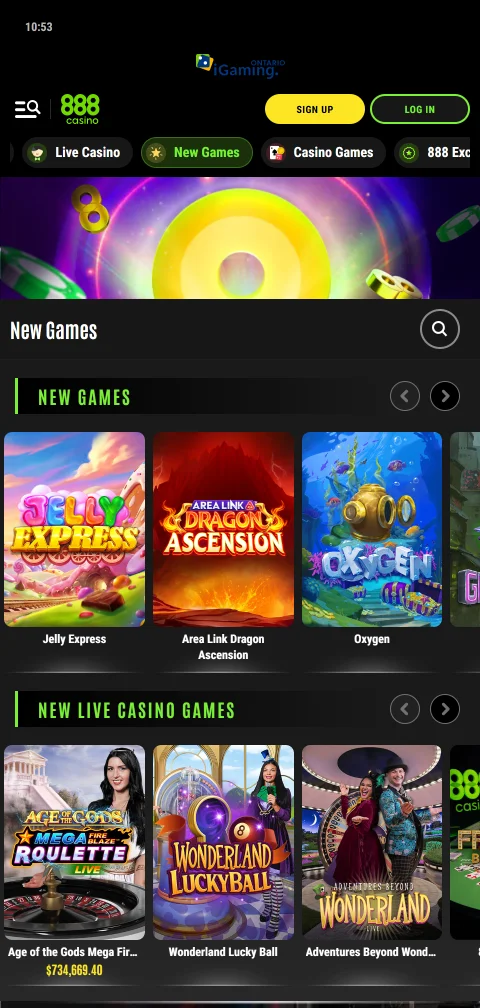
| Key Feature | In-house 888 slots and table games |
| Welcome Bonus | 100% up to €500, 40x wagering |
| Min. Deposit | €10 |
| Number of Games | Approximately 2,000+ |
| Game Providers | 888 in-house studio, Evolution, NetEnt, Pragmatic Play (approx.) |
| Payment Methods | Visa, Mastercard, PayPal, Skrill, NETELLER, Paysafecard, bank transfer |
| Payment Services | Skrill, NETELLER, PayPal, MuchBetter |
| Mobile App | iOS and Android apps, plus browser |
| VIP Programme | Yes, invitation-based VIP Casino Club |
| RTP | Around 95-97% on most slots, varies by title |
| Licence | Gibraltar Remote Gaming Licence No. 112 |
| Operator | 888 Eire Limited (Gibraltar) |
| Launch Date | 1997 |
| Legal Age | 18+ |


- Irish casino service licensed in Gibraltar under Remote Gaming Licence No. 112, named on every page
- Choice of welcome offers: 100% up to €500 or 100 free spins for a €10 deposit
- Operator history going back to 1997, with its own in-house slot and table studio
- Withdrawal timeframes published per method, including a one-day pending window for Gold VIP members
- Standard pending period of three business days before any withdrawal is processed
- 40x wagering on the match bonus, with Skrill and NETELLER deposits excluded from the offer
- Live chat only available while logged in and during operational hours, which are not published
Live chat at 888 Casino opens only once logged in, through the Help Center, and its operational hours go unpublished; the 888 Casino support assessment sets out what that means for a player locked out of an account.
bet365 Casino review
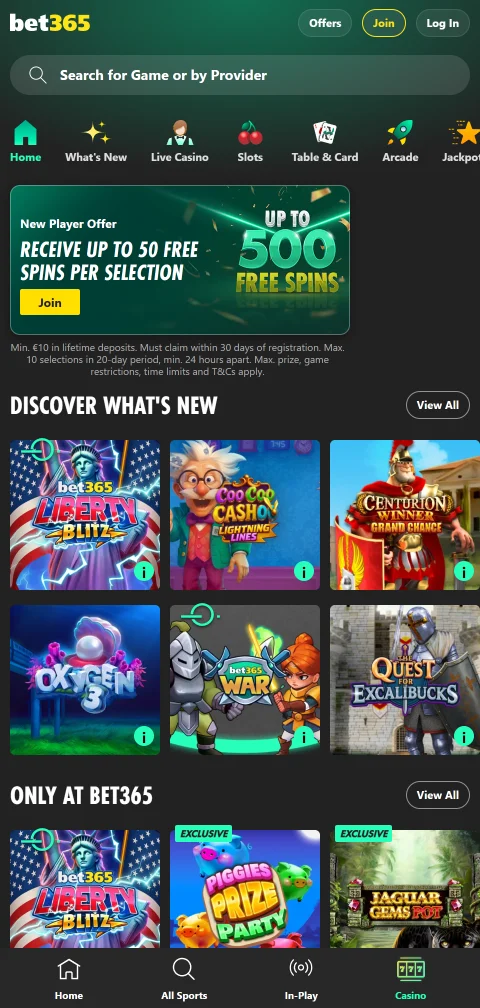
| Key Feature | One wallet shared with the bet365 sportsbook |
| Welcome Bonus | Up to 200 free spins over 10 days |
| Min. Deposit | €5–€10 depending on method |
| Number of Games | Approximately 1,500+ (unconfirmed) |
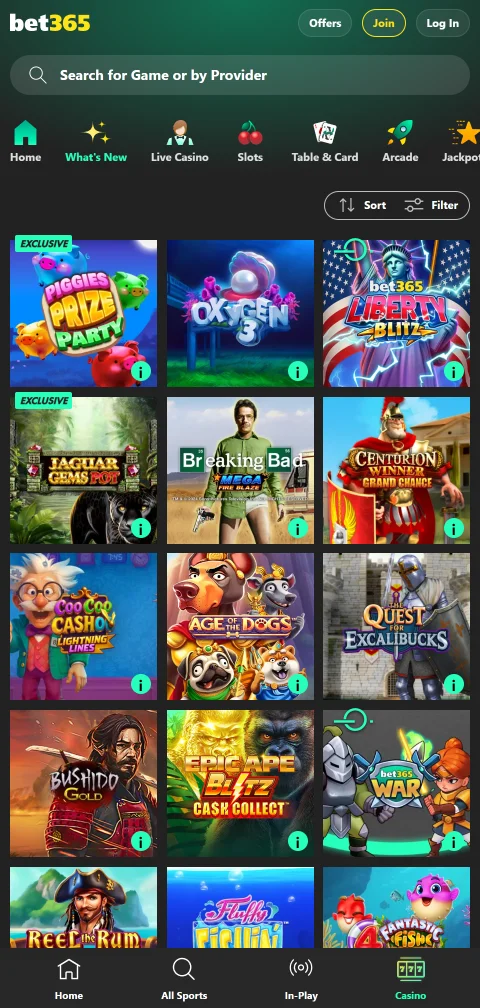
| Game Providers | Playtech, in-house titles and other studios (unconfirmed list) |
| Payment Methods | Visa Debit, Mastercard Debit, bank transfer, Trustly |
| Payment Services | PayPal, Apple Pay, Paysafecard |
| Mobile App | iOS and Android, casino inside main app |
| VIP Programme | No public VIP tiers published |
| RTP | Typically 94–97% on slots |
| Licence | GRAI remote betting; casino under MGA (check footer) |
| Operator | bet365 Group / Hillside entities |
| Launch Date | 2000 (bet365 brand) |
| Legal Age | 18+ |

- Stated withdrawal processing target of around four hours, with Visa Direct possibly inside two
- No fees on any listed withdrawal method, with bank transfers up to €50,000
- Free spins welcome offer needs only €10 in lifetime deposits to qualify
- Holds a GRAI remote betting licence, listed on the public Irish register
- Casino, sportsbook and live dealer games share one balance and one login
- GRAI has not yet opened casino licences, so casino cover still relies on Malta
- Free spins prizes of 5, 10 or 20 are randomised, not a fixed amount
- Withdrawals must normally return to the deposit method, which is awkward to change
- No published VIP ladder or tiered loyalty scheme for casino players
Help centre pages publish limits and processing targets, with live chat, email and phone behind them, though Irish support hours go unpublished, as our bet365 Casino support assessment notes.
Betfair Casino review
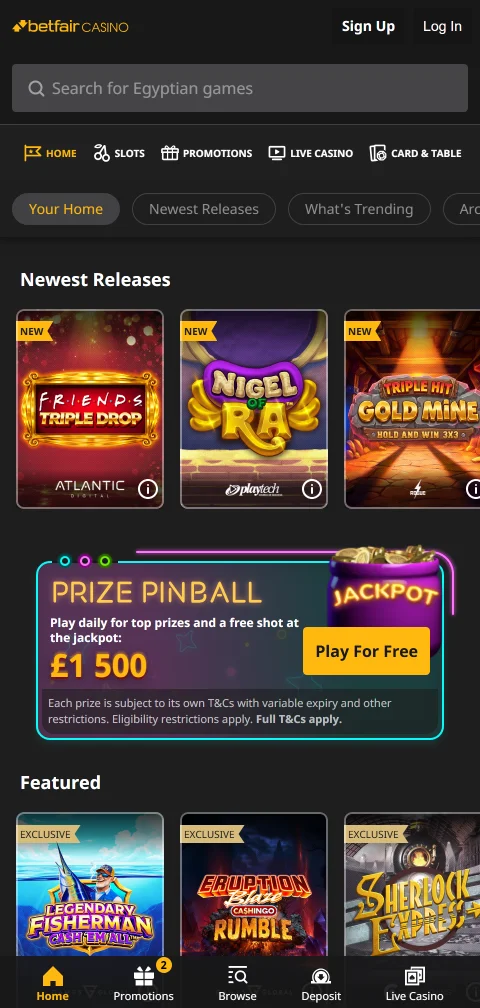
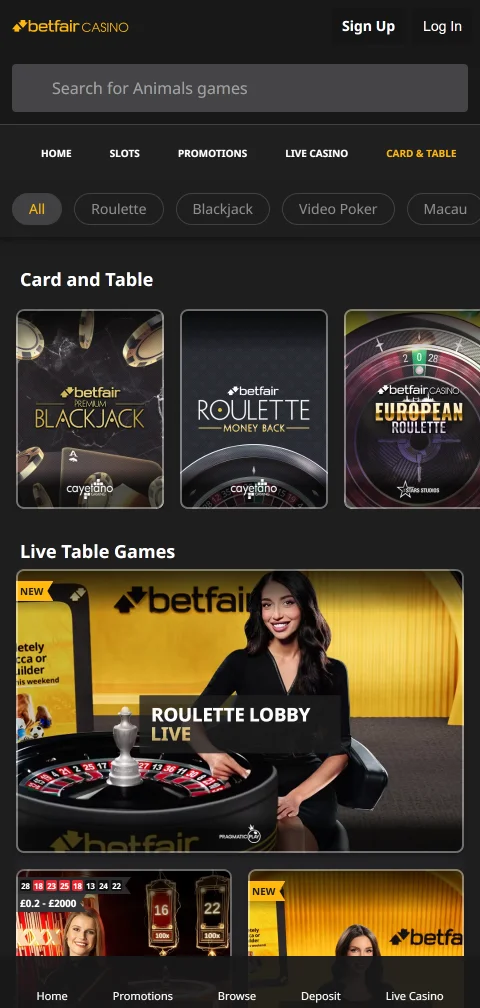
| Key Feature | Casino, sportsbook and Exchange on one account |
| Welcome Bonus | €2 free bonus, 1x wagering, 7 days |
| Min. Deposit | €5 via Pay by Bank; €20 standard transfer |
| Number of Games | Approximately 1,000+ titles |
| Game Providers | Blueprint (Jackpot King), Evolution, others |
| Payment Methods | Debit card, Pay by Bank, bank transfer, Apple Pay |
| Payment Services | Visa, Mastercard, Apple Pay, PayPal (typically) |
| Mobile App | iOS and Android apps, plus browser |
| VIP Programme | No public VIP scheme confirmed |
| RTP | Typically 94-97% on slots |
| Licence | GRAI (betting); MGA/CRP/131/2006 (gaming) |
| Operator | Flutter Entertainment plc group |
| Launch Date | Betfair brand founded 1999 |
| Legal Age | 18+ |

- Licence entities and numbers listed on a public regulatory information page, not buried in terms
- Pay by Bank withdrawals are stated at 1-4 hours, with a €5 minimum
- The €2 free bonus carries only 1x wagering, which is unusually light
- The Irish casino welcome offer is small next to the sportsbook and UK casino deals
- Standard bank transfers take 1-5 days and need a €20 minimum deposit
Help-centre articles on withdrawals and bank transfers, plus live chat through a linked messenger, are reviewed in the Betfair Casino support assessment, which notes that hours are not published.
William Hill Casino review
| Key Feature | One account for sportsbook, Vegas, poker and bingo |
| Welcome Bonus | 200 free spins on Big William Hill Fortune for a €10 stake |
| Min. Deposit | Typically around €5-€10 depending on method |
| Number of Games | Approximately 1,700-2,000 |
| Game Providers | Playtech, Games Global, Red Tiger, ELK Studios, Pragmatic Play |
| Payment Methods | Visa, Mastercard, bank transfer, Apple Pay, PayPal |
| Payment Services | Visa Direct, PayPal, Skrill, Neteller, Paysafecard |
| Mobile App | iOS and Android (Vegas app) |
| VIP Programme | No public tiered VIP scheme confirmed |
| RTP | Typically around 94-97% per slot |
| Licence | Gibraltar Remote Gaming Licence 112 (casino); GRAI-1096-RB-26-0001 (sportsbook) |
| Operator | WH Ireland Limited (Evoke plc group) |
| Launch Date | 1934 (brand); online casino since the late 1990s |
| Legal Age | 18+ |



- Casino operated under Gibraltar Remote Gaming Licence 112, with the operator named in every footer
- Visa Direct card withdrawals stated at up to four hours, weekends included
- Support runs 24/7 through Messaging, and one login covers sportsbook, Vegas, poker and bingo
- Free spin winnings are capped at €30 and unused spins disappear after 24 hours
- Casino side is not yet licensed by the Irish regulator; no phone line confirmed for Irish players
Support at this Evoke plc brand runs 24/7 through Messaging, with no phone line confirmed for Ireland, and help-centre routes for ARN requests on delayed card payouts; our William Hill Casino support assessment sets out each channel.
Betway Casino review
| Key Feature | Casino and sportsbook on one wallet |
| Welcome Bonus | Up to €50 free bet + 50 bonus spins |
| Min. Deposit | €5 (debit card, for the welcome offer) |
| Number of Games | Approximately 500+ slots, plus tables and live |
| Game Providers | Games Global, NetEnt, Pragmatic Play; Evolution live |
| Payment Methods | Visa, Mastercard debit, open banking, e-wallets |
| Payment Services | Debit cards, PayPal, open banking |
| Mobile App | iOS and Android apps, plus browser |
| VIP Programme | Invitation-only; no public tier table |
| RTP | Typically 94-97% on slots |
| Licence | MGA/B2C/130/2006; GRAI licence (betting) |
| Operator | Betway Limited (Malta) |
| Launch Date | 2006 |
| Legal Age | 18+ |
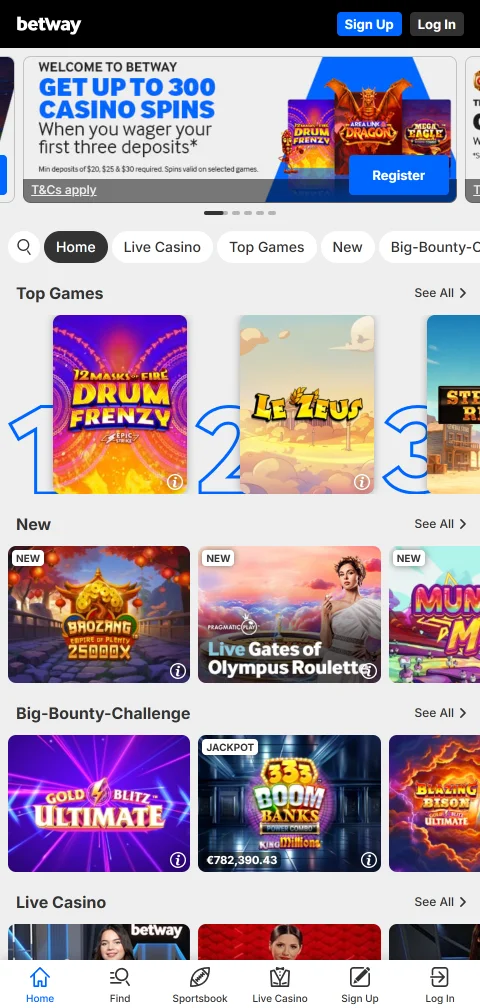
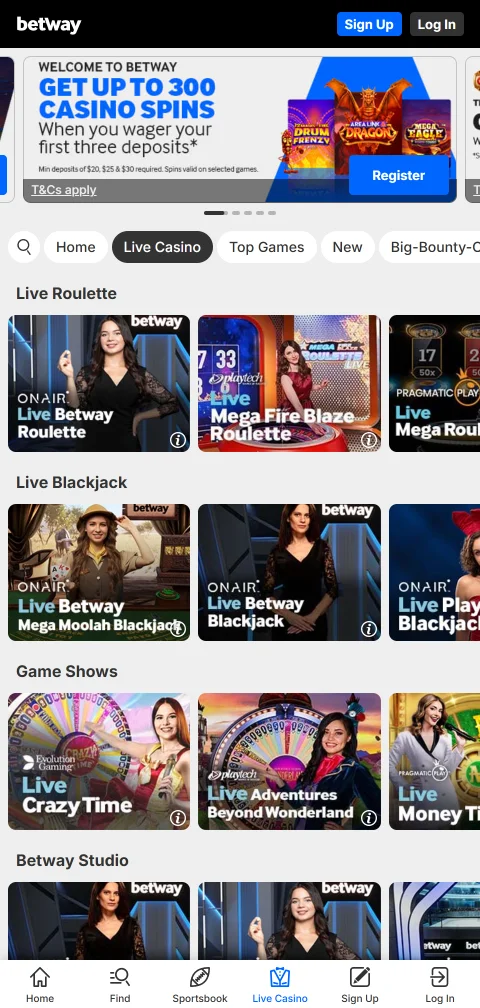
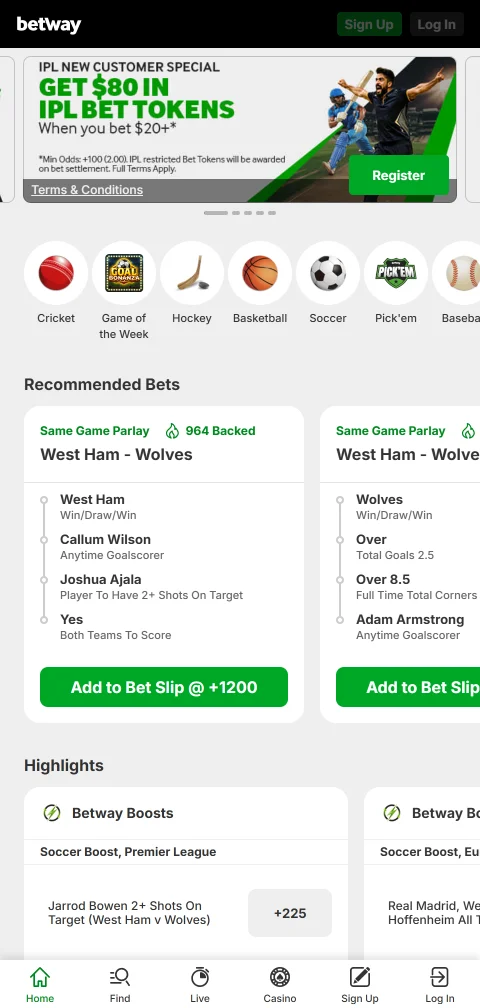
- Malta Gaming Authority licence MGA/B2C/130/2006 covers the casino product for Irish players
- GRAI register lists Betway for remote sports betting since the July 2026 licensing round
- Stated withdrawal processing within 24 hours, with one to two days in total
- Welcome offer starts from a €5 debit card deposit, lower than many rivals
- Bonus spins carry 50x wagering, and the offer expires seven days after registration
- Free bet returns winnings only; the €50 stake itself is never paid back
- Ireland has no online casino licence yet, so casino play relies on Malta
Live chat and email, no Irish phone line and no published hours for Ireland: support is the lowest-scored area in our Betway Casino editorial assessment, which also sets out the escalation routes to the GRAI and Malta.
How we rank casinos for online roulette
The ranking is built from what each casino publishes: the wheel versions it carries, the table rules, the bonus terms, the payment pages and the licence on record. Commission paid by an operator does not move a placing, and neither does the size of a headline bonus.
Roulette offers and their terms
A bonus that lets roulette count towards wagering at 10% or more, with the excluded bets named plainly, raises a placing. A bonus where roulette contributes nothing, or where even-money bets are banned without that rule appearing in the main terms, lowers it. A cashback paid on net roulette losses without wagering ranks above a large match bonus that roulette cannot clear.
Payout speed and payment methods
Withdrawals processed within 24 hours on cards and e-wallets, with no fee and a published minimum, raise a placing. A pending period beyond 72 hours, a withdrawal fee on standard methods, or a fresh document request on every withdrawal after KYC is complete, lowers it.
Roulette selection and providers
This criterion carries the most weight on this page, because the wheel is the price. A casino raises its placing by carrying European roulette and at least one French table with la partage or en prison, from studios with RNG games certified by an independent testing lab. A lobby dominated by American double-zero tables lowers a placing, as does a game whose rules panel hides the zero rule or the payout table. Side-bet variants are counted separately, since their edge is rarely shown on the table.
Mobile play and table loading
A placing goes up when the roulette lobby filters by wheel type on a phone and the racetrack betting area stays usable on a small screen. It goes down when live streams drop to a still frame between spins, or when the rules panel cannot be opened from inside the game.
Licence details and game certification
A current licence that can be confirmed on the regulator’s public register raises a placing, and so does a named testing lab behind the RNG tables. The Gambling Regulation Act 2024 created a dedicated Irish regulator, and once its online licences are issued and an operator holds one, that weighs heavily here. A casino whose licence number does not match the register entry, or whose certification page names no lab at all, is dropped from the list rather than placed low.
Customer support and how reachable it is
Live chat available around the clock in English, with agents who can answer a rules question about a specific table, raises a placing. Email-only support, chat limited to office hours, or answers that point the player back to the generic help page instead of the table’s own rules, lowers it.

What the house edge on a roulette wheel actually means
Roulette is one of the few casino games whose mathematics can be worked out on the back of an envelope. The house edge, which is the share of every stake the casino keeps over the long run, comes entirely from the zero pockets, since each payout is set as if those pockets did not exist.
Take a single-zero wheel with 37 pockets. A straight-up bet on one number pays 35 to 1, but the true odds against it are 36 to 1, and that gap of one unit across 37 spins is where the 2.70% comes from.
Over €500 of total stakes, that edge works out to an expected cost of about €13.50. That figure is a long-run average across many players and many sessions, and it is never a forecast of what one evening will bring: a single player can finish €200 ahead or €300 behind on the same wheel. What the edge does tell you is the price of the entertainment once enough spins have been played for luck to even out.
The edge stays the same however you bet.
On a standard single-zero wheel, almost every bet on the layout carries the same 2.70%, whether it covers one number or eighteen. Spreading chips across the table changes how often you win and how much each win pays, but it does not change the expected cost per euro staked. That is why the choice of wheel matters so much more than the choice of bet.
European or American roulette: the zero decides
The two common wheels look almost identical on screen, and the difference is one green pocket. The American wheel adds a double zero, bringing the total to 38 pockets while leaving the payouts unchanged, so the house edge almost doubles to 5.26%.
Run the same €500 of stakes through an American table and the expected cost rises to roughly €26.30, against €13.50 on the European wheel. The American layout also offers a five-number bet covering 0, 00, 1, 2 and 3, which carries an edge of 7.89% and is the costliest standard bet on any roulette table. French roulette uses the single-zero wheel and usually adds la partage, a rule that returns half of an even-money stake when the ball lands on zero, which cuts the edge on those bets to 1.35%. Some French tables use en prison instead, where the stake is held for one more spin, and the long-run cost on even-money bets comes out at the same 1.35% or close to it depending on the exact version.
The comparison below sets the two main wheels side by side on the points that change what a player pays.
European roulette (single zero) | American roulette (double zero) |
|---|---|
| 37 pockets, house edge of 2.70% on nearly every bet | 38 pockets, house edge of 5.26% on nearly every bet |
| Often paired with la partage or en prison on French tables | No equivalent zero rule on standard tables |
| Straight-up bet pays 35 to 1 | Straight-up bet pays 35 to 1 |
| No five-number bet on the layout | Five-number bet with a 7.89% edge |
Myths about roulette that cost money
Most roulette myths share one mistake: they treat the wheel as if it remembers. It does not. Each spin is independent of every spin before it, whether the result comes from a physical wheel in a live studio or from a certified random number generator.
Red is due after a run of black
After ten blacks in a row, red is no more likely on the eleventh spin than on the first. On a single-zero wheel, red still has 18 chances in 37, and a hot-numbers panel showing the last hundred results describes the past without predicting anything.
A betting system can beat the edge
Progressions such as the Martingale, where the stake is doubled after each loss, change the shape of the results rather than their cost. They produce many small wins and the occasional very large loss, either when a losing run is long enough or when the table maximum stops the doubling. The expected cost per euro staked stays at the house edge of the wheel, because no arrangement of bets with a negative expectation adds up to a positive one.
One good session proves nothing, and neither does one bad one.
Roulette bets, payouts and the cost of each
The table sets out the standard inside and outside bets on a single-zero wheel: how many numbers each covers, what it pays and what it costs over the long run. The figures follow from the 37-pocket layout itself, so they hold on any European table that pays standard odds.
| Bet type | Numbers covered | Payout | House edge |
|---|---|---|---|
| Straight up | 1 | 35 to 1 | 2.70% |
| Split | 2 | 17 to 1 | 2.70% |
| Street | 3 | 11 to 1 | 2.70% |
| Corner | 4 | 8 to 1 | 2.70% |
| Six line | 6 | 5 to 1 | 2.70% |
| Red or black | 18 | 1 to 1 | 2.70% (1.35% with la partage) |
How to check a roulette table before playing
A roulette game’s name often says less than its rules panel. Two tables both called European roulette can differ in their limits, their zero rule and any side bets attached, and the details sit in the help or info button inside the game.
A few minutes with that panel tells you more than any review can.
Five checks before your first spin
These checks take a couple of minutes per table and apply equally to RNG and live roulette. They rely only on what the game and the casino publish.
- Step 1
Count the zeros on the wheel
Look at the wheel or the layout for a double zero. A single green pocket means a 2.70% edge; two green pockets mean 5.26%, whatever the table is called. - Step 2
Open the rules panel inside the game
Find the info or help button and read the payout table and the stated RTP. A single-zero table without a zero rule should show 97.30%. - Step 3
Look for la partage or en prison
On French tables, check whether the zero rule applies to even-money bets. With it, those bets cost 1.35% over the long run instead of 2.70%. - Step 4
Read the table limits against your budget
Note the minimum and maximum stake per spin. A minimum that takes a large share of your session budget shortens play without changing the odds. - Step 5
Check how bonuses treat roulette
Before accepting an offer, find roulette in the game contribution list. Many bonuses count it at a low percentage or exclude it, and some ban covering both red and black.
Live roulette and RNG roulette compared
RNG roulette, the digital version, draws its results from a random number generator that independent testing labs certify before the game goes live. Live roulette uses a real wheel and dealer filmed in a studio, with the result read by sensors and shown on screen.
The mathematics is identical on both when the wheel and rules are the same. A live European table and an RNG European table both carry 2.70%, and neither is more or less fair because of how the ball is spun. What differs is pace: an RNG table can be played as fast as the player clicks, while a live table runs at the dealer’s speed, which usually means fewer spins per hour.
Fewer spins per hour means a lower expected cost per hour at the same stake, since the edge applies to each euro bet rather than to each minute played. Live tables also tend to have higher minimum stakes than RNG versions, and some live variants add random multipliers on straight-up numbers. Those multiplier games usually reduce the standard straight-up payout to fund the multipliers, so their edge differs from the plain wheel and has to be read from that game’s own rules panel.
Roulette and the rules for Irish players
The Gambling Regulation Act 2024 set up the Gambling Regulatory Authority of Ireland, which is taking over the licensing of online casinos offered to Irish players. Until its online licences are in place across the market, the casinos open to Irish players operate under licences issued elsewhere, and the listing records which regulator each one answers to.
For a roulette player, the practical checks stay the same whichever regulator is named. Confirm that the licence number on the casino’s footer appears on that regulator’s public register, and that the RNG games list a testing lab. Deposit limits, time-outs and self-exclusion should be available from the account settings.
Winnings from gambling are not normally taxed for players in Ireland, though anyone with an unusual situation should confirm their own position with Revenue.
Playing roulette within your limits
Roulette is quick, and a fast RNG table can run through hundreds of spins in an hour, so the house edge adds up faster than many players expect. Decide on a session budget before you open the lobby and treat it as the cost of the evening rather than money to be won back.
Set a deposit limit in the account settings when you register, not after a losing run. Time-outs and self-exclusion are available at licensed casinos and can be switched on without explaining yourself to anyone. If chasing losses or betting more than you planned becomes a pattern, the support organisations listed below offer free and confidential help.
What to remember before choosing a roulette table
If one figure stays with you, let it be the gap between 2.70% and 5.26%: the second zero doubles the price of every bet, and no strategy wins that back. The wheels, rules and terms on this page were last reviewed on 22 September 2026. The ranking would shift if a casino dropped its single-zero tables or cut roulette’s bonus contribution to nothing. What this page does not cover is side-bet roulette, whose edge has to be read game by game.
Online roulette questions answered
Which online roulette has the lowest house edge?
French roulette with la partage or en prison has the lowest edge on even-money bets, at 1.35%. Standard European roulette sits at 2.70% across nearly every bet. American roulette, with its double zero, costs 5.26%, which is roughly twice the European figure for the same stakes.
Is online roulette rigged?
RNG roulette at licensed casinos is certified by independent testing labs, which check that results are random and that the payouts match the stated rules. The casino’s profit comes from the zero pockets, not from manipulating spins. Checking the licence on the regulator’s register and the named lab is the reliable way to confirm a game.
Can a betting system beat roulette?
No. Systems such as the Martingale or Fibonacci change how wins and losses are spread across a session, but every bet still carries the wheel’s house edge. Over enough spins, the expected cost per euro staked is the same whatever system is used, and table maximums cap how far a progression can run.
What does 97.30% RTP mean on a roulette table?
RTP, or return to player, is the share of total stakes paid back over the long run. On a single-zero wheel it is 97.30%, the mirror of the 2.70% edge. Across €1,000 of stakes the average return is €973, though any single session can land far from that figure.
Does roulette count towards bonus wagering?
Often only partly. Many casinos count roulette at a reduced rate, such as 10% or 20%, or exclude it from wagering entirely, and some forbid covering both red and black in one spin. The game contribution list in the bonus terms states the exact rate for each offer.
Is live roulette fairer than RNG roulette?
Neither is fairer. With the same wheel and rules, both carry the same house edge, 2.70% on a European table. Live roulette is slower, so a player stakes less per hour at the same bet size, while multiplier variants change the payout table and have to be judged on their own rules.
More about online casinos







Look first at whether each casino lists French roulette separately. A lobby that names the zero rule usually shows the RTP in the game too.