

















Stake Casino review
| Key Feature | 31 in-house Stake Originals |
| Welcome Bonus | 200% up to approx. €1,700, 40x wagering (code-based) |
| Min. Deposit | Typically around €10 in crypto equivalent |
| Number of Games | More than 2,000 |
| Game Providers | Stake Originals, Pragmatic Play, Evolution, Hacksaw Gaming |
| Payment Methods | Bitcoin, Ethereum, Litecoin, USDT, Dogecoin |
| Payment Services | MoonPay, crypto wallets |
| Mobile App | Mobile browser site, no Irish app |
| VIP Programme | Yes, tiered VIP with rakeback |
| RTP | Approximately 96-99% depending on game |
| Licence | Curaçao Gaming Authority OGL/2024/1451/0918 |
| Operator | Medium Rare N.V. |
| Launch Date | 2017 |
| Legal Age | 18+ |



- Crypto withdrawals are often processed in under an hour once KYC is cleared
- A lobby of more than 2,000 games, including 31 in-house Originals
- Licence number OGL/2024/1451/0918 and operator Medium Rare N.V. are published openly
- Stake geo-blocked Irish users in September 2026 after engagement with the GRAI
- No GRAI licence, and the coded bonus carries 40x wagering on deposit plus bonus
Stake identity checks take from minutes to around 72 hours, and withdrawals can wait on them; the Stake Casino verification guide lists the documents.
BC Game Casino review
| Key Feature | Crypto-first cashier with provably fair BC Originals |
| Welcome Bonus | 180% on the first of four monthly deposits |
| Min. Deposit | Approximately €10, varies by method |
| Number of Games | 10,000+ |
| Game Providers | 170+, incl. Pragmatic Play, Evolution, Hacksaw Gaming |
| Payment Methods | BTC, ETH, USDT, LTC, DOGE, XRP, third-party fiat on-ramps |
| Payment Services | Visa, Mastercard, Skrill, Neteller where offered regionally |
| Mobile App | Browser-based mobile site |
| VIP Programme | Tiered VIP club with rakeback |
| RTP | Typically 94-97% on third-party slots |
| Licence | Anjouan, ALSI-202410011-FI1 |
| Operator | Twocent Technology Limited (Belize) |
| Launch Date | 2017 |
| Legal Age | 18+ |
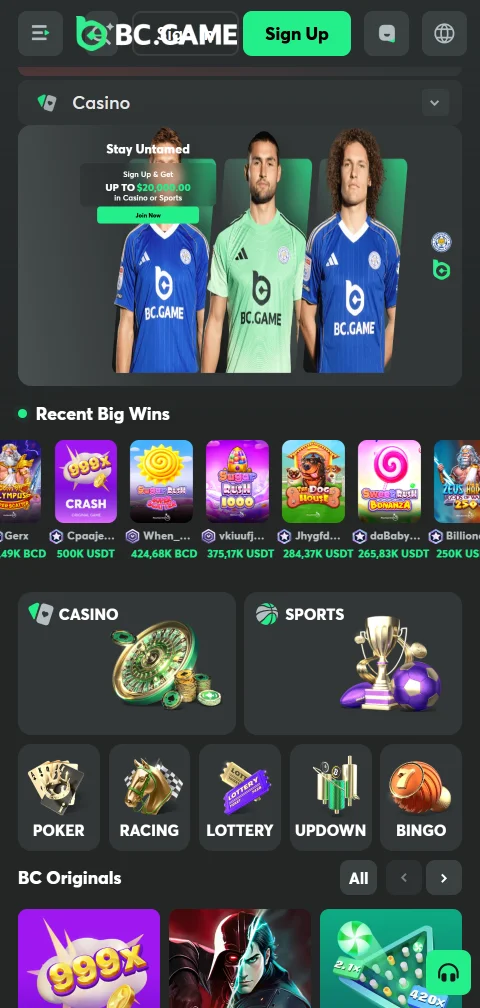


- Crypto payouts on USDT and ETH usually land within minutes once the request is approved
- Over 10,000 titles from more than 170 studios, including Evolution for live tables
- Operator, Belize company number and Anjouan licence number are all published on the licences page
- Live chat runs 24/7 in several languages, with email at [email protected] as backup
- Holds no Irish licence; offshore Anjouan oversight offers Irish players far less recourse
- Fiat options for Irish accounts depend on third-party on-ramps rather than a native euro cashier
- Bonus unlocks drip out through wagering, and the terms vary by region and over time
Email and phone verification come before any withdrawal, and each deposit must be wagered 1x first. Larger cash-outs can bring KYC or source-of-funds checks, all of it described in our BC Game registration guide for new accounts.
Cloudbet Casino review
| Key Feature | Crypto cashier with 30+ coins |
| Welcome Bonus | Up to approx. €2,150 cash over 30 days |
| Min. Deposit | Varies by coin; card purchase from about €7 |
| Number of Games | Over 3,000 |
| Game Providers | Evolution, Pragmatic Play, Play'n GO, Playtech, BGaming, Ezugi |
| Payment Methods | Bitcoin, Ethereum, USDT, USDC, Litecoin, Solana |
| Payment Services | Visa, Mastercard, Apple Pay, Google Pay, Skrill, Neteller via Swapped |
| Mobile App | Mobile browser site |
| VIP Programme | Cloudbet Rewards with rakeback |
| RTP | Typically 94-97% on slots, varies by title |
| Licence | Curaçao Gaming Authority, OGL/2024/328/0599 |
| Operator | Halcyon Super Holdings B.V. |
| Launch Date | 2013 |
| Legal Age | 18+ |

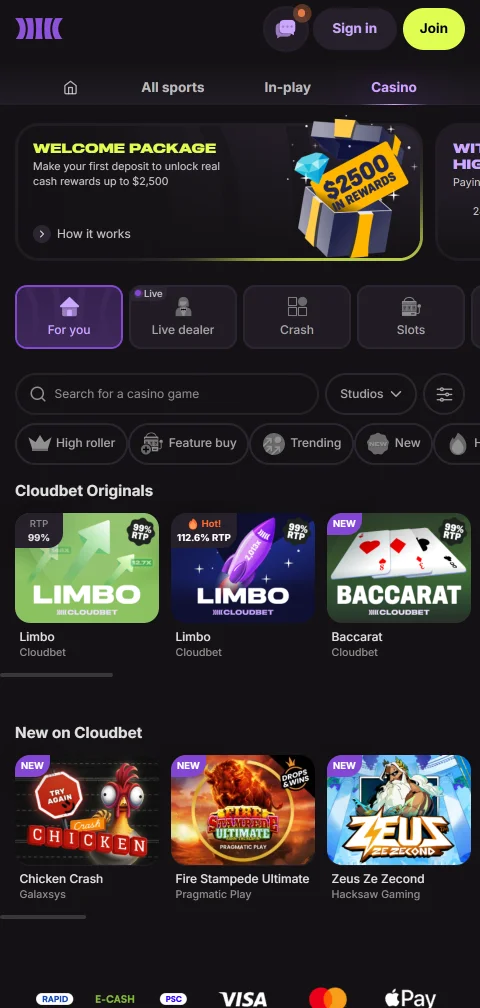

- Welcome Package pays real cash rather than bonus credit, with a 1x deposit playthrough
- Crypto withdrawals are mostly instant and the published ceiling is 24 hours
- Live casino tables from Evolution, Pragmatic Play, Ezugi and OneTouch
- No euro deposits directly: card, Skrill or Apple Pay payments buy crypto through Swapped, with fees
- Offshore Curaçao licence only, with no Irish licence and no local complaints route
Sign-up needs only an email and password. ID checks begin at $2,200 in cumulative deposits, and verified Level 2 accounts lose the daily withdrawal ceiling. Our Cloudbet Casino verification review covers the documents requested and the step where payouts stall.
Roobet casino review
| Key Feature | Crypto-first cashier with fast blockchain payouts |
| Welcome Bonus | 100% up to approximately €870 ($1,000) |
| Min. Deposit | Approximately €10 in crypto; card minimum around €15 |
| Number of Games | Approximately 7,000+ |
| Game Providers | In-house Roobet originals plus third-party slot and live studios |
| Payment Methods | Bitcoin, Ethereum, USDT, USDC, Litecoin, XRP, Dogecoin, Tron |
| Payment Services | Crypto wallets, Changelly, cards where offered |
| Mobile App | Mobile browser site; no confirmed native app |
| VIP Programme | Yes, with rakeback and cashback tiers |
| RTP | Typically 94-97% on slots; originals vary by game |
| Licence | Curaçao Gaming Authority, OGL/2024/687/0427 |
| Operator | Raw Entertainment B.V. (Reg. 157205) |
| Launch Date | 2019 |
| Legal Age | 18+ |



- Crypto withdrawals in most coins typically clear within about 15 minutes of approval.
- Licence OGL/2024/687/0427 is listed as active on the Curaçao Gaming Authority certificate.
- Ireland does not appear on the operator's published list of restricted countries.
- Rakeback can be claimed frequently, which suits players who dislike locked bonus balances.
- No Irish licence: disputes go through Curaçao rather than an Irish or EU regulator.
- Welcome wagering of around 30x deposit plus bonus is heavy for a first deposit.
- Fiat options such as Irish debit cards or PayPal are limited or unconfirmed for Ireland.
Registration is quick, but a first or large withdrawal can trigger ID, address and source-of-funds checks; the Roobet verification guide lists the documents to upload in advance.
BitStarz casino review
| Key Feature | Crypto and euro cashier, payouts targeted within 1 hour |
| Welcome Bonus | 100% match plus 180 free spins, 40x wagering |
| Min. Deposit | €20 (around 0.0002 BTC in crypto) |
| Number of Games | Over 4,500 |
| Game Providers | Pragmatic Play, Play'n GO, Hacksaw Gaming, BGaming, ELK Studios, Yggdrasil |
| Payment Methods | Visa, Mastercard, Skrill, Neteller, bank transfer, crypto |
| Payment Services | Bitcoin, Lightning, Ethereum, Litecoin, Tether, Dogecoin |
| Mobile App | Browser-based mobile site, no native app |
| VIP Programme | Yes, invitation-based loyalty tiers |
| RTP | Approximately 96% across slots, varies by title |
| Licence | Curaçao Gaming Authority, OGL/2024/165/0185 |
| Operator | Gareton B.V., Curaçao (reg. 160656) |
| Launch Date | 2014 |
| Legal Age | 18+ |
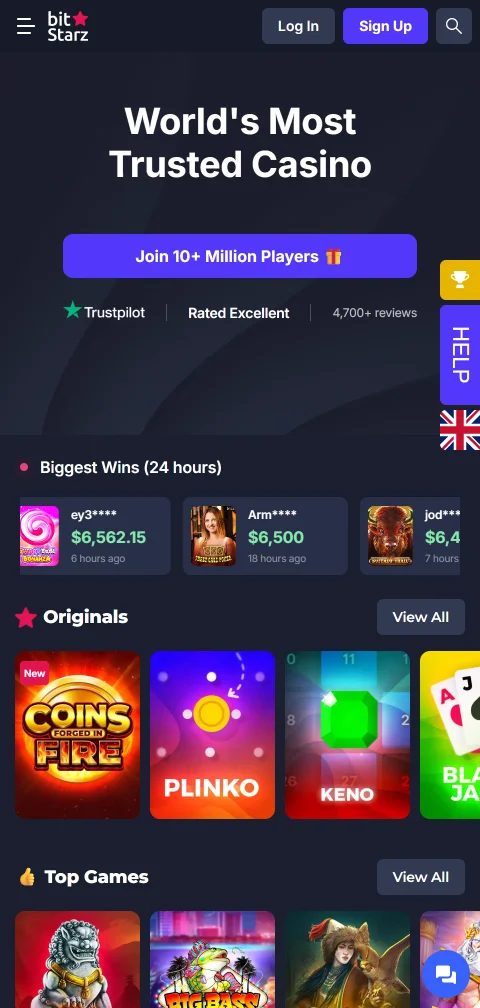


- Terms commit to paying withdrawals within one hour where possible, with no casino fee charged
- Euro accounts for Irish players alongside Bitcoin, Lightning and roughly ten other coins
- Library of over 4,500 titles from Pragmatic Play, Play'n GO, Hacksaw and ELK
- Curaçao licence only; no Irish regulation and no independent ADR body for disputes
- Bank transfers take 3 to 10 banking days, and 40x wagering applies to bonus funds
KYC at BitStarz asks for photo ID and proof of address at the first withdrawal, with further checks possible on large wins; the €20 minimum deposit and verification order are in the BitStarz registration walkthrough.
How we rank low minimum withdrawal casinos
The ranking is built from published cashier terms, withdrawal floors per method, fee tables and licence records, read against each other. Affiliate payments do not move a placing, and neither does the size of a welcome offer when its terms block small cashouts.
Bonuses and how they affect small cashouts
A placing rises when bonus funds sit apart from real money, so a €10 withdrawal of cash winnings is not frozen by unfinished wagering. Wagering at 35x or under, and a bonus you can forfeit without losing deposited money, both help. A rule that voids all winnings once you withdraw below the bonus target lowers it.
Withdrawal floors and payout speed
This is the heaviest criterion on this page. A floor of €10 or less on at least two everyday methods raises a placing, and a €5 floor on one of them raises it further. Processing within 24 hours for verified accounts helps. A floor of €20 or more on cards, a per-withdrawal fee on small amounts, or a pending period longer than 72 hours lowers it, as does a rule that small requests are batched and paid weekly.
Games that suit a small balance
Low stakes matter when the whole point is a small cashout. Slots that open at 10c a spin, and live tables with €1 minimums, raise a placing, because a modest balance can actually be played. A library in which most tables start at €5 lowers it.
Cashier use on mobile
Many small withdrawals are made from a phone, so the cashier has to show the floor for each method before you type an amount. A placing rises when the mobile cashier lists the same methods and limits as the desktop site, and when Apple Pay or Google Pay deposits have a clear return route. Hiding limits behind a help article, or dropping a method on mobile, lowers it.
Licence and the terms behind the floor
A licence on record with a regulator that publishes its register raises a placing, as do terms that state the withdrawal floor, the fees and the pending period in one place. A casino whose floor appears only in support replies, or whose terms change without a dated version, loses ground. Under the Gambling Regulation Act 2024 credit cards are out for gambling in Ireland, so a cashier still offering them counts against the operator rather than for it.
Support for payment questions
Support counts when it can answer cashier questions plainly: the floor for a method, why a request is pending, what document is missing. Live chat open in Irish evening hours raises a placing. Scripted answers that point back to the terms page without reading them lower it.


BC Game Casino
Monthly deposit bonus
Roobet casino
First deposit bonusWhat a low minimum withdrawal actually means
The minimum withdrawal is the smallest amount a casino will send back to you in one request. On most cashiers it is set per method, so a site can advertise a €10 floor while its bank transfer route starts at €20 or more.
Read the figure next to the method you actually use, not the one in the banner.
A low floor helps in three practical situations. You have a small win you want to bank before it drifts back into play. You want to test a new casino’s payout process with a modest amount before trusting it with more. Or you are closing an account and the balance left over is small enough that a high floor would strand it. That last case is where a €30 floor stops being a detail and starts being lost money.
The floor is only one of the limits in a cashier. Daily, weekly and monthly caps sit at the other end, and a fee can wipe out a small withdrawal even when the floor allows it.
How to check a casino's withdrawal floor before depositing
The floor is cheaper to find before you deposit than after. These four checks take a few minutes on any cashier.
- Step 1
Open the cashier's withdrawal tab first
Most cashiers show deposit limits by default. Switch to the withdrawal view, where the floor for each method is listed, and note the figure beside the method you plan to use. - Step 2
Match the deposit and withdrawal method
Casinos usually pay back to the method you deposited with. If that route has a higher floor than the e-wallet you hoped to use, the higher floor is the one that applies to you. - Step 3
Read the fee line beside the floor
A €10 floor with a €2.50 fee costs you a quarter of the withdrawal. Check whether a fee applies below a set amount, or on more than one free request per week. - Step 4
Verify your ID before the first request
The first withdrawal is where most small cashouts stall, because KYC checks start then. Uploading ID and proof of address early keeps a €10 request from sitting in pending for days.
Why a low floor can still leave money stranded
A cashier can meet the €10 test on paper and still fail you in practice. The usual cause is not the floor itself but a rule sitting next to it.
Bonus money is the most common one. If any part of your balance is still under wagering, many casinos block withdrawals altogether, or let you withdraw only after forfeiting the bonus and the winnings tied to it. A €12 balance made of €8 in bonus funds and €4 in cash is, for withdrawal purposes, a €4 balance, which is below almost every floor.
The second trap is the reverse of the first: a minimum that rises for some methods. Bank transfers often carry a higher floor than cards or e-wallets because each transfer costs the operator more to send, and some casinos pass that cost on as a fee rather than raising the floor.
The third is the closing balance. When you leave a casino with less than the floor in the account, the terms decide what happens next, and some are silent on it.
Ask support before you self-exclude or close an account, not after.
Withdrawal floors by payment method
The ranges below summarise the floors and processing windows printed in the cashier terms of the casinos we read for this page. They are not a promise from any one operator, and your casino’s own figure is the one that counts.
| Method | Typical floor | Usual processing |
|---|---|---|
| Debit card (Visa, Mastercard) | €10 to €20 | 1 to 5 banking days |
| PayPal, Skrill, Neteller | €5 to €10 | Same day to 48 hours |
| Revolut or Apple Pay route | €10 to €20 | 1 to 3 days, varies by card |
| Bank transfer | €20 to €50 | 2 to 7 banking days |
Where small withdrawals usually stall
A small withdrawal moves through the same stages as a large one. Knowing which stage you are in tells you whether to wait or to ask.
The pending period
Most casinos hold a new request as pending for anything from a few hours to 72 hours before processing it. During that window you can usually reverse the withdrawal back into your balance, which is the feature the hold exists to encourage. If your casino lets you switch reversal off, or offers a flush option that locks the request, use it.
The first-withdrawal check
This is the stage that stalls most often. KYC rules mean the casino must confirm who you are before it pays out, and a casino that never asked for documents at deposit will ask now. Photo ID and a proof of address dated within the last three months are the standard request, and a card withdrawal may also need a photo of the card with the middle digits covered. On larger sums a source-of-funds question can follow, though it is rare at the €10 level.
The method’s own timing
Once approved, the payment is in the method’s hands. E-wallets usually credit within hours, while cards and bank transfers depend on banking days, so a request approved on Friday evening can sit until the following week.
Later withdrawals are usually faster than the first.
Fees, caps and the small print around the floor
A low floor is only worth having if the amount that arrives is close to the amount you asked for. Two lines in the terms decide that.
The first is the fee. Some casinos charge a flat amount per withdrawal, others charge only on requests below a threshold, and others allow a set number of free withdrawals each week or month before a charge applies. A flat €2 to €3 charge is trivial on €500 and painful on €10. Where a fee exists, the honest comparison is the net figure: a €15 floor with no fee leaves you better off than a €5 floor that costs €2.50 each time you use it at a small amount.
The second is the currency. If your account is held in euro and your method is in euro, there is no conversion to worry about, but an account opened in sterling or dollars can lose a few per cent on each side.
Caps are less of an issue on this page, since the whole point is small amounts. They matter only if a small floor comes paired with a very low weekly cap.
E-wallets or debit cards for small cashouts
For small withdrawals, the choice of method often decides more than the choice of casino. The comparison below sets the two most common routes for Irish players side by side on the points that matter at the €10 level.
Neither is a clear winner overall, and the casino’s rule on returning funds to the deposit method may make the choice for you.
E-wallets (PayPal, Skrill, Neteller) | Debit cards (Visa, Mastercard) |
|---|---|
| Floor often set at €5 to €10 | Floor usually €10 to €20 |
| Funds often arrive within hours of approval | Funds take 1 to 5 banking days |
| Some deposit bonuses exclude Skrill and Neteller | Bonuses rarely exclude debit cards |
| Separate account to verify and manage | Card already linked to your bank |
| Withdrawal fees vary by casino | Withdrawal fees vary by casino |
Licensing and player protection in Ireland
Ireland’s Gambling Regulation Act 2024 set up the Gambling Regulatory Authority of Ireland, which takes over licensing from the older Revenue-based system as its regime comes into force. Until its new licences cover online casinos fully, many sites open to Irish players hold a licence issued elsewhere, most often in Malta.
Check the licence number in the casino’s footer against the regulator’s public register.
For withdrawals, the licence matters because it decides who you complain to when a payout is refused. A casino licensed by a regulator with a published complaints route gives you somewhere to take a disputed €10 withdrawal, while one with an unverifiable licence gives you nowhere. The Act also bans the use of credit cards for gambling, so a cashier offering one to an Irish customer is a sign worth taking seriously.
Keeping small balances small: gambling responsibly
A low withdrawal floor makes it easier to take a small win out, and that is the healthiest way to use it. Leaving a balance in the account because it is below the floor is a common route to playing it back.
Set a deposit limit in the cashier before you play, and treat any money you deposit as spent on entertainment rather than as a stake to grow. Reality checks and session time limits are available on licensed sites, and self-exclusion stops access entirely when you need a break. If gambling has stopped being fun, or you are chasing losses, the helplines listed below offer free and confidential support to Irish players and their families.
Before you choose a low minimum withdrawal casino
The one number worth carrying away is not the floor but the net amount: floor minus any fee, on the method you actually deposited with. If that figure is under €10 and your ID is verified, a small cashout should clear in the method’s normal window. This list would change if a casino raised a card floor, added a small-withdrawal fee or tightened bonus rules on cash balances, which is why the cashier terms were checked again on 7 August 2026 before publishing.
Low minimum withdrawal casinos: common questions
What is a low minimum withdrawal?
On this page it means a floor of €10 or less on at least one everyday payment method. Floors between €20 and €50 are common on bank transfers, so a casino that lets you cash out €10 by card or e-wallet sits at the lower end of what Irish players will find.
Can I withdraw €5 from an online casino?
Sometimes, usually through an e-wallet such as PayPal, Skrill or Neteller, where floors of €5 appear in some cashiers. Cards and bank transfers rarely go that low. Check the withdrawal tab for your method, and confirm no fee applies at that amount, before you count on it.
Why is my small withdrawal still pending?
Most casinos hold requests for a pending period, often up to 72 hours, before processing them. On a first withdrawal, the usual cause is an unfinished KYC check. Look in your account for a document request, and ask support which stage the request is at if nothing is shown.
Does a bonus affect the minimum withdrawal?
It can. While bonus wagering is unfinished, many casinos block withdrawals or require you to forfeit the bonus and its winnings first. Only real cash counts towards the floor, so a balance that looks like €15 may be well under €10 once bonus funds are removed.
Do casinos charge fees on small withdrawals?
Some do, either a flat charge on every request or a charge on withdrawals below a set amount. A €2.50 fee on a €10 cashout takes a quarter of it. The fee line usually sits beside the floor in the cashier terms, and it is worth reading both together.
What happens to a balance below the minimum?
That depends on the casino’s terms. Some let support process a one-off withdrawal of the remaining balance when you close an account, while others leave it in the account. Ask before you close or self-exclude, since the answer is easier to get while the account is still open.
More about online casinos







Look first at which method carries the low floor. A casino listed for €10 cashouts may offer that only on e-wallets, while its card route starts higher.