



















PlayOJO Casino review
| Key Feature | No-wagering bonuses and OJOplus money back on every bet |
| Welcome Bonus | 50 wager-free spins on Book of Dead, €10 minimum deposit |
| Min. Deposit | €10 |
| Number of Games | 4,000+ (operator also cites over 7,000) |
| Game Providers | Evolution, Pragmatic Play, Play'n GO, NetEnt, Nolimit City, Relax Gaming |
| Payment Methods | Visa Debit, Mastercard Debit, Apple Pay, Instant Bank, Trustly |
| Payment Services | PayPal, Skrill, Neteller, MuchBetter |
| Mobile App | Mobile browser site; native apps not confirmed for Ireland |
| VIP Programme | OJO Levels with Kickers, OJO Wheel and Prize Twister |
| RTP | Varies by game; approximately 94-97% on mainstream slots |
| Licence | Malta Gaming Authority, MGA/CRP/171/2009/01 |
| Operator | Skill On Net Limited, Ta' Xbiex, Malta |
| Launch Date | 2017 |
| Legal Age | 18+ |

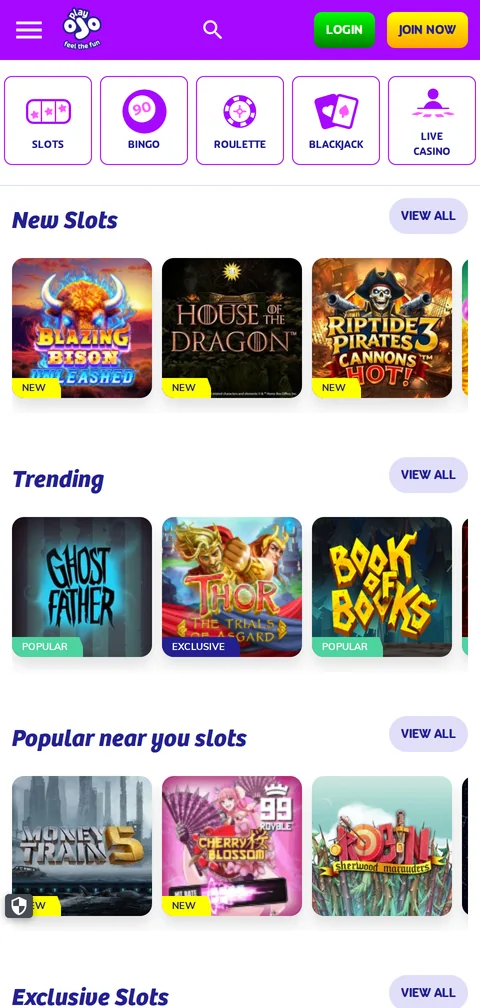

- Welcome free spins carry no wagering, so winnings are paid as withdrawable cash.
- OJOplus returns a small cash percentage on every real-money bet, win or lose.
- No minimum withdrawal on Visa, Mastercard, Apple Pay and Instant Bank payments.
- No telephone support, and the welcome offer is small next to match-bonus rivals.
- Irish GRAI licence still pending; the Irish site currently relies on its Maltese licence.
Run by Skill On Net Limited under Malta Gaming Authority licence MGA/CRP/171/2009/01, with eCOGRA for disputes, as set out in our PlayOJO Casino licence review.
Casumo Casino review
| Key Feature | Gamified Casumo platform with 5,600+ games |
| Welcome Bonus | 100% up to €300 + 50 bonus spins |
| Min. Deposit | Around €10; €20 for the welcome bonus |
| Number of Games | 5,600+ (5,100+ slots) |
| Game Providers | Pragmatic Play, Play'n GO, Evolution, Playtech, Relax Gaming |
| Payment Methods | Visa, Mastercard, Trustly, Skrill, Neteller, Paysafecard |
| Payment Services | Cards, e-wallets, instant banking via Trustly |
| Mobile App | iOS and Android apps plus mobile browser |
| VIP Programme | Loyalty rewards; terms set by the operator |
| RTP | Approximately 96% average on slots |
| Licence | Malta Gaming Authority, MGA/CRP/217/2012-05 |
| Operator | Casumo Services Limited, Malta |
| Launch Date | 2012 |
| Legal Age | 18+ |


- Malta Gaming Authority licence MGA/CRP/217/2012-05, verifiable on the regulator's public register
- Over 5,600 games, with Pragmatic Play, Play'n GO and Evolution among the studios
- Welcome offer capped at €5 per spin, a clear and checkable limit
- 30x wagering on the welcome bonus is heavier than some rivals' 10x deals
- Withdrawal approval can take up to three days before the payment rail even starts
Licence MGA/CRP/217/2012-05, held by Casumo Services Limited since 2012 and listed as active by the Malta Gaming Authority, with eCOGRA for disputes, is read in our Casumo Casino licence review.
LeoVegas Casino review
| Key Feature | Mobile-first platform with native iOS and Android apps |
| Welcome Bonus | Up to €1,000 + 200 free spins on Book of Dead |
| Min. Deposit | €10 to qualify for the welcome offer |
| Number of Games | Over 3,000 slots and table games |
| Game Providers | Evolution, Pragmatic Play, Playtech, OnAir, Stakelogic, Authentic Gaming |
| Payment Methods | Visa, Mastercard, Apple Pay, PayPal, bank transfer |
| Payment Services | PayPal, Apple Pay, Trustly (check cashier) |
| Mobile App | iOS and Android apps plus mobile browser |
| VIP Programme | Invitation-based VIP; terms not published |
| RTP | Approximately 94-97% on most slots, varies by title |
| Licence | Malta Gaming Authority, MGA/CRP/237/2013 |
| Operator | LeoVegas Gaming plc (MGM Resorts subsidiary) |
| Launch Date | Founded 2011, launched 2012 |
| Legal Age | 18+ |

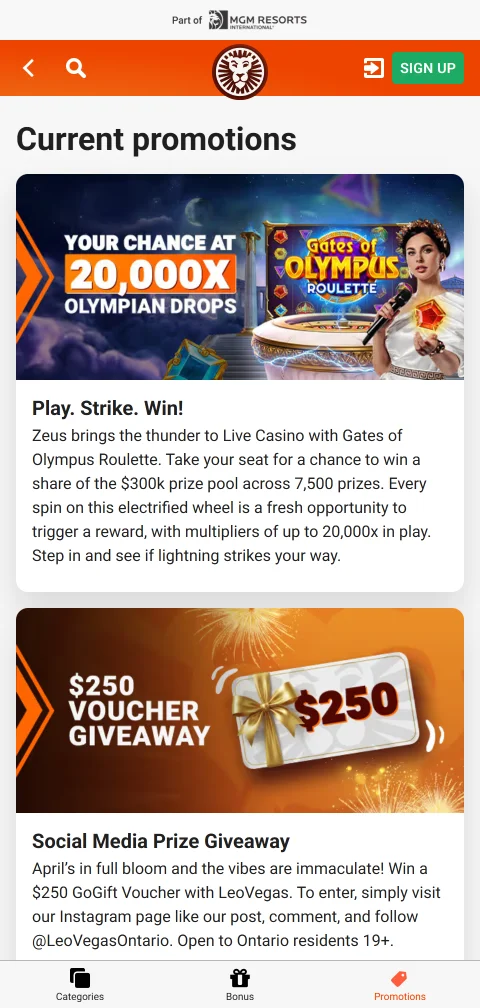

- Malta Gaming Authority licence MGA/CRP/237/2013 is printed on the Irish site's own pages
- Welcome offer needs only a €10 deposit, with 25x wagering on the cash part
- Live casino lists over 600 tables from Evolution, Playtech and Pragmatic Play Live
- Native apps on iOS and Android, and a mobile browser site that stands on its own
- Owned by MGM Resorts International since 2022, with a corporate record going back to 2011
- Irish pages state the welcome wagering as both 25x and 35x, so read the live terms
- No telephone support line; contact runs through live chat and email only
- Withdrawals can take up to five business days depending on the payment method
- No Irish GRAI casino licence yet, as online gaming licensing is phased into 2027-2028
Licensed by the Malta Gaming Authority under MGA/CRP/237/2013 since 2018, with MGM Resorts as parent, as set out in our LeoVegas Casino licence review.
Rizk Casino review
| Key Feature | Wheel of Rizk loyalty rewards |
| Welcome Bonus | 100% up to €100 plus free spins |
| Min. Deposit | Typically €10 |
| Number of Games | Around 2,500 |
| Game Providers | NetEnt, Evolution, Play'n GO, Pragmatic Play, Red Tiger |
| Payment Methods | Visa, Mastercard, Trustly, bank transfer |
| Payment Services | Skrill, Neteller, MuchBetter, Paysafecard |
| Mobile App | iOS and Android apps, plus mobile browser |
| VIP Programme | Captain Rizk levels and Wheel of Rizk |
| RTP | Approximately 96% on slots, varies by title |
| Licence | MGA sub-licence MGA/CRP/1117/2025/02 |
| Operator | Zecure Gaming Ltd (C 69036), Betsson Group |
| Launch Date | 2016 |
| Legal Age | 18+ |


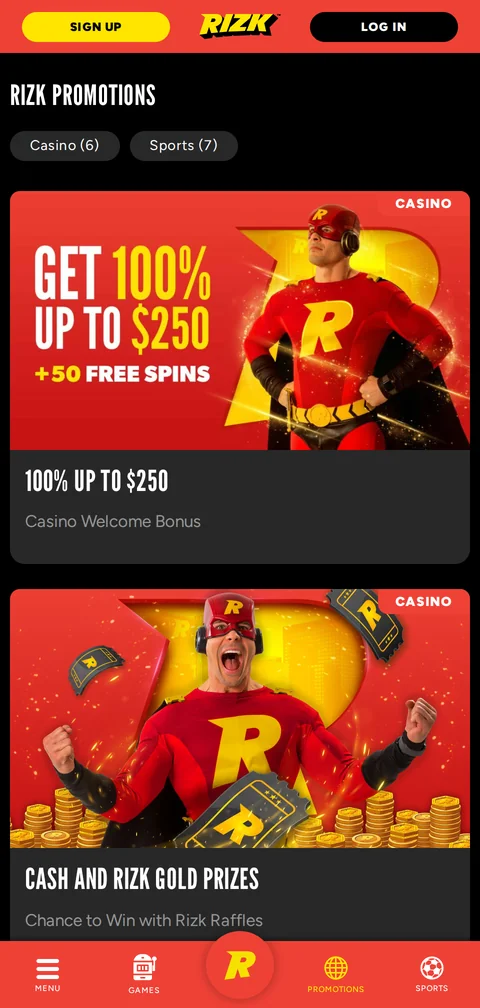
- Malta Gaming Authority sub-licence, with the number printed in the operator's footer
- Stated withdrawal processing window of up to 3 hours once KYC is cleared
- Around 2,500 titles, with live tables from Evolution and slots from NetEnt and Play'n GO
- Fee-free cashier with Trustly, Skrill and Neteller alongside debit cards
- Current terms list Ireland among the jurisdictions refused for new account registration
- Welcome bonus carries wagering of around 40x and excludes Skrill and Neteller deposits
- No phone line; support runs on live chat, email and a callback request
Zecure Gaming Ltd runs Rizk under Malta Gaming Authority sub-licence MGA/CRP/1117/2025/02, while its terms refuse new Irish accounts, as our Rizk Casino licence review explains.
888 Casino review
| Key Feature | In-house 888 slots and table games |
| Welcome Bonus | 100% up to €500, 40x wagering |
| Min. Deposit | €10 |
| Number of Games | Approximately 2,000+ |
| Game Providers | 888 in-house studio, Evolution, NetEnt, Pragmatic Play (approx.) |
| Payment Methods | Visa, Mastercard, PayPal, Skrill, NETELLER, Paysafecard, bank transfer |
| Payment Services | Skrill, NETELLER, PayPal, MuchBetter |
| Mobile App | iOS and Android apps, plus browser |
| VIP Programme | Yes, invitation-based VIP Casino Club |
| RTP | Around 95-97% on most slots, varies by title |
| Licence | Gibraltar Remote Gaming Licence No. 112 |
| Operator | 888 Eire Limited (Gibraltar) |
| Launch Date | 1997 |
| Legal Age | 18+ |

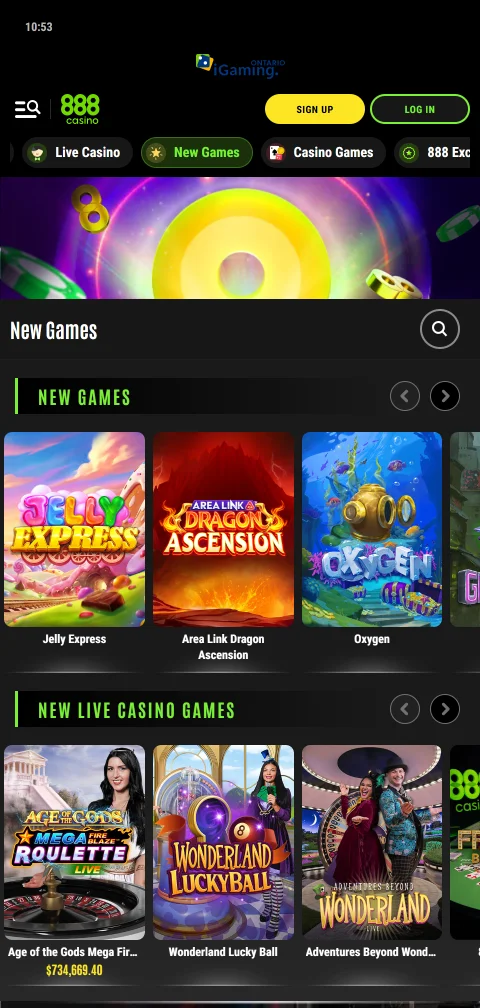

- Irish casino service licensed in Gibraltar under Remote Gaming Licence No. 112, named on every page
- Choice of welcome offers: 100% up to €500 or 100 free spins for a €10 deposit
- Operator history going back to 1997, with its own in-house slot and table studio
- Withdrawal timeframes published per method, including a one-day pending window for Gold VIP members
- Standard pending period of three business days before any withdrawal is processed
- 40x wagering on the match bonus, with Skrill and NETELLER deposits excluded from the offer
- Live chat only available while logged in and during operational hours, which are not published
Casino play for Ireland runs under Gibraltar Remote Gaming Licence No. 112, held by 888 Eire Limited and supervised by the Gibraltar Gambling Commissioner, with the separate Irish GRAI licence covering only the sportsbook, as set out in our 888 Casino licence review.
How we ranked casinos for first-time players
The ranking is built from what each operator publishes: its bonus terms, payment pages, licence record and responsible gambling tools, read the way a first-time player would have to read them. Affiliate commission and the size of a headline offer do not move a placing.
Bonus terms a beginner can follow
Wagering at or below 20x on the bonus amount alone, a deadline of at least 30 days and a max bet clause written in euro raise a placing. Wagering above 35x, a requirement on deposit plus bonus, or a cap on bonus winnings below five times the bonus lowers it, because a newcomer cannot realistically clear those terms.
Low deposits and clear withdrawals
A €10 minimum deposit, the same minimum for withdrawals and a stated processing window of 48 hours or less raise a placing. Withdrawal fees, a reversible pending period or KYC demanded only at first cash-out lower it.
Games suited to small stakes
Slots from 10c a spin and tables from €1 a hand, with RTP shown in the game info, count in a casino’s favour. A lobby that hides RTP or fronts high-minimum tables counts against it.
Mobile use and the bonus screen
What matters on a phone is whether remaining wagering, the deadline and active limits sit in the account menu. If bonus and cash balances are merged into one figure, the casino drops, since you cannot tell which money you are betting with.
Licence, limits and exclusion tools
A licence you can check on the regulator’s public register, deposit and loss limits offered during sign-up, and self-exclusion reachable from the account menu raise a placing. A cooling-off option hidden behind a support request lowers it, as does any delay on lowering a limit: raised limits ought to wait 24 hours, lowered ones apply at once.
Support that answers bonus questions
Live chat that can quote the clause behind an answer, a published complaints procedure and a named external dispute route raise a placing. Email-only support, or agents who cannot say whether a game counts towards wagering, lower it, because a beginner’s questions are almost always about terms rather than technical faults.

What makes a casino workable for a first deposit
A casino suits a beginner when you can read its terms once and know what you are agreeing to. That sounds modest, but most welcome pages fail it, because the headline figure and the conditions attached to it sit on different screens.
The cards above share two features you can check yourself: a minimum deposit low enough to try the site without committing much, and bonus terms that state wagering, deadline and maximum bet in plain figures. Neither guarantees a good experience. Both remove the most common reasons a first session ends in a complaint.
What I look at first on any beginner page is the ratio between the bonus and the betting it demands, because that single number tells you whether the offer is a trial or a commitment.
A €10 deposit with no bonus attached is often the cleaner start. You keep every cent you win, you can withdraw whenever you like, and you learn how the cashier, the game lobby and the limits screen work before any wagering clock starts running. Taking the bonus later, once you know the site, costs you nothing except the welcome-offer label, and on many sites the first-deposit offer is the only one with that name anyway.
Decline first, learn the site, then decide.
Sticky and non-sticky bonuses side by side
The single clause that changes a beginner’s odds most is whether your own money and the bonus money are kept apart. Casinos rarely use the words sticky or non-sticky on the offer banner, so you will find the answer in the bonus terms, usually under a heading about the order in which balances are used.
On a non-sticky offer, also called a parachute bonus, you play with your deposit first. If you win while only your cash is in play, you can withdraw and forfeit the bonus. A typical clause reads: “Real money funds will be wagered first.” That sentence is worth more to you than an extra 50% on the match.
On a sticky offer, deposit and bonus merge into one balance, and the wagering applies to the whole sum before anything comes out. Some sticky bonuses are also removed at withdrawal, so a €100 bonus on a €100 deposit can leave you clearing €200 of balance only to see €100 deducted at the cashier.
For a first deposit, the non-sticky version is the less costly mistake to make.
Non-sticky bonus | Sticky bonus |
|---|---|
| Your deposit is played first and stays withdrawable | Deposit and bonus merge; nothing withdrawable until wagering ends |
| Win early on cash and you can walk away | Early wins are locked into the wagering |
| Bonus only activates if your cash runs out | Bonus is in play from the first spin |
| Wagering, max bet and deadline still apply once active | Wagering, max bet and deadline apply throughout |
| Bonus is yours once wagering is met | Bonus amount may be deducted at withdrawal |
Wagering requirements worked out in euro
A wagering requirement is a multiplier, and the only honest way to read it is to multiply. Take a €50 bonus at 35x: you must place €1,750 in bets before the bonus converts to cash. At 10c a spin that is 17,500 spins.
Then check what the multiplier is applied to. “Wagering requirement of 35x the bonus amount” and “wagering requirement of 35x the deposit and bonus” look alike in small print, yet on a €50 deposit with a €50 match the second one doubles your target to €3,500. When both figures are given, the second is the worse offer by exactly that margin.
Bets do not disappear when you place them. Most of each stake comes back as winnings, and the house keeps a share set by the game’s RTP. On a slot with 96% RTP, the expected loss across €1,750 of bets is about €70, which is more than the €50 bonus you were trying to clear. That is the arithmetic beginners are rarely shown: past a certain multiplier, the bonus costs more to clear than it is worth.
The break-even point on a 96% slot sits at 25x the bonus.
Why deadlines matter as much as the multiplier
A 7-day deadline on €1,750 of wagering means €250 of bets a day. If you play for an hour in the evening, that pace pushes you towards higher stakes, and higher stakes run into the max bet clause covered below.
The max bet clause and caps on winnings
The clause that voids more beginner winnings than any other is short. A common version reads: “The maximum bet allowed while a bonus is active is €5 per spin or round.” Place a €6 spin once, even by accident, and the casino can cancel the bonus and everything won with it.
The rule usually covers bonus rounds bought outright and any doubling feature after a win, which catches people who never thought of those as separate bets. Read the clause for the words “including” or “any bet”, and set your stake below the limit before you start.
Caps on winnings work differently. A clause such as “winnings from bonus funds are limited to 5 times the bonus amount” means a €20 bonus can pay out no more than €100, however well the session goes. On free spins the cap is often lower, sometimes €50 or €100 flat, and the spins themselves are usually fixed at 10c or 20c.
Between two offers with the same wagering, the one with the lower cap is the worse deal.
Game weighting and free spins terms
Not every euro you bet counts in full. Casinos publish a weighting table, and a typical one counts slots at 100%, table games at 10% or 20%, and live casino at 0% or close to it.
That changes the wagering sum completely. If blackjack counts at 10%, a €1,750 target becomes €17,500 of blackjack bets. A beginner who prefers tables and takes a slot-oriented bonus has signed up for something close to impossible.
Some terms also exclude named slots, often high-RTP titles, from counting at all. The list is usually at the bottom of the bonus page, and playing an excluded game while the bonus is active can void it in the same way a breached max bet does.
Free spins carry their own conditions
Free spins sound like the smallest commitment, though the winnings from them are often credited as bonus money with a wagering requirement of their own. Fifty spins at 10c producing €8 of winnings at 40x leave you €320 of bets to place, on whatever games the weighting table allows, before any of that €8 can be withdrawn. Look for spins paid as cash or with wagering at 10x or below.
What wagering costs on a €50 bonus
The table works through five common multipliers on the same €50 bonus, assuming slots weighted at 100% and an RTP of 96%. The expected cost is the house edge applied to the full turnover, so it is an average, not a forecast of any single session.
| Wagering | Turnover required | Expected cost (96% RTP) | What it means |
|---|---|---|---|
| 10x | €500 | €20 | Clearable; worth €30 on average |
| 20x | €1,000 | €40 | Marginal; worth €10 on average |
| 25x | €1,250 | €50 | Break-even with the bonus |
| 35x | €1,750 | €70 | Costs €20 more than it gives |
| 50x | €2,500 | €100 | Costs double the bonus |
Where Irish gambling regulation stands
The Gambling Regulation Act 2024 was signed into law on 23 October 2024 and set up the Gambling Regulatory Authority of Ireland, the GRAI, to license and supervise gambling in person and online. Licensing is being opened in phases rather than all at once.
Remote betting licences issued by the GRAI commenced on 1 July 2026. Licences for online casino gaming follow later, so while that track is still unopened, an online casino available in Ireland generally holds its licence from another regulator, commonly Malta or a similar authority. Check which one before you deposit, and look the licence number up on that regulator’s own register.
For bonus terms, the key provision is section 157 of the Act. It reads: “A licensee may not offer a person or specific group of persons an inducement.” In practice that targets personalised offers, the reload sent to you by email after a losing week, rather than a welcome offer published to everyone, which falls under regulations the Minister may make after consulting the GRAI. Once casino licensees come under the Act, the individual offers beginners are most likely to receive are the ones this clause restricts.
The Act also provides for a National Gambling Exclusion Register, run by the GRAI and separate from any scheme a casino operates. When it is in operation, one application will exclude you from every GRAI-licensed online operator.
Limits to set before your first deposit
The order in which you open an account matters more than which game you play first. Set the limits before the money goes in, because a limit chosen in the middle of a session is chosen by the session.
A deposit limit caps what you can add per day, week or month; a loss limit caps what you can lose over the same period, which is the more useful of the two for a beginner. Reality checks interrupt play at intervals you choose and show how long you have been at it and what you have won or lost.
Most operators apply a lowered limit immediately and make a raised one wait, often 24 hours or longer. If a site lets you raise a limit instantly, treat that as a mark against it.
Opening an account in six steps
These steps follow the order that protects your money first and leaves the bonus decision until you know what it costs.
- Step 1
Check the licence on the register
Find the licence number in the site footer, then search it on the issuing regulator's public register. If the number does not appear there, or the company name differs, do not open the account. - Step 2
Complete verification before any deposit
Upload your ID and proof of address at sign-up. KYC left until your first withdrawal is the most common reason a beginner's payout is held for days. - Step 3
Set deposit and loss limits
Choose a weekly figure you would be content to lose entirely, and set it as both the deposit limit and the loss limit before the cashier opens. - Step 4
Read the bonus terms in full
Find the wagering multiplier, what it applies to, the deadline, the max bet and the cap on winnings. Multiply the wagering by the bonus to see the turnover. - Step 5
Decide whether to take the offer
If the turnover exceeds 25 times the bonus on a 96% slot, the expected cost passes the bonus value. Declining is a legitimate choice. - Step 6
Make a small first withdrawal
Withdraw a modest sum early, even €10 or €20, to confirm how long the casino takes and whether any fee applies before larger amounts are involved.
Complaints and when to walk away
If a casino voids winnings or delays a withdrawal, start with its own complaints procedure and ask, in writing, for the exact clause it is relying on. A reply that names the clause gives you something to dispute; a reply that does not is already a weak position for the operator.
If the internal process fails, the next route depends on the licence. Read the complaints section of the terms for the named external dispute service, and note that the regulator that issued the licence also takes complaints about its licensees. Keep screenshots of the bonus terms as they stood on the day you accepted the offer, since terms pages change.
Walk away when the support team cannot tell you which games count towards wagering.
Keeping gambling a paid-for pastime
Treat every deposit as the price of the entertainment, gone the moment it is spent. If a bonus is the reason you are still playing, or you are raising stakes to clear wagering before a deadline, stop the session and look at the figures again tomorrow.
The practical tools sit in your account menu: deposit and loss limits, reality checks, time-outs and self-exclusion. Set a loss limit you would be content to lose in full before you deposit at all. If gambling has started to cost more than money, in time, sleep or arguments at home, take a cooling-off break straight away and contact one of the free, confidential helplines listed below this section.
Before you choose from the list
If you remember one figure from this page, make it 25x: on a 96% slot, wagering above twenty-five times the bonus costs more on average than the bonus pays. The terms behind this list were last checked on 6 October 2026, and a casino moves down the moment it raises a multiplier or shortens a deadline. Set your loss limit first, deposit second, and leave the offer until you have multiplied it out. Which game to play is a question this page leaves to you.
Questions beginners ask about casino bonuses and limits
What is a wagering requirement?
It is the amount you must bet before bonus money becomes withdrawable cash. Multiply the bonus by the stated figure: a €20 bonus at 30x means €600 of bets. Check whether the multiplier applies to the bonus alone or to deposit plus bonus, because the second version doubles the target on a matched offer.
Should a beginner accept a welcome bonus?
Only once you have multiplied it out. On a slot with 96% RTP, wagering above 25 times the bonus costs more on average than the bonus is worth. A first deposit with no bonus leaves you free to withdraw at any point, which is often the better way to learn a site.
What is the minimum deposit at beginner-friendly casinos?
The casinos listed here accept deposits from €10, and some payment methods allow less. Check the withdrawal minimum too, as a site that accepts €10 but pays out only from €50 keeps small balances locked until you either lose them or deposit again.
What does a max bet rule do?
It caps your stake while a bonus is active, often at €5 per spin or round. Breaking it once can void the bonus and all winnings from it. The rule usually covers bought bonus rounds and gamble features as well, so set your stake below the limit before you start.
Do free spins have wagering?
Often, yes. Winnings from free spins are usually credited as bonus money with their own multiplier and a cap on what can be withdrawn. Fifty spins at 10c that return €8 at 40x leave €320 of bets to place. Spins paid out as cash carry no such condition.
Are online casinos licensed in Ireland?
The GRAI began issuing licences under the Gambling Regulation Act 2024 with remote betting, which commenced on 1 July 2026. Online casino gaming licences come in a later phase, so until that track opens, casinos serving Irish players hold licences from other regulators. Check the licence number on the issuing regulator’s register.
How do deposit and loss limits work?
A deposit limit caps what you can add over a day, week or month, while a loss limit caps what you can lose in the same period. Lowered limits normally apply at once; raised ones wait, often 24 hours. Set both before your first deposit, not during play.
How do I exclude myself from a casino?
Use the self-exclusion option in the account menu, which closes the account for a set period, or a cooling-off break for a shorter pause. The Gambling Regulation Act 2024 also provides for a National Gambling Exclusion Register covering all GRAI-licensed online operators, separate from any casino’s own scheme.
More about online casinos







Compare the withdrawal minimum with the deposit minimum first; we check both, because a casino taking €10 in but paying out only from €50 keeps small balances locked.